What Is Character Development? 5 Best Books to Read Free Online
You've felt it before. A character starts out one way, selfish, naive, afraid, cruel, and by the end of the story they've become someone different. Not because the writer randomly decided to change them, but because the events of the story forced them to grow. That's character development, and it's the single most important factor in whether a story resonates with readers. Plot keeps you turning pages. Character development is what makes you care.
This post explains what character development is, how it works, the difference between static and dynamic characters, and why it matters more than plot in most fiction. Then I'll recommend 5 free web novels you can read right now on NovelDay, all featuring characters who change in meaningful ways. No paywalls, no premium tiers, no "wait 23 hours for the next chapter" timers. Just free fiction, updated regularly by independent authors.
If you've read my slow burn romance guide or my found family guide, this post covers a different dimension. Those focused on specific tropes. This one focuses on the underlying craft that makes any trope work: how a character changes over time.
What Is Character Development?
Character development is the process by which a fictional character changes over the course of a story. The change can be internal, a shift in beliefs, values, emotional capacity, or self-awareness, or external, a change in behavior, skills, relationships, or circumstances. Most strong character development involves both.
The key word is process. Character development isn't a single moment of revelation. It's a gradual transformation built from accumulated experiences. A character who suddenly changes personality in one scene hasn't developed. They've been rewritten. Real development is earned through scenes that test the character, push them to their limits, and force them to confront something they've been avoiding.
The core components:
- A starting point: The character begins with a specific worldview, set of flaws, or emotional wound. This is who they are before the story tests them. A character who trusts no one. A character who believes power is the only currency that matters. A character who thinks they're worthless.
- Pressure: The story's events challenge the character's starting position. They're forced into situations where their existing approach doesn't work. The mistrustful character has to trust someone to survive. The power-hungry character discovers a problem they can't punch through. The self-hating character meets someone who sees value in them.
- Resistance: The character doesn't change immediately. They resist. They fall back into old patterns. They try to solve the new problem with the old toolkit and fail. This resistance is what makes the eventual change feel earned. If change comes too easily, it feels unearned.
- A turning point: At some point, the character faces a decision or revelation that makes the old way of being untenable. They can't go back. This isn't always a dramatic scene. Sometimes it's quiet. A character who finally says "I was wrong." A character who chooses vulnerability over self-protection for the first time.
- A new equilibrium: The character arrives at a new way of being that reflects what they've learned. It's not necessarily better. Character development can be a downward arc, where a character becomes worse. But the new state is different from the starting point, and the difference is traceable through specific scenes.
Character development is not the same as a character having a backstory. Backstory explains who a character was. Development shows who they're becoming. A character can have a rich, detailed backstory and zero development if they never change during the story. Conversely, a character with barely any backstory can develop powerfully if the story puts them under enough pressure.
Static vs Dynamic Characters
Not every character needs to develop. Fiction distinguishes between two types:
Dynamic characters change during the story. Their beliefs, behavior, or emotional state at the end is different from where they started. Protagonists are usually dynamic, though not always. The change doesn't have to be positive. A character who becomes more cynical, more isolated, or more ruthless over the course of a story is still dynamic.
Static characters stay the same. Their beliefs, behavior, and emotional state at the end match their starting point. This isn't a flaw. Static characters often serve as anchors in a story. Sherlock Holmes is largely static across most of his stories. His personality, methods, and worldview don't shift. What changes is the situation around him. Static characters work well in series fiction, where readers return for the comfort of a familiar personality, and in supporting roles, where the character's consistency provides contrast to a dynamic protagonist.
The mistake isn't writing static characters. The mistake is writing a character who should be dynamic, a protagonist facing life-altering events, but who doesn't change. If your protagonist goes through war, loss, love, and betrayal and comes out exactly the same person, readers will feel the story had no weight. The events didn't matter. And if the events didn't matter, why read?
There's also a middle category: flat characters. These are characters with one or two dominant traits and little interiority. They're not meant to develop. They serve a function in the story: the comic relief, the loyal soldier, the information provider. Flat characters are fine in small doses. A story full of them feels hollow.
Why Character Development Matters
Plot creates suspense. Character development creates meaning. You can have a story with a tight plot and flat characters, and readers will finish it and forget it by next week. You can have a story with a thin plot and deep characters, and readers will think about it for years.
Here's why it matters:
- It creates emotional investment: Readers care about characters who grow because growth is something they recognize from their own lives. Watching a character overcome a flaw or confront a fear mirrors the reader's own struggles. That mirror is what makes fiction feel personal.
- It gives the plot stakes: If a character doesn't change, the events of the plot didn't really matter to them. If they do change, then the plot had real consequences. Development is the evidence that the story's events had weight.
- It creates satisfaction: A character who struggles, fails, resists, and finally changes delivers a payoff that pure plot can't match. The satisfaction of a good character arc is the satisfaction of watching someone become more fully themselves.
- It drives re-reads: Readers return to stories with strong character development because they want to experience the transformation again. They want to see the early scenes knowing what the character will become, and catch the seeds of change they missed the first time.
This is why progression fantasy and LitRPG have grown so popular. Yes, the power systems and game mechanics are fun. But what keeps readers coming back is the character development. Watching a weak protagonist become strong, a naive one become wise, a selfish one become generous. That's the engine. The power system is the vehicle. The character arc is the destination.
Types of Character Arcs
Character development isn't one shape. There are several common arc types, each with a different emotional effect.
Positive Arc
The character starts with a flaw, false belief, or emotional wound and overcomes it by the end. This is the most common arc in commercial fiction. The character who learns to trust. The character who finds courage. The character who lets go of hatred. The change is upward. The character ends in a better place than they started.
Positive arcs work because they're hopeful. They suggest that change is possible, that people aren't fixed, that struggle leads to growth. They're the default for most romance, most fantasy, most coming-of-age stories.
Flat Arc
The character doesn't change much. Instead, their consistency changes the world around them. The character holds a truth or value that the story tests, and by holding firm, they transform the characters and situations they encounter. Many detective stories and adventure serials use flat arcs. The protagonist is the same person at the end, but the world is different because of them.
Flat arcs are not the same as no development. The character's world develops. The people around them develop. The flat-arc protagonist is the catalyst, not the reagent.
Negative Arc
The character changes for the worse. They start with a flaw and instead of overcoming it, they succumb to it. The mistrustful character becomes paranoid. The ambitious character becomes ruthless. The character who wanted to do good gets corrupted by power or fear or grief.
Negative arcs are powerful because they're unsettling. They violate the expectation that stories end with growth. They're common in grimdark fiction, tragedy, and crime fiction. A well-executed negative arc lingers because it forces the reader to watch a character they care about make the wrong choices, one at a time, until it's too late.
Corruption Arc
A specific type of negative arc where a good character is gradually corrupted. The character starts moral, idealistic, or kind, and the story systematically breaks down their principles. Each compromise is small enough to feel justified in the moment, but the cumulative effect is transformation. The character who said "I'd never do that" does it, and then does worse.
Redemption Arc
The inverse of a corruption arc. A character who starts as a villain, antihero, or morally compromised figure gradually becomes better. The redemption arc is powerful because it argues that no one is beyond change. But it's also the hardest arc to write well, because the change has to be earned through genuine struggle, not just a single scene of regret.
What Makes Character Development Feel Earned
Not all development is good development. Readers can tell when a character's change is unearned. Here's what separates development that lands from development that flops.
It takes time. The single most common mistake is rushing the arc. A character who's mistrustful for 20 chapters and then suddenly trusts someone in one scene hasn't developed. They've been overwritten. Real development happens in small steps: a moment of hesitation, a half-trust, a retreat, a slightly bigger risk, building over many scenes until the change feels inevitable.
It involves failure. Characters who try to change and succeed immediately don't feel real. Real change is messy. The character tries to be brave and chickens out. They try to trust and get burned. They try to be kind and it backfires. The failures make the eventual success meaningful because the reader has seen how hard it was.
It's specific. "She became a better person" is not character development. "She stopped assuming every compliment was a manipulation" is. The change needs to be concrete enough that the reader can point to the scenes where it happened. Vague development reads as the author announcing growth rather than showing it.
It has a cost. The best character development involves trade-offs. The character who learns to trust also becomes vulnerable. The character who finds courage also becomes reckless. The character who lets go of anger also has to face the grief underneath it. Change without cost feels like a wish, not a transformation.
It connects to the plot. The events that drive the character's change should be the same events that drive the story. If the plot and the character arc feel like two separate tracks, something's wrong. The plot should be the pressure that forces the change, and the change should be what allows the character to resolve the plot.
5 Books with Strong Character Development (Read Free)
Now let's look at five web novels on NovelDay that demonstrate character development done well. Each one shows a different type of arc: identity formation across multiple POVs, moral complexity, the cost of power, coming of age, and trauma recovery. All are free to read, all are written by independent authors, and all are tagged with Character Development in the NovelDay catalog.
1. The Sky That Lied
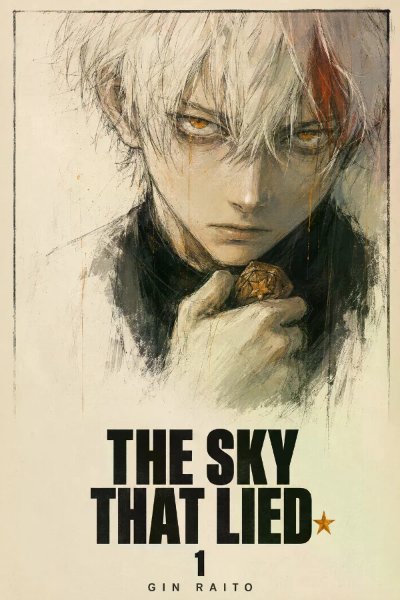
A dark fantasy academy story told across three perspectives: Shiro, a slum boy who carves stars to prove he exists; Kuro, a gilded boy breaking under a weight he won't name; and Valeria, a soldier who refuses to let either boy be erased. The character development is identity formation. Each character is fighting to be seen as who they are, not who the world has decided they should be. Shiro's arc is about whether a boy from the slums can claim a place in a world that erases him. Kuro's is about whether he can let someone in before the weight crushes him. Valeria's is about whether protecting others costs her the ability to protect herself.
The development is layered because it's relational. The three characters change each other. Shiro's stubbornness cracks Kuro's isolation. Kuro's fragility forces Valeria to confront what she's been avoiding. The forbidden pattern that forms when their lives collide is the engine of the development. Each character is changed by the collision, not by events in isolation. This is the deepest read on the list at 31 chapters, and it uses every chapter to build the three arcs in parallel.
Read it if you like: A Song of Ice and Fire by George R.R. Martin (the multi-POV structure where characters change each other), The Raven Cycle by Maggie Stiefvater (the relational character development across a group), stories where the character arcs are the plot.
Read The Sky That Lied free on NovelDay →
2. The Killer's Consultant
![The Killer's Consultant [Kdrama Crime Thriller]](https://novelday.net/api/novels/14757/image/1786744871)
A crime thriller inspired by Death Note, following Detective Kang Minjae as he investigates a string of murders connected to a beloved actor, Seo Yujin. The character development here is moral complexity. Minjae starts as a straightforward investigator and gradually discovers that the case is less about finding a killer and more about understanding why people perform the roles they're given. The line between fiction and reality thins, and the detective's certainty erodes with it.
What makes the development work is the slow pace. Each murder adds a layer to Minjae's understanding, not just of the case but of the actor's psychology. The detective doesn't have a single revelation. He has a dozen small ones, each one slightly shifting his perspective until he's looking at the case from an angle he couldn't have imagined at the start. That's earned development. This novel also has the highest view count on the list (761 views as of writing this blog), which suggests the character work is resonating with readers.
Read it if you like: Death Note (the moral complexity and the detective-vs-killer dynamic), Mindhunter by John Douglas (the gradual shift in the investigator's perspective), crime thrillers where the detective changes as much as the case does.
Read The Killer's Consultant free on NovelDay →
3. Welcome Traveler
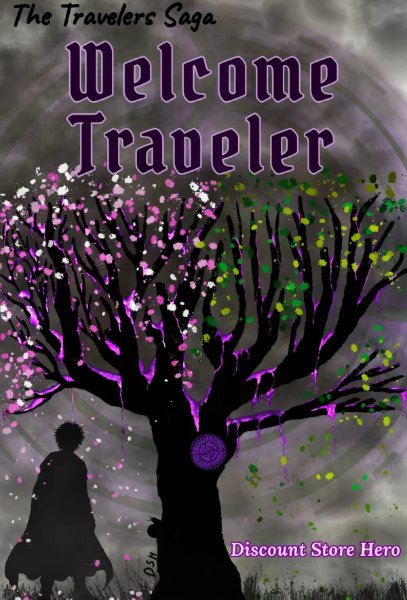
An isekai story about Kai, who wakes in a grave that shouldn't exist in a frozen world that wants to erase him. He has a power that forces knowledge into his mind and lets him reshape matter, but every use hurts, every mistake costs, and pushing too far won't just kill him, it'll erase everything. The character development is the cost of power. Kai starts as a lost soul who doesn't know what he's become, and the story is about whether he can learn to use a power that punishes him every time he reaches for it.
What makes the development work is the cost. This isn't a power fantasy where the protagonist gets stronger and stronger with no downside. Every use of Kai's power has a price, and the development comes from learning what price he's willing to pay. The mentor figure, Talis, has already failed at this. He's a man who couldn't conquer his own realm and now leads a village of failed Travelers. Kai's arc is about whether he can avoid becoming another Talis. The snail with a purple top hat is also there, treating every near-death experience like opening night at the theatre.
Read it if you like: The Lord of the Rings (the cost-of-power arc, Frodo and the Ring), Mistborn by Brandon Sanderson (power systems with consequences), isekai where the protagonist's power is as much a burden as a gift.
Read Welcome Traveler free on NovelDay →
4. Witches of Mellgrah
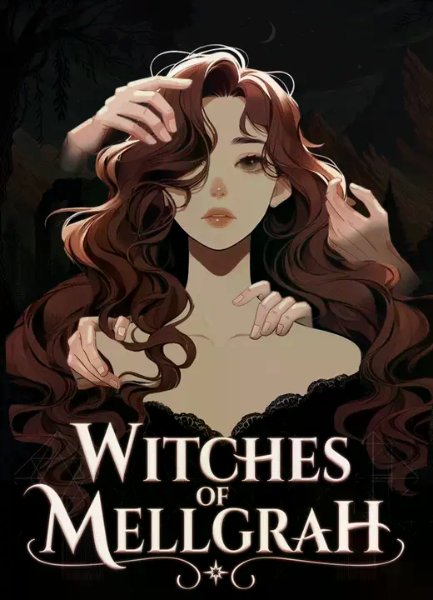
A magic academy story about sixteen-year-old Maya, who's invited to the world of Mellgrah after a string of terrible losses. Mellgrah is a world where magic finds those who have suffered, and Maya has suffered plenty. She arrives at a prestigious academy for young mages carrying grief, a volatile roommate, and powers that shouldn't exist. The character development is coming of age: the arc from a girl defined by her losses to a girl who decides what kind of person she'll become.
What makes Maya's development work is that it's not a straight line. She wants to believe in the utopia Mellgrah offers, and the story keeps poking holes in that belief. Each revelation about the world's secrets forces her to decide: does she become the hero this world buries, or does she drown in the darkness? The development comes from the accumulation of those decisions. 412 views as of writing this blog, which is strong for a 15-chapter novel.
Read it if you like: Harry Potter (the magic academy coming-of-age arc), The Magicians by Lev Grossman (the academy where the world is darker than it looks), stories about girls who arrive at magic school carrying grief and have to decide what to do with it.
Read Witches of Mellgrah free on NovelDay →
5. The Eighth Absolute
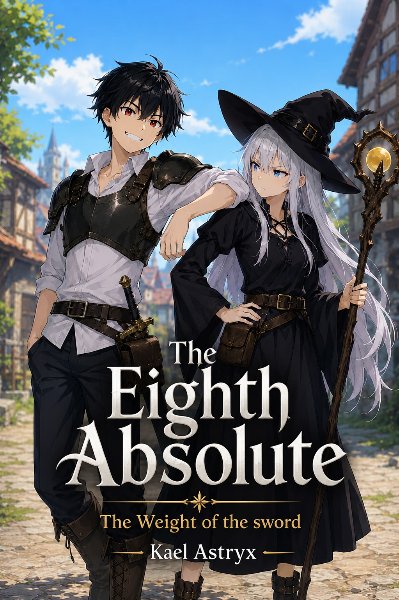
A fantasy adventure about a ten-year-old boy named Ravon who leaves his found family to search for his real parents, terrified of his own power. He survives using only basic spells and a sword until an ambush nearly kills him and he's saved by Lyra, a witch who binds him with a life debt. The character development is trauma recovery. Ravon starts the story afraid of himself, afraid of his power, afraid of the thing that makes him who he is. The story is about whether he can learn to use that power without being consumed by it.
The development is specific and physical. Ravon doesn't just "become brave." He learns to use one advanced spell, then another, each one a confrontation with the fear that's been controlling him. The partnership with Lyra forces him to rely on someone else, which is its own kind of growth for a character who's been surviving alone. The story explicitly tags the protagonist as battling a personality disorder and trauma, and the development tracks that internal struggle scene by scene. This is the shortest read on the list at 13 chapters, but the arc is dense.
Read it if you like: The Name of the Wind by Patrick Rothfuss (the trauma-recovery arc and the protagonist afraid of his own power), Ender's Game by Orson Scott Card (the young protagonist forced to grow up too fast), stories where the character's relationship to their own power is the whole story.
Read The Eighth Absolute free on NovelDay →
Famous Character Development Examples (And How These Compare)
You've seen character development in published fiction your whole reading life. Here's how the five novels above compare to the famous examples you already know.
Walter White in Breaking Bad is the gold standard of a corruption arc. A mild-mannered chemistry teacher becomes a drug kingpin through a series of small, individually justifiable compromises. The Killer's Consultant on this list explores similar moral territory: a detective whose certainty erodes as he understands the killer's psychology. Both arcs are about the slow shift in perspective that changes everything.
Frodo Baggins in The Lord of the Rings is a positive arc with a cost. Frodo grows in courage and wisdom, but the Ring leaves scars that never heal. He can't go home. Welcome Traveler uses the same structure: Kai grows in power, but every use of that power costs him something he can't get back.
Jaime Lannister in A Song of Ice and Fire is a redemption arc done right. The man who pushed a child out a window becomes someone who risks his life for honor. The development is earned through specific scenes across many chapters. The Sky That Lied takes a similar multi-POV approach: three characters who change each other through proximity, not through solitary revelation.
Harry Potter is a coming-of-age positive arc stretched across seven books. The boy under the stairs becomes a man who faces death without flinching. Witches of Mellgrah follows the same shape: a girl defined by loss arrives at a magic academy and must decide what kind of person she'll become when the world turns out to be darker than she hoped.
Eddard Stark in A Game of Thrones is a flat arc with a brutal ending. Ned doesn't change. His consistency is what kills him. The world changes around him. The Eighth Absolute inverts this: Ravon's world is static, but Ravon himself must change to survive in it. The pressure is internal, not external.
Where to Read More Character Development Fiction
If these five aren't enough, NovelDay has a full catalog of free web novels tagged with Character Development, Weak to Strong, and Coming of Age. You can browse the complete library to filter by genre, tag, and update status.
For more on the craft side, my unreliable narrator guide covers a related technique: how a character's perspective can shift the reader's understanding of the story. My fantasy books for adults list includes several novels with strong character arcs. If you're interested in how character development works in specific subgenres, my enemies to lovers guide shows how character change drives romance, and my grimdark guide covers how negative arcs work in dark fiction. And if you're a writer working on your own character development, NovelDay lets you publish your own web novel free: no paywalls, no gatekeepers, just a platform to serialize your fiction and build an audience.
Frequently Asked Questions
What is the difference between character development and character growth?
The terms are often used interchangeably, but some writers distinguish them. Character development refers to any change in a character over the course of a story, including negative change. Character growth specifically refers to positive change: a character becoming better, wiser, or more capable. A character who becomes more ruthless has developed but hasn't grown.
Can a static character be interesting?
Yes. Static characters work well in series fiction, where readers return for a familiar personality, and in supporting roles where their consistency provides contrast to a dynamic protagonist. Sherlock Holmes is largely static across his stories. What changes is the case, not the detective. The key is that static characters should be interesting from the start, since they won't develop to create interest.
How many chapters does it take for character development to feel earned?
There's no fixed number, but development that happens in a single scene almost always feels unearned. In web novels, readers expect gradual change over 10 or more chapters. The five novels recommended above range from 13 to 34 chapters, and each one spaces its character development across the full length. The key is that the change should be traceable: a reader should be able to point to specific scenes where the character's behavior or beliefs shifted.
Is character development the same as a character arc?
A character arc is the specific shape of a character's development across a story. Character development is the broader concept. You can think of the arc as the structure and development as the content. A positive arc, a negative arc, a flat arc: these are all types of character development, each with a different trajectory.
Do all protagonists need character development?
Most do, but not all. A protagonist in a flat arc can stay largely the same while the world changes around them. This works in detective fiction, adventure serials, and some fantasy. But if a protagonist goes through significant events and doesn't change at all, readers will feel the story had no weight. The question isn't whether the protagonist changes but whether the change, or lack of it, feels intentional and earned.
Character development is what makes a story stick. Plot gets you to the end. Development gets you to care. The five novels above are all free to read on NovelDay, written by independent authors who are actively updating their work. Start with whichever arc speaks to you, and if you want to browse more, the full NovelDay library is open. No paywalls, no premium tiers, no waiting. Just fiction.