What Is Xianxia? The Cultivation Fantasy Genre, Explained
If you have spent any time around web fiction, you have seen the word xianxia attached to stories about sword-wielding immortals, mystical energy, and protagonists who meditate for a century before breakfast. The term gets used loosely, sometimes as a catch-all for any Chinese fantasy, sometimes as a synonym for cultivation stories in general. Both habits hide a more interesting truth: xianxia is a specific genre with its own rules, its own vocabulary, and a philosophy underneath it that makes it feel genuinely different from Western fantasy. This guide explains what xianxia actually is, where it came from, and where to start reading it free on NovelDay.
What Xianxia Actually Means
The word is a compound of two Chinese terms. Xian (仙) means immortal or transcendent being: a person who has escaped ordinary human limits through spiritual practice. Xia (侠) is harder to translate cleanly; it carries the idea of the heroic wanderer, the righteous figure who acts on a personal code of honor outside official power. Put together, xianxia (仙侠) roughly means "immortal hero" fiction: stories about people pursuing transcendence while remaining entangled in a world that needs heroes.
That combination is the genre's signature tension. A xianxia protagonist is climbing toward godhood, but the genre keeps asking what that climb costs. The immortal-to-be still has grudges, loyalties, sects, and enemies. Transcendence in xianxia is not retirement from the human drama; it raises the stakes of it.
The genre grew out of Chinese web novel platforms in the 2000s, building on much older roots: Daoist ideas about refining the self, wuxia martial-arts fiction, Chinese mythology, and folk religion. When platforms like Qidian industrialized daily-chapter serial fiction, xianxia became one of its dominant categories, and English translations carried it to a global audience through sites like Wuxiaworld. Today it is arguably the single most influential genre in web fiction, full stop: its mechanics shaped progression fantasy, LitRPG, and half the systems you see on NovelDay whether the author intended it or not.
Where the Genre Came From
Xianxia did not appear out of nowhere. Its ancestry runs through three distinct streams. The oldest is Daoist cultivation lore: centuries of Chinese tradition holding that disciplined practice, meditation, breathwork, moral refinement, could transform a person into something beyond ordinary human limits. The second stream is wuxia, the martial-arts fiction genre that dominated Chinese popular literature through the twentieth century, which contributed the wandering hero, the sect politics, and the honor economy. The third is the serial web novel platform: when sites like Qidian began publishing chapters daily in the 2000s, xianxia's structure (an endless ladder of realms, each one a fresh arc) proved almost perfectly suited to a format where a story might run three million words.
English readers met the genre in the mid-2010s through fan translation sites, where novels like Coiling Dragon, I Shall Seal the Heavens, and A Will Eternal built audiences that traditional publishers had never reached. Those readers did not stay readers for long. Within a few years they were writing their own cultivation stories in English, which is why the genre now exists on a spectrum: translated xianxia at one end, western cultivation fiction in the middle, and the system-driven descendants (progression fantasy, LitRPG) at the far end.
The Core Ingredients
Strip a xianxia story to its skeleton and you will usually find these elements:
Cultivation. The defining mechanic. The protagonist refines internal energy (qi) through meditation, combat, alchemy, lucky encounters, and sheer endurance. Cultivation is always a ladder: progress is measurable, each stage has a name, and each breakthrough is a dramatic event. If you enjoy watching numbers and titles climb, xianxia invented that pleasure decades before stat sheets existed.
Realms and stages. Cultivation advances through named tiers: Qi Condensation, Foundation Establishment, Core Formation, Nascent Soul, and beyond (the exact ladder varies by story). Higher realms mean longer life, greater power, and usually a whole new tier of enemies. The ladder structure gives xianxia its famous pacing: there is always a next mountain.
Heavenly tribulation. Breaking into a major realm often triggers literal punishment from the heavens, most famously lightning tribulation. The universe itself tests whether you deserve to advance. It is a gorgeous narrative device: the universe has rules, and advancement is theft from the natural order.
Sects, clans, and face. Xianxia societies run on sects (martial schools with their own hierarchies), aristocratic cultivation clans, and a brutal honor economy. Being slighted matters. Seniors bully juniors. Courting death is the genre's affectionate term for antagonists who provoke someone far stronger than they realize, and yes, readers use it as a compliment to the trope.
Immortality as the finish line, not the premise. In Western fantasy, gods tend to start godly. In xianxia, godhood is the endpoint of a thousand chapters of grinding. The genre is basically about earning divinity, which is why it scratches a different itch than chosen-one fantasy.
Xianxia vs. Wuxia vs. Xuanhuan
These three terms blur together online, so here is the short version. Wuxia is grounded martial-arts fiction: skilled fighters, human limits, jianghu (the outlaw-hero world), honor and revenge. Xianxia adds cultivation and genuine transcendence: qi is real, immortality is attainable, and power scales reach planet-cracking absurdity by the late chapters. Xuanhuan is the broader "mysterious fantasy" umbrella: Chinese-flavored fantasy that mixes cultivation with elements borrowed from everywhere (Western magic, game systems, whatever works).
The shorthand most readers use: if the hero could plausibly lose a fight to a very skilled normal human, it is wuxia. If the hero is refining qi toward literal immortality, it is xianxia. If it is Chinese-flavored fantasy that does not fit either box, it is xuanhuan. Our wuxia vs. xianxia comparison goes much deeper on the boundary between the two, including where the genres overlap.
Why Xianxia Took Over Web Fiction
Xianxia's influence on English-language web fiction is hard to overstate. When cultivation novels hit translation in the mid-2010s, readers latched onto something the Western market barely offered: a magic system where power is a measurable grind with explicit milestones. That is the direct ancestor of progression fantasy, the genre behind stories where growth is the point. LitRPG's stat blocks and level-ups are cultivation rendered as a game HUD, which is why our LitRPG explainer keeps circling back to the same pleasures.
There is also the serialized fit. Xianxia was born on platforms where authors published a chapter a day for years, so the genre evolved for binge-and-weekly rhythms alike. Arcs are structured around breakthroughs and tournaments, natural cliffhanger shapes. If you are the kind of reader who wants a story that can run a million words without running out of road, xianxia was engineered for exactly that.
Where to Start: Xianxia and Cultivation Stories on NovelDay
The xianxia shelf on NovelDay is young but growing — the newest arrivals are genuinely direct xianxia like Rep-a-Forth, Overkill; Incarnations, A Reincarnator's Path of Cultivation, and I was born into an immortal family(Xianxia), all still in their first chapters. For a full read today, these three serials use cultivation-style progression in different flavors, ordered longest first:
1. Feasting on Immortals
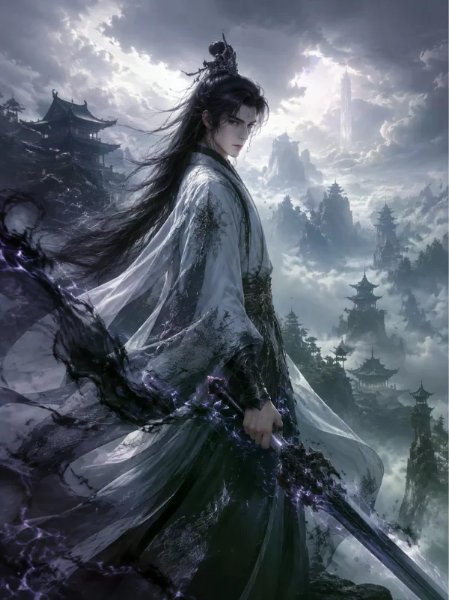
Fang Cheng has a demonic sword lodged in his soul, whispering for blood. His countermeasure is one of the strangest hooks in the genre: he forces every monster and villain he meets to say "you are a good person" out loud, because the more they say it, the more he believes it, and the less he turns into a mindless killing machine. It is the most literally tagged xianxia on the platform, tagged xuanhuan too, and it understands the genre's dark comedy: the path to power is always also a fight over what the power is doing to you.
Read Feasting on Immortals on NovelDay
2. The Advent of the Soul Tree
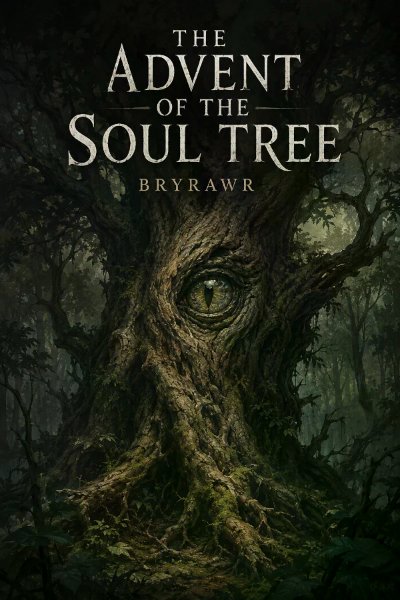
Dendron died a nobody and woke up as a tree. Not a magical talking tree with legs, an actual rooted, immobile tree in a forest full of monsters and cultivators. What follows is a cultivation story forced into a new shape: he cannot train his body, so he grows his soul. It is a clever proof that the genre's real engine is not swords or sects but patient, incremental becoming. Reincarnation plus cultivation, filtered through a protagonist who literally cannot move.
Read The Advent of the Soul Tree on NovelDay
3. The Disposable Cast Handbook for When You Get a System
Three minutes from drowning, Emyres gets an offer no protagonist should refuse: a system claiming the world is a comic book, and a contract to sign. He ignores it. The story that follows runs on the friction between system tropes and cultivation-flavored martial arts, with a protagonist who survives by being skeptical of the genre itself. A good pick if you like your progression fantasy self-aware.
Read The Disposable Cast Handbook for When You Get a System on NovelDay
For more, the xianxia, xuanhuan, and eastern genre pages collect every tagged serial in the library, and the shelf keeps growing as new authors join.
How to Read Your First Xianxia
A few honest tips for newcomers. First, expect a slow-burn opening: xianxia invests in foundations, so the first dozen chapters often establish the sect, the humiliation, or the spark that starts the climb. Trust the structure. Second, learn the glossary as you go rather than upfront: terms like dao, meridian, spirit stone, and golden core make sense fastest inside a story. Third, do not fight the length. These stories are designed to run long, and the pleasure is cumulative: the breakthrough in chapter 400 lands because you watched the grind in chapter 40.
It also helps to know the genre's recurring set pieces, because xianxia readers talk about them the way sports fans talk about plays. The tournament arc, where the sect's juniors fight for rank and the protagonist inevitably meets someone who underestimated them. The auction scene, where rare treasures go on the block and someone always overpays or gets robbed. The secluded-cultivation timeskip, where the protagonist disappears into a cave for fifty years and emerges onto a changed map. The young-master provocation, where a spoiled heir picks a fight with the wrong nobody. These beats are the genre's grammar, and part of the pleasure is watching each author play them straight, invert them, or build an entire book around one.
Also worth knowing: English xianxia and cultivation-inspired web fiction now form a continuum rather than two separate shelves. Pure translated-flavor xianxia sits at one end, western cultivation stories sit in the middle, and system-driven progression fantasy sits at the far end. Wherever a story lands, it is drawing from the same well.
For Writers: Why Cultivation Works
If you write fiction, xianxia is worth studying even if you never plan to write one. The genre solved a problem every long serial faces: how do you keep escalating for hundreds of chapters without breaking the story? The cultivation ladder is the answer. Named stages give readers a map of progress, tribulations give advancement a cost, and each new realm unlocks new factions and threats so the world scales with the character. It is a template for earned escalation, and it transfers cleanly to any genre with a power curve. If you are building a serial of your own, publishing on NovelDay is free: your rights never transfer, and reader support passes through to you without a cut. Our guide to building magic systems covers how to design progression rules like these.
Keep Reading
The library sorts the full catalog by genre if you want to browse beyond this cluster, and the weekly rankings show what other readers are binging right now. If xianxia's blend of grind and transcendence clicks for you, the progression fantasy and LitRPG shelves are the natural next stop, since both genres grew directly out of this one. And if nothing here fits, the fantasy and adventure shelves are the widest part of the catalog.
Xianxia in Other Media
If the genre sounds familiar even though the word does not, you have probably met it already. Chinese fantasy dramas built on xianxia novels are among the most-watched shows on the planet, animated adaptations (donghua) run for hundreds of episodes, and the genre's fingerprints are on games and films far beyond the serial-fiction world. The western reader pipeline usually runs backwards: someone discovers a drama or a translated hit like a certain mushroom-powered cultivation satire, loves the progression logic, and goes looking for where the whole thing comes from. Where it comes from is web serials, and the originals are bigger, stranger, and more numerous than any adaptation.
That translation pipeline matters for one practical reason: it means the English-language xianxia canon is still being built. The stories that will define the genre for English readers in ten years are being written right now, on serial platforms, by authors you have not heard of yet. Reading xianxia on a platform like NovelDay is a bit like reading Golden Age science fiction in the pulps while it was still being stapled together.
Xianxia Questions, Answered
What does xianxia mean literally? "Immortal hero." Xian means a transcendent being who has escaped human limits through cultivation, and xia is the wandering-hero ideal borrowed from older Chinese martial fiction.
Is xianxia the same as cultivation fiction? Not exactly. Cultivation is the mechanic; xianxia is the genre built around it. Some stories use cultivation systems without the immortal-hero framework (those often get labeled xuanhuan or general fantasy), and some xianxia stories foreground sect politics and heroism more than the grind.
What is the difference between xianxia and wuxia? Power ceiling. Wuxia stays human: master swordsmen, but still people. Xianxia crosses into genuine transcendence, with qi cultivation, immortal realms, and power that eventually threatens the heavens themselves. Our full comparison walks through it.
Do I need to know Chinese mythology first? No. Good xianxia teaches its own vocabulary in context. Terms like qi, dao, and tribulation become familiar within a few chapters, and most English web fiction in the genre is written for readers who have never read a word of Chinese.
Why do xianxia stories run so long? They were built for daily serialization on Chinese platforms where authors publish a chapter a day for years. The realm-ladder structure supports that length deliberately: there is always a next stage, a stronger enemy, and a bigger world.
Is xianxia related to LitRPG and progression fantasy? Directly. The cultivation ladder (measurable stages, named breakthroughs, earned power) is the ancestor of both. If you like stat screens and leveling, xianxia is where that DNA comes from.
Can I read xianxia novels in English for free? The xianxia genre page on NovelDay lists every tagged serial, all free. It is a young shelf, but Feasting on Immortals alone gives you eight hours of the real thing, and adjacent genres like LitRPG carry the same progression DNA while the tag fills out.
Can I write xianxia as a non-Chinese author? Plenty do, respectfully. Western cultivation fiction is an established shelf now, and the genre's mechanics (ladders, sects, tribulations) travel well. Readers mostly ask that you treat the genre's source culture as inspiration rather than costume.