What is LitRPG? A Complete Guide (With Free Web Novels)
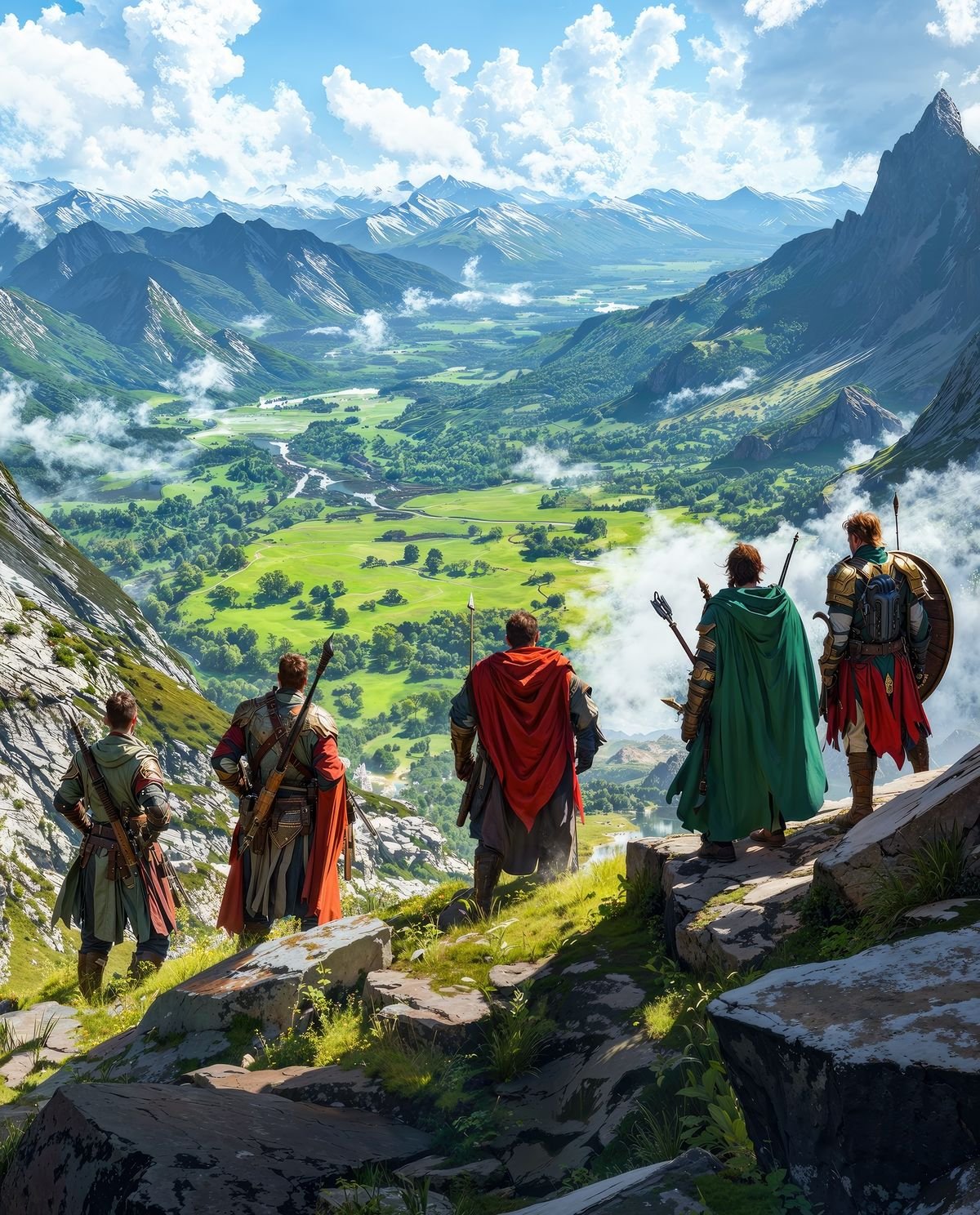
LitRPG is the genre that took "grinding for levels" and turned it into literature. The name stands for Literary Role-Playing Game, and it describes stories where the characters interact with game-like systems: stat screens, skill trees, leveling up, dungeons, loot drops, and all the mechanics you'd recognize from an RPG. Except instead of pressing buttons, the characters are living inside them.
The genre exploded from a niche web fiction community into a publishing phenomenon. Dungeon Crawler Carl by Matt Dinniman sold over 14 million copies and landed on the New York Times bestseller list. Solo Leveling became a global franchise with an anime adaptation. The Wandering Inn by pirateaba is over ten million words long and still updating. LitRPG went from "what does that word mean" to "I can't stop reading these" for millions of readers, and it happened fast.
But here's the thing. Most LitRPG lists online recommend the same published series. Dungeon Crawler Carl. He Who Fights with Monsters. Defiance of the Fall. The Primal Hunter. Good books. All of them. But they cost money, and most are finished or far along in their publication cycle. I wanted free LitRPG I could read online, chapter by chapter, the way the genre was born — on web fiction platforms, updated weekly, with the author still writing.
So this guide does two things. First, it explains what LitRPG is, where it came from, and how it differs from adjacent genres like progression fantasy and isekai. Second, it recommends free LitRPG web novels you can read right now on NovelDay, starting with the one I couldn't stop reading: a 124-chapter epic about an IT professional who gets isekai'd into a world governed by a buggy system and has to literally become its system administrator.
What Does LitRPG Mean?
LitRPG means Literary Role-Playing Game. The term was coined in the early 2010s to describe fiction that integrates RPG mechanics directly into the narrative. In a LitRPG novel, the characters don't just live in a fantasy world. They interact with a system — a set of rules, interfaces, and progression mechanics that function like a video game.
The core elements of LitRPG are:
- System interface: Characters can see stat screens, health bars, skill lists, or notification windows. The system is a visible, in-world presence, not just a metaphor.
- Progression mechanics: Characters gain experience points, level up, unlock new skills, and acquire better gear. The progression is quantified and visible to the reader.
- Dungeons and combat: Many LitRPG novels feature dungeons, raids, boss fights, or arena battles structured like game encounters. The combat follows game-like rules.
- Loot and crafting: Items have stats and rarity tiers. Characters craft, upgrade, and optimize their gear. The economy often functions like a game economy.
- The system as a character: In the best LitRPG, the system itself has personality. It can be helpful, hostile, buggy, mysterious, or actively trying to kill the protagonist. The system isn't just a UI overlay. It's part of the story.
Not every novel with a leveling system is LitRPG. The key distinction is that the game mechanics are diegetic — they exist inside the world and the characters interact with them directly. A fantasy novel where the protagonist happens to get stronger over time is just progression fantasy. A novel where the protagonist opens a stat screen, allocates skill points, and watches a notification pop up saying "Level Up!" is LitRPG.
LitRPG vs Progression Fantasy vs Isekai — What's the Difference?
These three genres overlap so much that people use them interchangeably. They're not the same thing, though the best novels often combine elements from all three.
LitRPG is about the system. The game mechanics are visible, quantified, and central to the story. The protagonist interacts with stat screens, skill trees, and level notifications. Example: Dungeon Crawler Carl, where the entire world has been converted into a game show with literal UI elements, loot boxes, and level-up announcements.
Progression fantasy is about the growth. The protagonist gets systematically stronger over the course of the story, but the mechanics don't have to be game-like. A martial arts novel where the character advances through cultivation stages is progression fantasy without being LitRPG. A novel with a system interface is both. Example: Cradle by Will Wight is progression fantasy. It has progression mechanics (advancing through sacred artist stages) but no game UI.
Isekai is about the displacement. The protagonist is transported from one world (usually modern Earth) to another. Isekai is a setup, not a genre mechanic. An isekai novel can be LitRPG (the protagonist gets a system upon arrival), progression fantasy (the protagonist grows stronger in the new world), or neither (the protagonist just lives in a new world). Example: Solo Leveling is isekai-adjacent (Sung Jinwoo gets a system in the real world, not a new world, but the displacement is metaphorical) and LitRPG (the system is central). Overlord is isekai (transported to a game world) and LitRPG (game mechanics persist).
The Venn diagram looks like this: all LitRPG is progression fantasy (because leveling up is progression), but not all progression fantasy is LitRPG (because progression doesn't require a game UI). Many LitRPG novels are also isekai (the protagonist arrives in a new world and gets a system), but not all isekai is LitRPG (you can be isekai'd without getting a stat screen).
The novels recommended below are mostly LitRPG that's also progression fantasy, and several are also isekai. The System Administrator hits all three: the protagonist is transported from Earth (isekai), gets a system with bugs (LitRPG), and grows stronger by fixing those bugs (progression fantasy).
Where Did LitRPG Come From?
LitRPG has roots in several places. The earliest precursor is Slash by N. G. Ptolemay (1990), but the genre as we know it emerged from three streams converging in the 2010s:
Japanese light novels and anime. Sword Art Online (2012 anime) popularized the "trapped in a game" premise. Log Horizon and Overlord followed. These weren't called LitRPG at the time, but they established the template: game world, game mechanics, real stakes.
Korean web novels. Solo Leveling by Chugong started as a Korean web novel on KakaoPage before becoming a manhwa and then a global phenomenon. It proved that a system-driven progression story could find a massive audience outside Japan.
Russian LitRPG. The term "LitRPG" itself was popularized by Russian authors. Vasily Mahanenko's Survival Quest (2013) is often cited as one of the first novels to explicitly label itself LitRPG. Russian publisher LitRPG Publishers (later LitRPG Republic) built an entire catalog around the genre.
English-language web fiction. Platforms like Royal Road, FictionPress, and Wattpad became incubators for English-language LitRPG. The Wandering Inn started on a personal blog in 2016. He Who Fights with Monsters started on Royal Road. Dungeon Crawler Carl started on Royal Road. The genre's biggest English-language hits were born as free web fiction before being picked up by publishers.
That last point matters for this guide. LitRPG was born on web fiction platforms. The published books are the ones that made it big, but the genre's DNA is serialized, free-to-read, chapter-by-chapter fiction. The novels recommended below are part of that tradition — free web fiction, updated regularly, written by authors who are still actively publishing.
Free LitRPG Web Novels to Read Online
Every novel below is free to read on NovelDay, updated chapter by chapter. I've noted the reading time, chapter count, and what kind of LitRPG each one is. The list starts with the longest and most ambitious, then moves through the rest by feel.
1. The System Administrator
By eightbits · ~14 hour read · 124 chapters · Daily updates (Mon-Fri)
Brian is an IT professional, a computer guy, who is ripped from his body on Earth and thrown into someone else's body on another world. It's a brutal world, intent on beating him down again and again. But the worst part is that it's governed by a system. A system with a lot of bugs. Some of these bugs make it even more brutal, and some are affecting Brian in particularly bad ways.
Can he use his skills and knowledge from his old world to gain access to the system and fix the bugs? If he ever wants to go home, he's going to have to try. He's going to have to become: The System Administrator.
This is the most on-the-nose LitRPG on the list, and the best entry point if you're new to the genre. The premise is exactly what the title says: a guy whose job was fixing computer systems gets isekai'd into a world that is a computer system, and it's full of bugs. 124 chapters, updating every weekday. What makes it different from every other LitRPG on this list is the protagonist's actual skill set — Brian doesn't swing a sword and hope for a level-up. He reads error logs, patches exploits, and treats the world's broken rules like a ticket queue. The bugs aren't flavor text; some of them are actively making his life worse, and fixing them is the progression. If you've ever wanted a LitRPG where the hero wins because he understands stack traces, this is the only one that delivers it.
If the system-driven progression of Solo Leveling or the "fix the broken system" angle of Dungeon Crawler Carl hooked you, but you wanted a protagonist whose day job is literally fixing systems, this is your next read.
2. New Game [LITRPG]
By D.M.Aquilina · ~6 hour read · 35 chapters · Ongoing (Tue/Fri)
Sebastian is just a fifteen-year-old boy trying to pass his GCSEs. When his best friends Alister and Sophia sign the three of them up to beta test a new gaming system that's supposed to be more advanced than VR itself, Sebastian couldn't be more excited. But they soon find that this new gaming technology is more than just VR. The three of them are frozen in time, with machines that have transported them into a medieval MMORPG. Oh, there's also another thing: if you die in the game, you die in real life.
This is the most traditional LitRPG on the list. The "trapped in a game" premise is the genre's founding setup — Sword Art Online did it first, and it still works. 35 chapters, updating twice a week. What sets it apart is the three-friend dynamic: Sebastian, Alister, and Sophia get frozen into the same medieval MMORPG together, and the story leans on that social layer — coordinating builds, covering each other's weaknesses, arguing about risk, that solo-protagonist LitRPG almost never has. The stakes are real (die in the game, die in real life), and the progression is story-driven rather than number-crunchy, so you're following people, not a spreadsheet.
If Sword Art Online or Log Horizon was your entry into the genre, this is the free web novel version of that premise, with real stakes and a cozy MMORPG world.
3. Welcome Traveler
By Discount Store Hero · ~3 hour read · 31 chapters · Weekly (Mon)
Three chimes. That's what Kai heard as he woke in a grave that shouldn't exist yet. He clawed his way to the surface only to find a frozen world that offered nothing to help him survive. And something has already noticed him.
In Thunder Hallows, the silent clock tower tolls. A spark has ignited, beginning a new cycle and creating a new Realm. With it comes a Traveler. For some, it's hope. For Talis, it's just another failure waiting. He's found them, helped them, buried most of them.
This is isekai LitRPG with a literary bent. 31 chapters, updating weekly. The system here isn't a clean stat screen, it's magic that "forces knowledge into his mind and allows him to reshape matter," and every use hurts. Every mistake costs. Kai wakes in a grave that shouldn't exist yet, in a frozen world that offers nothing, and something has already noticed him; meanwhile Talis, who has found and buried most of the Travelers before him, is waiting for the next failure. The snail companion with "impeccable manners" who's "already composing a eulogy" tells you the tone: dark, funny, and self-aware. It's the only entry on this list where the progression system itself is a source of pain rather than power.
Readers who liked the character-first approach of The Wandering Inn or the "the system is trying to kill you" tension of Dungeon Crawler Carl will find both here, in a shorter and faster-paced package.
4. Timeless Empress
By HouseOfBones · ~2.5 hour read · 15 chapters · Ongoing
In the chaos of the abyss between worlds, Anja Kyrov followed her desire. She reached out and stole Time from a Regressor. By interfering with his plan, Anja seized a SoulRune she had no right to claim. Now, she wields a power that is slowly consuming her from within, acting as a beacon for the most dangerous beings in existence.
This is isekai LitRPG with a time-loop mechanic. 15 chapters, with Book 1 completed at over 140,000 words. Anja Kyrov steals Time from a Regressor in the abyss between worlds and seizes a SoulRune she had no right to claim, a power that's slowly consuming her from within and acting as a beacon for the most dangerous beings in existence. The system is unique to each character rather than a shared ruleset, and the "Return by Death" loop puts it in conversation with Re:Zero, but the LitRPG mechanics make it something different: Anja isn't just dying and retrying, she's leveling through cycles while the world gets harder. It's the only entry here with a female lead and a time-loop structure, and the darkest tone on the list.
If the time-loop structure of Re:Zero combined with LitRPG progression sounds like your thing, this is the one.
5. Godfated
By Tarrow · ~2.5 hour read · 15 chapters · Ongoing
The God of Gods lost everything, even his own name. His last and only memory is of his betrayal, everything else scattered, his unrivalled gifts stolen by a scar. He awakes from his sealing thousands of years later by a mortal girl named Snow, who gives him his name, Death, and mistakenly ties their souls and fates into an unbreakable bond.
With no powers, memories, and not one clue of who he is, he begins anew and discovers the nations he once knew are plagued with degeneracy. He must reclaim his place as a god, kill all those who wronged him, and pursue an impossible task of making Snow immortal to save himself from certain death.
This is Progression Fantasy with a god-to-mortal reversal. 15 chapters, with 100+ chapters available on Royal Road. The God of Gods lost everything, his name, his gifts, his memories, stolen by a scar and sealed for thousands of years. A mortal girl named Snow wakes him, names him Death, and accidentally binds their souls together. Now powerless, he has to reclaim his divinity from the nations he once knew, kill everyone who wronged him, and somehow make Snow immortal before the bond kills him. The progression isn't a clean system UI, it's a god rebuilding from zero, which puts it closer to Cradle than Solo Leveling on the LitRPG-to-progression-fantasy spectrum. It's the only entry on this list where the protagonist starts at the top of the power scale and has to climb back up.
Readers who loved the "start from nothing and rebuild to godhood" structure of Cradle or Defiance of the Fall will find the same engine here, darker and more intimate.
What is Progression Fantasy?
Progression fantasy is a broader genre that includes LitRPG as a subset. The defining feature is that the protagonist gets systematically stronger over the course of the story, following a clear progression path. In LitRPG, that path is game-like (levels, skills, stats). In progression fantasy more broadly, it can be anything: cultivation stages, martial arts ranks, magical power tiers, or divine ascension.
The term "progression fantasy" was popularized around 2020 to distinguish stories with explicit progression mechanics from general fantasy where characters just happen to grow. Cradle by Will Wight is the most cited example of progression fantasy that isn't LitRPG, the characters advance through sacred artist stages, but there's no game UI. He Who Fights with Monsters by Shirtaloon is both, it has a system interface (LitRPG) and explicit progression stages (progression fantasy).
All the novels recommended above are progression fantasy. Most are also LitRPG. The System Administrator is the most explicitly LitRPG (visible system, leveling, game mechanics). Godfated leans more toward progression fantasy without a clean game UI. Welcome Traveler sits in between, there's a system, but it's magic-based and painful to use, not a clean stat screen.
If you want to go deeper into progression fantasy as a genre, I'll be writing a separate guide: "What is Progression Fantasy? A Complete Guide." For now, the short version is: if the character gets measurably stronger over time and the story is structured around that growth, it's progression fantasy. If there's a game UI, it's also LitRPG.
Best LitRPG Books to Start With
If you're new to LitRPG and don't know where to start, don't begin with the 14-hour one. Start short.
Timeless Empress is a ~2.5 hour read. It's the most accessible entry point because the time-loop mechanic gives you a hook within the first few chapters. If it hooks you, you'll know LitRPG is your genre. If it doesn't, you've lost an afternoon.
From there, Welcome Traveler at ~3 hours is your step into isekai LitRPG with a darker edge. After that, New Game [LITRPG] at ~6 hours is the traditional "trapped in a game" experience. Save The System Administrator for when you're ready to commit to a 14-hour binge. It's worth it, but it's not a beginner entry.
And if you want to read the famous published LitRPG that defined the genre, here's the quick list:
- Dungeon Crawler Carl by Matt Dinniman, the genre's biggest crossover hit. Comedy apocalypse with a game-show structure. Started on Royal Road, now a NYT bestseller.
- Solo Leveling by Chugong, the Korean web novel that became a global phenomenon. System-driven progression with a weak-to-strong arc. The anime adaptation aired in 2024.
- The Wandering Inn by pirateaba, over ten million words, still updating. Character-first LitRPG with an innkeeper protagonist. Started as a free web serial.
- He Who Fights with Monsters by Shirtaloon, portal fantasy with a deep system. Started on Royal Road, now published by Random House.
- Defiance of the Fall by TheFirstDefier, system apocalypse with massive scope. Also started on Royal Road.
- Cradle by Will Wight, progression fantasy (not LitRPG, no game UI) that defined the genre's broader category. 12 books, completed.
Every one of those started as or is still serialized web fiction. The genre was built on free, chapter-by-chapter publishing. The novels on NovelDay are part of that same tradition, they're just earlier in their journey.
Where to Read These Novels
All six novels are free to read on NovelDay, updated chapter by chapter. No paywalls, no premium locks. Just serialized fiction, the way LitRPG was meant to be read.
- Browse all LitRPG novels on NovelDay
- Browse System novels for system-driven fiction
- Browse Isekai novels for transported-to-another-world stories
- Browse Progression Fantasy novels for the broader genre
- Browse Weak to Strong novels for underdog-to-OP progression
- Browse Dungeons novels for dungeon-crawling fiction
- Read my other posts: 10 Best Psychological Horror Web Novels, 7 Best Horror Books to Read Free Online, 7 Best Dark Romance Books to Read Free Online, and 5 Best Dark Academia Books to Read Free Online
If you're new to LitRPG, start with Timeless Empress. It's a ~2.5 hour read, and it'll tell you within one afternoon whether the genre is for you. If it hooks you, The System Administrator is your next stop, 124 chapters, daily updates, and a protagonist who does for fantasy worlds what he used to do for office servers.
And if you're a writer thinking about serializing your own LitRPG, or any fiction with a system, NovelDay is built for exactly that.
Written by the NovelDay editorial team. Follow more genre guides and book recommendations on The Storyteller's Journal.