What is Grimdark? (Definition, Meaning, and Best Books to Read Free Online)
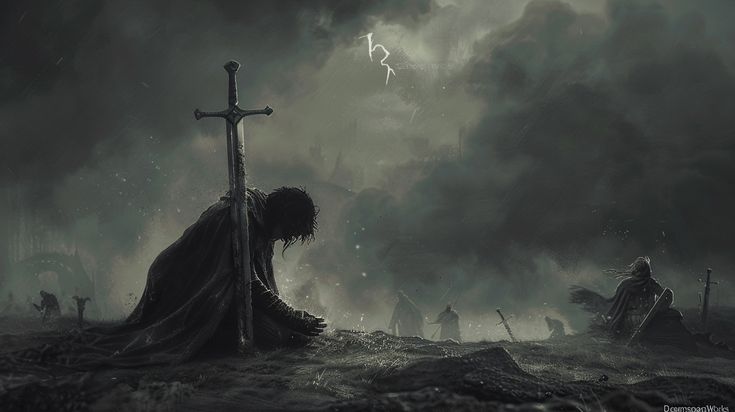
Grimdark is a subgenre of fantasy fiction characterized by its bleak, morally ambiguous, and often violent worldview. The term comes from the opening line of the tabletop wargame Warhammer 40,000: "In the grim darkness of the far future, there is only war." Grimdark fantasy takes that ethos and applies it to fiction: no clear heroes, no clean victories, no guaranteed happy endings. The world is broken. The people in it are broken. The story is about how they survive anyway.
If you've read Joe Abercrombie's The First Law trilogy, Mark Lawrence's Prince of Thorns, or Glen Cook's The Black Company, you've read grimdark. If you've watched Game of Thrones and noticed that the "good guys" keep dying while the schemers thrive, you've seen grimdark's influence on mainstream fantasy. Grimdark is the genre that asks: what if the fantasy world isn't a place where heroes win, but a place where everyone is just trying not to lose?
This guide explains what grimdark is, where the term comes from, how it differs from dark fantasy, and which tropes define the genre. Then I'll recommend 10 free grimdark web novels you can read right now on NovelDay — all with at least 2 hours of reading content, ordered from longest to shortest so you can pick the right binge for your schedule.
What is Grimdark? (Definition)
The grimdark definition is straightforward: grimdark is fantasy that rejects the moral clarity of traditional high fantasy. In classic fantasy — Tolkien, Lewis, Eddings — there is a clear line between good and evil. The heroes are heroic. The villains are villainous. The quest is righteous. Grimdark fantasy erases that line.
In grimdark, the protagonists are morally gray at best and outright villains at worst. The antagonists may have understandable motivations. The "good" faction may be corrupt. The "evil" faction may have a point. Victory, when it comes, is partial and costly. The world doesn't get saved — it just doesn't get destroyed this time. And the characters who survive are changed in ways that aren't entirely positive.
The core elements of grimdark fantasy:
- Moral ambiguity: No clear heroes or villains. Protagonists make morally questionable choices. Antagonists may be sympathetic. The "right" thing to do is often unclear or impossible.
- Bleak setting: The world is harsh, violent, and unforgiving. Institutions are corrupt. War is constant. Suffering is widespread. The setting itself feels hostile to human life.
- High stakes, low hope: The stakes are real — death, torture, betrayal — but the hope of a clean victory is minimal. Characters fight for survival, not for ideals. When they win, they lose something too.
- Violence and its consequences: Violence is graphic and has lasting consequences. Characters are injured, traumatized, and changed by what they experience. There's no "shake it off and move on" — the damage is permanent.
- Pragmatic characters: Characters do what they must to survive, not what is "right." They lie, cheat, steal, and kill. They form alliances with people they don't trust. They betray and are betrayed.
- No guaranteed happy ending: The story may end well, badly, or somewhere in between. The point is that the outcome isn't predetermined by genre convention. Anything can happen.
The term "grimdark" was originally used pejoratively — critics used it to dismiss fantasy that seemed to be dark for darkness's sake, full of gratuitous violence and cynicism without substance. But the term was reclaimed by fans and authors who recognized that grimdark, at its best, is not about being edgy. It's about honesty. Grimdark fantasy acknowledges that power corrupts, that war destroys, that survival has a cost. It's fantasy that takes the consequences of its own premises seriously.
Grimdark Meaning: Where the Term Comes From
The word "grimdark" originates from the tagline of Warhammer 40,000, first published by Games Workshop in 1987. The full opening line, which appeared in the rulebook and became the franchise's signature phrase, is: "In the grim darkness of the far future, there is only war."
Fans of Warhammer 40K began using "grimdark" as shorthand for the franchise's tone, a universe where humanity is beset by aliens, demons, and its own corrupt government, where hope is a joke and survival is the best you can hope for. The term migrated from the Warhammer community to the broader fantasy community in the late 2000s and early 2010s, as a wave of fantasy novels adopted a similar tone.
The key novels that established grimdark as a literary subgenre:
- Glen Cook's The Black Company (1984): Often cited as the proto-grimdark novel. Follows a mercenary company working for the "evil" empire. The protagonists are soldiers, not heroes. The tone is cynical and grounded.
- Joe Abercrombie's The Blade Itself (2006): The novel that popularized grimdark as a modern subgenre. Features a torturer as a protagonist, a crippled warrior, and a nobleman who is more schemer than savior. Abercrombie's dark humor and moral complexity set the template.
- Mark Lawrence's Prince of Thorns (2011): A teenage protagonist who is genuinely terrible, a raider, a killer, a boy shaped by trauma into something monstrous. The novel asks whether someone who has done terrible things can still be a hero. The answer is complicated.
- Steven Erikson's Gardens of the Moon (1999): Part of the Malazan Book of the Fallen series. Massive scope, moral ambiguity, and a world where gods manipulate mortals and mortals manipulate gods. No clean heroes anywhere.
By the 2010s, "grimdark" had become a recognized subgenre label, used by publishers, reviewers, and readers. It sits alongside "high fantasy" and "sword and sorcery" as one of the major modes of fantasy fiction. And it has a dedicated audience, readers who are tired of chosen-one narratives and want fantasy that engages with the messiness of power, violence, and survival.
Grimdark vs Dark Fantasy: What's the Difference?
Grimdark and dark fantasy are often used interchangeably, but they're not the same thing. The distinction matters because they target different reader expectations.
Dark fantasy is fantasy that incorporates horror elements. It's defined by its atmosphere, dark, gothic, frightening. Dark fantasy can have clear heroes and villains. The darkness comes from the setting and the threats, not from the moral ambiguity of the characters. The Dark Tower by Stephen King is dark fantasy. Berserk by Kentaro Miura is dark fantasy. The horror is the point.
Grimdark is fantasy that incorporates moral ambiguity. It's defined by its worldview, cynical, pragmatic, consequential. Grimdark can have horror elements, but the darkness comes from the characters and the society, not from supernatural threats. The First Law by Joe Abercrombie is grimdark. The Broken Empire by Mark Lawrence is grimdark. The moral complexity is the point.
The practical distinction: a dark fantasy novel can have a noble hero fighting a terrifying evil in a dark world. A grimdark novel doesn't have a noble hero, the closest thing to a protagonist is someone who does bad things for understandable reasons. Dark fantasy is about the setting being dark. Grimdark is about the people being dark.
There is overlap. Many grimdark novels have horror elements, and many dark fantasy novels have morally gray characters. The Black Company is both grimdark and dark fantasy. But the labels point to different core appeals: dark fantasy readers want atmosphere and dread; grimdark readers want moral complexity and consequence.
I cover dark fantasy's overlap with romance in my fantasy romance guide, which includes several dark fantasy romance novels. This guide focuses specifically on grimdark, the morally ambiguous, consequence-driven side of dark fantasy.
Grimdark Fantasy Tropes
Grimdark has its own set of recognizable tropes that distinguish it from other fantasy subgenres:
The antihero protagonist: The main character is not a hero. They may be a mercenary, a criminal, a torturer, a tyrant, or simply someone who has given up on being good. The story is about how they survive a world that doesn't reward goodness. The Black Company follows mercenaries working for the evil empire. Prince of Thorns follows a teenage warlord.
The corrupt institution: Governments, churches, guilds, and armies are all corrupt. Power is held by people who abuse it. The system cannot be fixed from within because the system is the problem. Characters must work outside or against institutions to achieve anything.
The pyrrhic victory: When the protagonists win, they lose something significant, friends, limbs, morals, innocence. The victory is real but costly. The world is slightly better, but the characters are slightly worse. This is the opposite of the "happily ever after" of traditional fantasy.
The cynical mentor: The older, experienced character who has seen it all and has no illusions. They teach the younger character not how to be a hero, but how to survive. Their lessons are pragmatic, not moral. "Don't trust anyone" is more useful than "believe in yourself."
The brutal magic system: Magic in grimdark is dangerous, costly, and often corrupting. It's not a gift, it's a weapon, a curse, or a burden. Using magic may have physical, mental, or moral consequences. The more powerful the magic, the higher the cost.
The unreliable narrator: Grimdark narrators may lie, misremember, or have biased perspectives. The reader can't fully trust what they're told. This adds to the moral ambiguity, if you can't trust the narrator, you can't trust the story's moral framework either.
Not every grimdark novel uses all of these tropes, but most use several. If you see a mercenary protagonist, a corrupt empire, a magic system that eats its users, and a victory that costs more than it gains, you're reading grimdark.
Why Read Grimdark?
If traditional fantasy is comfort food, the assurance that good will triumph, that the quest will succeed, that the hero will come home, grimdark is the opposite. It's the genre that refuses to comfort you. And that's exactly why readers love it.
The appeal of grimdark is honesty. Traditional fantasy often sidesteps the real consequences of violence, war, and power. The hero kills the dark lord, the kingdom is saved, and nobody talks about the bodies. Grimdark talks about the bodies. It talks about what it costs to kill someone, even when they deserve it. It talks about what it costs to survive a war, even when you won. It talks about what power does to the people who hold it, even when they started with good intentions.
This honesty makes grimdark more relevant to the real world. We live in a world where institutions are corrupt, where the powerful abuse their power, where good people do bad things for understandable reasons, and where happy endings aren't guaranteed. Traditional fantasy offers an escape from that reality. Grimdark engages with it. For readers who are tired of fantasy that pretends the world is simpler than it is, grimdark is the genre that says: yes, the world is complicated, and here's a story about someone dealing with that.
The other appeal is character complexity. In traditional fantasy, characters are often defined by their role, the hero, the mentor, the villain, the love interest. In grimdark, characters are defined by their choices, and those choices are rarely clean. The mercenary who works for the evil empire may be doing it to feed his family. The tyrant who burns villages may be trying to prevent a worse war. The hero who saves the day may become the villain of the next book. Grimdark characters are people, not archetypes, and that makes them more interesting to read about.
Finally, grimdark has stakes. When a genre is willing to kill its protagonists, to break its heroes, to end its stories with partial victories and permanent losses, the tension is real. You don't know what's going to happen. You can't predict the outcome from the genre conventions. Every battle matters because the characters might not survive it. Every decision matters because the consequences are permanent. That unpredictability is rare in fantasy, and it's what keeps grimdark readers coming back.
10 Best Grimdark Fantasy Books to Read Free Online
The novels below are all free to read on NovelDay with no paywalls. They're ordered by reading time, longest first, so you can see the most substantial binges at the top. Every novel has at least 2 hours of reading content. Whether you want a 32-hour epic or a 2.5-hour quick read, there's a grimdark novel here for you.
1. Stillore: Shard and Canvas
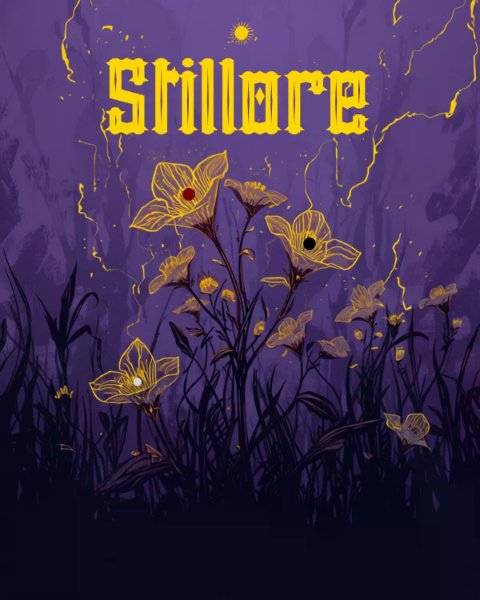
After a century of war and disasters that the Archipelago of Andimica has chosen to forget, an uneasy peace holds the city of Bayork together. Beneath it, something stirs. Hel Frequency, an energy whose existence science has only begun to name, is bleeding into the world, and the organisations that want to control it are already moving. Lance Klint is eighteen, a caring delivery guy, and a brother searching for a sister who disappeared without a trace. During a failed delivery, he finds himself halfway between his old world and the new reality built by horrors beyond human comprehension and the very madness that is consuming the world.
What makes this worth reading is the scale. 111 chapters, 480,000 words, and the author is translating their own work from another language at 2-3 chapters per day. The story follows Lance through a world where nothing is coincidence, where his sister's disappearance connects to the Hel Frequency bleeding into reality, and where the organizations fighting over that power don't care who gets caught in the crossfire. There's no system, no cultivation, no leveling up. Just a man trying to find his sister in a world that is unraveling. The multiple POV structure means you see the conspiracy from several angles, including from inside the organizations causing it.
If you wanted the multi-POV conspiracy scope of The First Law by Joe Abercrombie, the urban-fantasy-meets-horror tone of The Library at Mount Char by Scott Hawkins, and the "everything is connected" plotting of The City & the City by China Mieville, this is the closest thing on NovelDay. At 32 hours, it's a commitment. But it's the deepest grimdark world on the platform.
2. The Weight of Falling Objects: The Oasis of the Eye
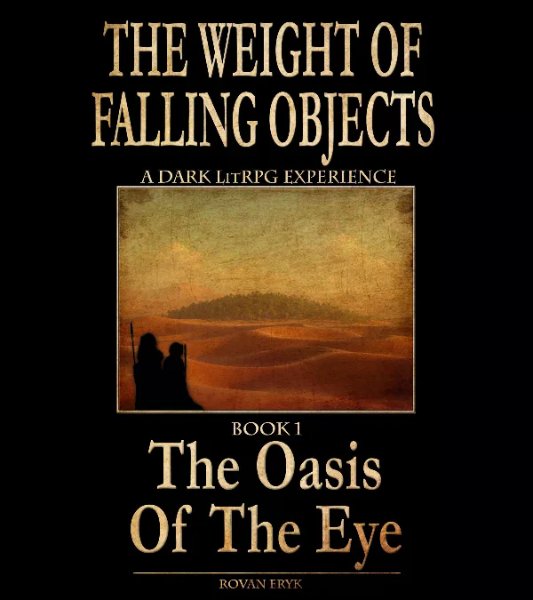
Deep in the inaccessible depths of the desert, several hundred miles east of the dead cities that comprise the arc of the Varkhana ruins, there is another dead city, a place far more ancient. Thousand-year-old maps commissioned by the triumvirate of Kharbel name it Madinat Al-Ramal. The acolytes of Talis name it dar-Uraketh, a most unholy place. It has had other names across the centuries, but the one that has persisted is the Oasis of the Eye.
This is the only completed grimdark novel on the list, and that matters. Grimdark stories rarely end cleanly, and web novels rarely end at all. This one does. 39 chapters, 175,000 words, and a real ending. The protagonist is a weak man dropped into a dead city to serve as a tool for something he doesn't understand, in a world where the power structure has a LitRPG system layered over medieval sword-and-magic combat. The progression is slow at the start, which is the point. He's not a chosen one. He's an acceptable tool, the only one available, and the story is about what happens when a tool starts thinking for itself in a place that was supposed to be dead.
If you liked the way The Red Queen's War by Mark Lawrence drops an unwilling protagonist into a harsh desert world with ancient powers, this hits the same notes but adds a LitRPG system and a completion guarantee. Read it if you want grimdark with a real ending.
3. Rise of a Champion
Fifteen-year-old orphan Lucille Domitian is meat for the machine. In the brutal Praevecti Academy, she bleeds through six years of savage training, rival knives at her back, and instructors who'd rather bury her than break her. Only her bond with Cain Aurellius keeps her human. The system doesn't just test her; it tries to erase her. She survives anyway.
What makes this different from other academy novels is that the academy is the villain, not the setting. Most battle-academy stories are about passing tests and beating rivals. This one is about surviving an institution that is actively trying to destroy you. Lucille ages from fifteen to twenty-one across the story, and the age progression means you watch the academy grind her down and reshape her. The question isn't whether she'll graduate. It's whether the person who graduates will still be Lucille.
If you liked the brutal academy survival of Red Rising by Pierce Brown, the age progression of The Name of the Wind by Patrick Rothfuss, and the "institution as enemy" framing of The Magicians by Lev Grossman, this combines all three with a female protagonist and a darker tone. 57 chapters, 7 hours, ongoing.
4. The Spartan of Invicta
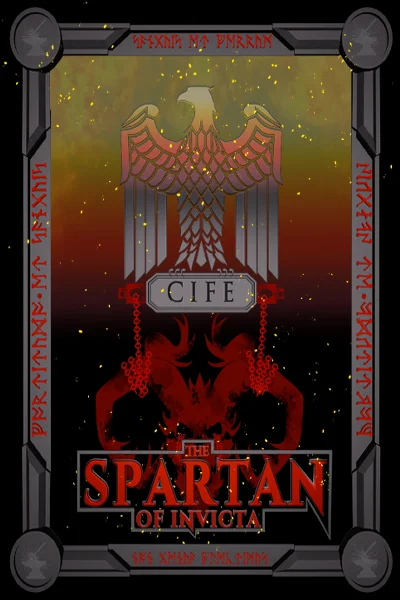
The Empire of Invicta does not run on mercy. It runs on Houses, Board-chambers, forged gods in warplate, and the living weapons called Vardengard, engineered killers bound by code, collar, and creed. At the empire's exposed center stands Spartan: not a mascot, not a pet legend, but a remote war-architecture in a woman's shape. Whoever holds her holds more than a sword. Whoever fails her holds a grave.
The core of this novel is the relationship between Magnus and Spartan. She's a weapon that thinks. He's the general who must decide whether holding Invicta means holding her, or surviving what she becomes when the leash runs short. Every triumph carries a political cost. Every method that works writes a rumor in blood. The Vardengard concept, engineered killers bound by code and collar, is the kind of magic system that makes grimdark work. Power isn't a gift. It's manufactured, controlled, and weaponized, and the people holding the leash are as trapped as the weapon.
If you liked the military grimdark of The Black Company by Glen Cook, the political knives of A Game of Thrones by George R.R. Martin, and the living-weapon concept of Berserk by Kentaro Miura, this is the closest match on NovelDay. 79 chapters, 7 hours, ongoing.
5. The Sky That Lied
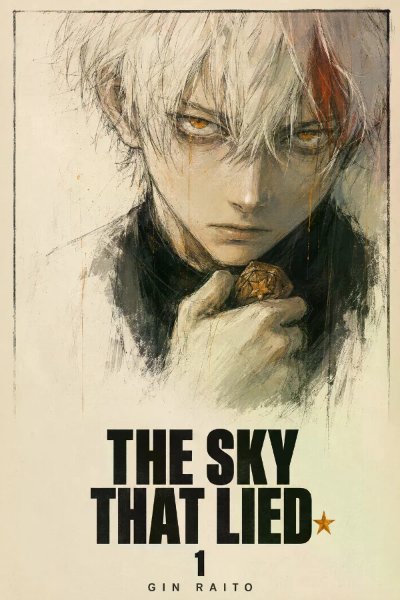
Stars are liars, not because they speak but because the people who record them bury their secrets in blood. Shiro Aratani is a slum boy who carves stars to prove he exists. Kuro is the boy who finds him, gilded, sharp and breaking under a weight he will not name. Valeria is the soldier, who refuses to let either boy be erased. When their lives collide, a forbidden pattern forms, one the powerful will kill to keep hidden.
This is the most emotionally driven grimdark on the list. The three protagonists, a slum boy, a gilded boy, and a soldier, form a found family in a world that is trying to erase all three of them. The Academy setting is where the conspiracy unfolds, but the real story is about what these three people mean to each other and what they're willing to do to protect that. The gods and goddesses are present, but they're not the threat. The threat is the people who recorded the stars and buried the truth. The multiple POV structure lets you see each boy's damage from the outside, which makes the found family bond hit harder.
If you liked the found-family dynamics of Six of Crows by Leigh Bardugo, the academy conspiracy of The Magicians by Lev Grossman, and the "the truth is buried" plotting of The Fifth Season by N.K. Jemisin, this is your next read. 30 chapters, 5 hours, ongoing. Updates Tuesdays and Fridays.
6. This Is How I Lived [A Post-Apocalyptic Diary]
![This Is How I Lived [A Post-Apocalyptic Diary]](https://novelday.net/api/novels/14753/image/1784375449)
The sky keeps bleeding. The undead roam the streets mumbling to themselves. That's not even the worse part of the apocalypse. There's Lindsay.
The description is short because the novel is a diary, and the diary's voice is the whole point. The narrator is a woman surviving a zombie apocalypse, writing in short entries, and the tone is what makes this special. It's grimdark with a comedic undertone. The narrator is funny, but the humor doesn't undercut the horror. It makes it worse. You're laughing at a joke and then the next entry is about someone dying. The short chapters, 67 of them in 53,000 words, mean each entry is a quick punch. You can read the whole thing in an afternoon, and the diary format means you're inside the narrator's head the entire time.
This is also a completed novel, which is rare for web fiction and even rarer for grimdark. The author officially publishes on Royal Road, Wattpad, and NovelDay. If you liked the diary format of World War Z by Max Brooks, the dark humor of The Road by Cormac McCarthy (yes, it's there, buried under the bleakness), and the zombie survival of Feed by Mira Grant, this is a quick, complete, character-driven read.
7. Project:Psychic
Life happens all at once. Then it ends. And it begins anew. Liam, only a student in high school, finds himself falling deep into a world he never knew existed, with abilities he'll have no choice but to quickly learn in order to stop the coming threat. Ghosts, Spirits, Ghouls, and things even beyond that all converge to reshape his life forever. What does it mean to fight for a world that should have already ended?
What makes this grimdark rather than just urban fantasy is the cost. Liam isn't a chosen one who gets cool powers and saves the day. He's an introverted kid with past trauma who is forced into a fight he didn't ask for, and the fight changes him. The multiple protagonists and multiple POVs mean you see the supernatural threat from several angles, including from people who have been in this world longer than Liam and are already damaged by it. The gore is present but not gratuitous, and the author notes there's no smut. The focus is on the psychological cost of fighting things that shouldn't exist.
If you liked the urban supernatural of The Dresden Files by Jim Butcher but wanted it darker and more psychological, or the "kid forced into a hidden war" structure of Bleach but with psychic powers instead of soul reapers, this is a solid 3-hour read. Updates weekly.
8. The Last Blood
Human life has come to a halt; the gods have made their decision, and the end of humanity has arrived. Yet hope has struck the first blow: the greatest heroes of our history will enter the arena to battle the gods. How long will we survive?
This is the most concentrated grimdark on the list. Six chapters, 44,000 words, which means each chapter averages over 7,000 words. The premise is simple and brutal: humanity is ending, the gods decided it, and the only response is to send our greatest heroes into a tournament to fight them. This isn't a story about winning. It's a story about how long you can delay the inevitable. The tournament structure means every chapter is a fight, and the 18+ content warning means the violence is explicit and extreme. The mythological framework gives the fights weight. These aren't random brawls. They're humanity's last stand against beings who have already decided we're done.
If you liked the gods-vs-mortals confrontation of American Gods by Neil Gaiman, the tournament structure of Yu Yu Hakusho by Yoshihiro Togashi, and the explicit violence of The First Law by Joe Abercrombie, this is a short, intense, mythological grimdark. Six chapters won't take long, but they'll stay with you.
9. Timeless Empress
In the chaos of the abyss between worlds, Anja Kyrov followed her desire. She reached out and stole Time from a Regressor. By interfering with his plan, Anja seized a SoulRune she had no right to claim. Now, she wields a power that is slowly consuming her from within, acting as a beacon for everything that wants her dead.
What makes this grimdark is the cost of the power. Anja stole something she shouldn't have, and the novel doesn't let her off the hook for it. The SoulRune is eating her alive. Every time she uses it, she gets closer to losing herself. And the people hunting her aren't generic villains. The Regressor knows her future because he's lived it. The Reincarnated Evil has been planning this across lifetimes. The antagonists are intelligent, which means Anja can't brute-force her way out. She has to outplay them with a power that is killing her. The time-loop mechanic, return by death, means failure isn't permanent, but the cost of each loop is real.
If you liked the time-loop tension of Re:Zero by Tappei Nagatsuki, the system-grimdark of The Wandering Inn by pirateaba, and the "thief steals something dangerous" premise of Six of Crows by Leigh Bardugo, this combines all three. Book 1 is completed at over 140,000 words. Also on Royal Road.
10. Godfated
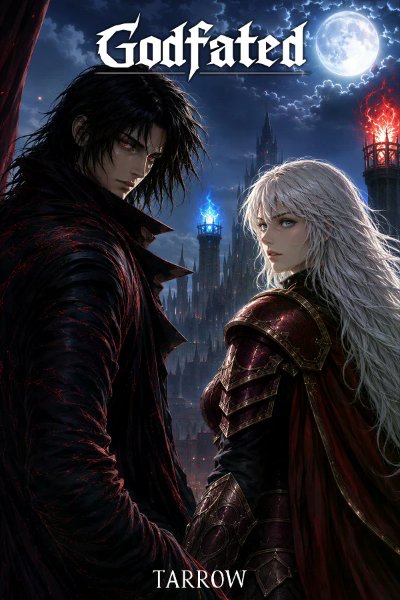
The God of Gods lost everything, even his own name. His last and only memory is of his betrayal, everything else scattered, his unrivalled gifts stolen by a scar. He awakes from his sealing thousands of years later by a mortal girl named Snow, who gives him his name, Death, and mistakenly ties their souls and fates into an unbreakable bond. With no powers, no memories, and not one clue of who he is, he must start from nothing.
The grimdark hook is in the details. This isn't a standard "god falls to mortal and rebuilds" story. The bond with Snow is the catch. She saved him, named him, and accidentally bound their souls together. If she dies, he dies. So the God of Gods, who wants to reclaim his throne and kill his enemies, is now dependent on a mortal girl he can't let die. That dependency is the grimdark element. He's not a benevolent protagonist. He wants revenge, conquest, and power. But he can't get any of it without keeping Snow alive, and Snow is mortal. The progression from zero to god is the structure, but the emotional core is the tension between his ambition and his dependency on the girl who saved him.
If you liked the god-to-mortal reversal of The Hundred Thousand Kingdoms by N.K. Jemisin, the soul-bond dependency of The Sharing Knife by Lois McMaster Bujold, and the "reclaim stolen power" progression of Cradle by Will Wight, this is your next read. 100+ chapters available on Royal Road, with 15 currently posted on NovelDay. Adult content.
How to Choose Your Next Grimdark Read
With 10 novels covering the full range of grimdark, here's how to pick your next read:
You want the longest binge: Stillore: Shard and Canvas is 32 hours of reading, 111 chapters, 480,000 words. It's the most developed grimdark world on NovelDay.
You want a completed story: The Weight of Falling Objects is marked as Complete, 12 hours with a real ending. This Is How I Lived is also Complete, 3.5 hours with a real ending.
You want academy grimdark: Rise of a Champion is 7 hours of brutal battle-academy survival. The Sky That Lied is 5 hours of academy-set character-driven grimdark.
You want military grimdark: The Spartan of Invicta is 7 hours of empire-driven militaristic grimdark with living weapons and forged gods.
You want apocalyptic grimdark: This Is How I Lived is 3.5 hours of zombie-apocalypse diary. The Last Blood is 3 hours of gods-vs-humanity tournament.
You want urban grimdark: Project:Psychic is 3 hours of psychic-powers urban grimdark with ghosts and ghouls.
You want system/LitRPG grimdark: Timeless Empress is 2.5 hours of isekai system grimdark with a power that consumes its user.
You want god-to-mortal grimdark: Godfated is 2.5 hours of a fallen god rebuilding from nothing.
You want a quick entry point: Timeless Empress is 2.5 hours, the shortest read on the list, with a time-stealing thief and a power that consumes its user. Godfated is also 2.5 hours, a fallen god rebuilding from nothing.
Where to Read Grimdark Fantasy Online Free
All 10 novels above are free to read on NovelDay with no paywalls. But NovelDay isn't the only platform for free grimdark web novels. Here's a quick guide:
- NovelDay. All the novels listed above. Free, no paywalls. Browse the Grimdark tag for more.
- Royal Road. The largest English-language web fiction platform. Free to read. Has a significant grimdark audience. See my webnovel sites guide for a full comparison.
- Wattpad. Free with ads. Good for YA grimdark and darker romance.
- AO3. Free, no ads. Best for grimdark fan fiction.
- Scribble Hub. Free, permissive. Good for unconventional grimdark that doesn't fit elsewhere.
For a full comparison of all webnovel platforms, see my guide to the best webnovel sites.
More Fantasy Recommendations
If you've read through this list and want more, here are my other guides that overlap with grimdark:
- 10 Best Psychological Horror Novels to Read in 2026. Psychological horror overlaps with grimdark when the darkness is internal. Several novels listed above appear in both posts.
- 7 Best Horror Books to Read Free Online. Horror is the atmospheric cousin of grimdark. If the gore and violence of grimdark hooked you, this guide covers pure horror.
- 7 Best Dark Romance Books to Read Free Online. Dark romance shares grimdark's moral ambiguity but focuses on relationships rather than worldbuilding.
- Best Fantasy Romance Books to Read Free Online. Fantasy romance and grimdark overlap in dark fantasy romance. Several novels appear in both lists.
- Best High Fantasy Books to Read Free Online. High fantasy is the traditional counterpart to grimdark. If you want clearer heroes and cleaner morality, this is the guide.
- What is Progression Fantasy? A Complete Guide. Progression fantasy overlaps with grimdark when the power has a cost. Several grimdark novels use progression structures.
- What is LitRPG? A Complete Guide. LitRPG overlaps with grimdark when the system is brutal. The Weight of Falling Objects and Timeless Empress appear in both lists.
- What is a Light Novel?. The Japanese format that influenced many grimdark web novels.
- 5 Best Dark Academia Books to Read Free Online. Dark academia shares grimdark's institutional corruption. Several novels appear in both lists.
You can also browse the full Grimdark tag and Dark tag on NovelDay for more free web novels. The Gore tag and Tragedy tag are good starting points for finding darker fiction.
And if you're a writer thinking about serializing your own grimdark fantasy, NovelDay is built for exactly that. The grimdark audience is dedicated, engaged, and growing. The platform is free to publish on. The pipeline starts here.
Written by the NovelDay editorial team. Follow more genre guides and book recommendations on The Storyteller's Journal.