The State of Non-LitRPG Web Fiction in 2026: What 147 Serials Actually Look Like

Talk about web fiction long enough and one genre absorbs the whole conversation. Royal Road's charts run on LitRPG and progression fantasy, the biggest serial hits are system-flavored, and it is easy to walk away believing that "web novel" and "guy gets a status screen" are synonyms. That assumption shapes where writers post, what readers bother looking for, and which stories get recommended. It is also wrong, and we can show the receipts.
This post is a data report, not an opinion piece. We pulled the live numbers from every user-authored serial on NovelDay as of October 2026: genre tags, chapter counts, word counts, reading times, update recency, and completion status. The catalog is 147 serials and 8.4 million words, which is small next to Royal Road's hundreds of thousands of titles, but it is a clean dataset in one important respect: nothing on the platform was imported or licensed, so every entry represents an author who chose to publish serialized fiction here.
The Dataset at a Glance
Key numbers, formatted so they are easy to quote or screenshot:
- Serials in catalog: 147
- Total words published: 8,417,995
- Total chapters: 3,304
- Aggregate reading time: 562 hours
- Average serial length: 57,265 words (22 chapters)
- Median serial length: 30,222 words
- Serials updated in last 30 days: 73 (50% of the catalog; 55% of ongoing works)
- Completed serials: 28 (19%)
- Serials over 10 hours of reading: 16
Last updated: October 2026. All figures from NovelDay's public catalog data.
The Headline Finding: LitRPG Is a Minority Taste Here
On the biggest English-language web fiction platforms, LitRPG and its progression-fantasy cousins dominate the front pages so thoroughly that other genres struggle for visibility. In our catalog the picture still inverts, though less completely than it did a quarter ago: 18 of 147 serials (12%) carry a LitRPG tag and 25 use any kind of System element, while cultivation fiction has grown to nine representatives. LitRPG was our fastest-growing tag this period, which is worth saying plainly: the genre's gravity reaches even here. But at 12% it remains a minority flavor rather than the whole meal, and it is still nowhere close to the front-page monopoly it holds elsewhere.
What fills the space instead is the missing middle of web fiction: genres that have enormous readerships in traditional publishing but get crowded out on platforms built around game mechanics.
Fifteen genres by share of catalog, largest to smallest:
- Fantasy: 92 serials (63%)
- Adventure: 77 serials (52%)
- Action: 74 serials (50%)
- Magic: 70 serials (48%)
- Psychological: 51 serials (35%)
- Mystery: 46 serials (31%)
- Supernatural: 41 serials (28%)
- Romance: 35 serials (24%)
- Slice of Life: 34 serials (23%)
- Horror: 33 serials (22%)
- Drama: 33 serials (22%)
- Comedy: 33 serials (22%)
- Sci-Fi: 31 serials (21%)
- Isekai: 24 serials (16%)
- LitRPG: 18 serials (12%)
Two of these deserve a second look. Psychological is the fifth most common tag in the catalog at 35%, and Mystery follows at 31%. On a LitRPG-dominated platform both would be niche; here they are core inventory, and the pairing data shows why: after the obvious fantasy blends, the deepest combination in the catalog is fantasy + mystery (30 serials), with mystery + psychological close behind at 28, a blend that barely exists in the system-fiction mainstream at all.
What the Missing Middle Looks Like in Practice
Genre shares are abstract until you see the books. Four serials that exemplify what a non-LitRPG catalog actually contains:
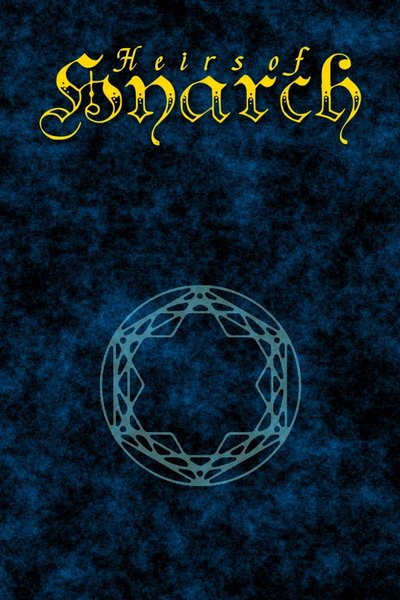
Heirs of Hyarch by ProfessorMitchell — classic epic fantasy
20.4-hour read · 153 chapters
I Swear I Saw You Die by Harmonica Writes — horror with a heartbeat
13.2-hour read · 94 chapters · Volume 2 complete
![I Swear I Saw You Die [Vol 2 Complete]](https://novelday.net/api/novels/14777/image/1789223828)
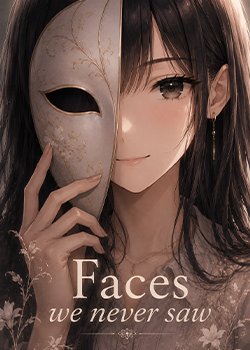
Faces we never saw by cjohngt — literary ensemble drama
11-hour read · 38 chapters
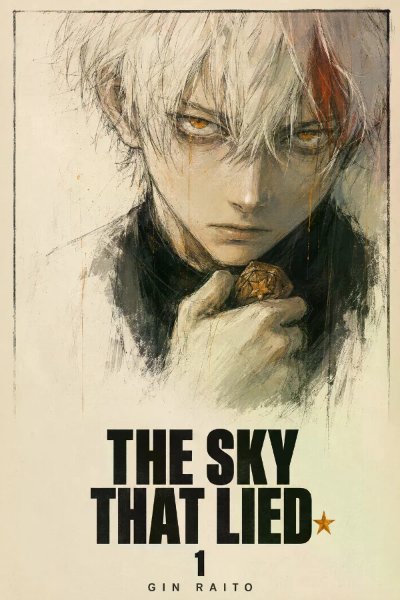
The Sky That Lied by Gin Raito — the mystery-psychological hybrid
9.7-hour read · 42 chapters
What the Shape of a Serial Looks Like
The length distribution tells a story about what serialized fiction actually is, versus what people assume. The median NovelDay serial is about 30,000 words, roughly a novella, and the average is pulled up to 57,000 by a long tail of epics: 16 serials exceed 10 hours of reading time, led by five works over 100 chapters. In other words, the "typical" web serial is not a million-word monolith. It is a focused book's worth of story that may or may not keep growing.
That median matters for readers who assume serials are a commitment trap. A 30,000-word story is an afternoon binge, not a lifestyle. And for writers, the update pattern underneath the numbers is the more useful signal: half the catalog published new content within the last 30 days, and that share rises to 55% once completed works are set aside. Abandoned serials are a real phenomenon in web fiction, but the majority of active authors here are still writing.
The chapter math reinforces the same point. The catalog holds 3,304 chapters across 147 serials, roughly 22 chapters per work, and at the median reading time the whole catalog sums to about 562 hours of material. That is enough to read continuously for 23 days, or roughly a year and a half of one serial chapter per evening. The aggregate number is a quiet rebuttal to the idea that a young platform has nothing to read; the constraint is discovery, not volume.
Completion is the honest counterweight: only 28 serials (19%) are marked complete. That is normal for the format and worth saying plainly. Serialized fiction produces more ongoing works than finished ones almost by definition, because chapters publish as they are written rather than after the fact.
Why This Distribution Exists
Genre distributions are never accidents. Royal Road built its identity on LitRPG early, so LitRPG readers went there, LitRPG writers followed the readers, and the feedback loop hardened into a wall. Every platform does the same thing to itself in miniature: the genres that get seen are the genres that get written.
There is a subtler signal in the pairings. When two genres co-occur on the same novel, they tell you what blend a platform's authors are actually producing. After the obvious adventure + fantasy (63 serials) and fantasy + magic (61), the next cluster is fantasy + mystery (30), with mystery + psychological (28) and action + mystery (28) close behind, followed by fantasy + psychological (27). Read as a whole, the catalog's second tier is not "lesser LitRPG" at all; it is investigation-driven fiction wearing fantasy, horror, and urban clothing. That is a coherent readership profile, and it is the profile of readers whose needs are structurally ignored by platforms built around stat sheets.
The absence data is equally informative. Cultivation fiction, one of the pillars of translated web fiction, appears on just nine serials even after a recent growth spurt. Villainess fiction, which dominates web-novel recommendation threads elsewhere, appears on zero under that label even though transmigration-into-novel plots exist here under other tags. These are not failures of the catalog; they are the shape of a platform whose author base came from outside the genre-fiction pipeline, writing the kinds of stories they wanted to tell rather than the kinds the charts reward. The genres that show up here are the ones orphaned elsewhere.
The interesting implication of our numbers is that a platform without that loop develops a different ecology. Mystery and psychological fiction dominate here partly because authors who write them have fewer places to go. If you are a serial writer working in mystery, literary horror, romance, or drama, the biggest web fiction platforms were never built for you, which is a frustration we wrote about in where to post your web novel if you don't write LitRPG. The catalog data is that frustration, measured.
It is also worth being explicit about what the 12% LitRPG figure does and does not mean. It does not mean LitRPG readers are unwelcome or that the genre is weak; several of the catalog's longest serials are system-driven, and the tag has been growing faster than the catalog as a whole. What it means is that even here, on a platform with no status-screen bias baked into discovery, LitRPG attracts authors. But at one serial in eight it is a strong minority, not the monoculture it becomes where charts reward it. The web-fiction audience for mysteries, horror, and romance did not disappear because a chart said otherwise. It just went undercounted.
For readers, the same numbers cut the other way: a platform where nearly nine in ten serials are not LitRPG is effectively a specialized bookstore for everyone who bounced off the mainstream. The library shelves for mystery, horror, romance, and drama are stocked precisely because the competition is not.
What This Means If You Write
The practical takeaway for authors is about positioning. If you write LitRPG or progression fantasy, you are competing on platforms where your genre is the majority of the catalog and the front page is a knife fight. If you write anything else, you have the opposite problem and the opposite opportunity: the readers for your work exist, they are underserved on the dominant platforms, and they concentrate where non-LitRPG fiction is actually welcome.
On NovelDay specifically, the structure is built to keep it that way: authors keep full rights to their work and 100% of direct reader support, and the platform does not gate chapters behind paywalls. That is the pitch at novelday.net/write, and the catalog data above is what it produces in practice. For a broader comparison of the options, we broke down the trade-offs in Royal Road vs Scribble Hub and our LitRPG guide explains exactly what the dominant genre is and why it eats platforms.
What Readers Should Take From This
If you read web fiction and you do not care about LitRPG, the prevailing assumption is that the medium is not for you. The data here says that assumption is a platform artifact, not a property of the form. Serialized fiction can carry detective stories, psychological horror, ensemble epics, crime fiction, and romance just as naturally as it carries status screens; it just needs a platform that did not self-select into one genre first.
The practical version of that insight is boring but real: if you have ever typed "web novels that aren't LitRPG" into a search box and come up empty, the problem was never supply. It was distribution. A library where 88% of the catalog is not LitRPG is a different browsing experience than one where the front page is ten flavors of dungeon crawler, and the difference compounds as the catalog grows. For the industry-wide angle, our genre-distribution report tracks what web-fiction authors are actually writing this year across platforms.
Methodology Notes
The figures above were computed on October 14, 2026 from NovelDay's public novels. Genre shares are counted per serial against the author's own tags, so a novel tagged fantasy, adventure, and magic contributes one count to each. Reading-time figures derive from each serial's measured word count. "Updated in last 30 days" uses the last content-update timestamp rather than the record's generic modification date. The dataset will drift as the catalog grows, and that is the point of publishing it: this is a baseline to measure against in the next quarterly update, and the numbers that matter most are the ones that change.
How to Read the Distribution Fairly
One last interpretive note before the caveats. Fantasy's 63% share looks dominant until you remember that on most serial platforms fantasy is so thoroughly fused with LitRPG that the tags are nearly synonymous. Here they are not: the largest fantasy block in this catalog is mystery-adjacent or classic epic, not system-driven. The genre label survived; what changed is what it means inside it. That distinction, same shelf, different contents, is the whole report in miniature.
Caveats Worth Stating
Honest data work means stating the limits. This catalog is 147 serials, not a census of web fiction; it tells you what lives on NovelDay, not what the whole market looks like. Genre tags are author-applied, so "mystery" here means "the author says the book contains mystery," not a librarian's ruling. And a platform's genre mix reflects its audience and onboarding as much as its values, so these numbers will drift as the catalog grows. We will update this report quarterly; the table above carries a date for exactly that reason.
What the Data Raised for Readers
How much web fiction is LitRPG, really? It depends entirely on where you look. On the largest platforms it is the plurality or majority of visible titles. In our catalog it is 12% and climbing, which illustrates the real lesson: "web fiction" is not a genre with a fixed mix, it is a medium whose contents change with the platform. Any statistic about web novels should say which platform it describes.
What is the average length of a web serial? On NovelDay the median sits around 30,000 words and the average at 57,000, roughly novella-to-short-novel range. The long tail is real though: five serials run over 100 chapters and sixteen pass 10 hours of reading, and they are the works dragging the average upward.
What are the most popular genres in web novels? Platform-dependent again, but in our catalog the leaders are fantasy, adventure, action, magic, psychological, and mystery. The striking result is how high mystery and psychological fiction rank relative to their visibility on LitRPG-dominated platforms; there is a whole readership for them that the mainstream sites underserve.
Do most web serials ever finish? Most serial fiction is ongoing by nature, and our catalog is typical: 28 of 147 serials are complete, and 55% of ongoing works published new content in the last 30 days. "Ongoing" is the format's natural state, not a warning sign, and an actively updating serial is a healthier sign than a finished abandoned one. The number that matters is whether the author is still updating, not whether the work has an ending yet.
Is it worth writing web fiction if I do not write LitRPG? The data says yes, arguably more than it ever has been. Mystery, psychological, romance, horror, and drama serials all have proven audiences and thin competition on the biggest platforms. The constraint is finding the platform where that audience lives, which is exactly the problem NovelDay was built to solve.
How often will this report update? Quarterly. Genre shares will shift as the catalog grows, and a stale dataset is worse than none, so the "last updated" note above the tables is part of the methodology rather than decoration.