What is Found Family? And Best Books to Read Free Online
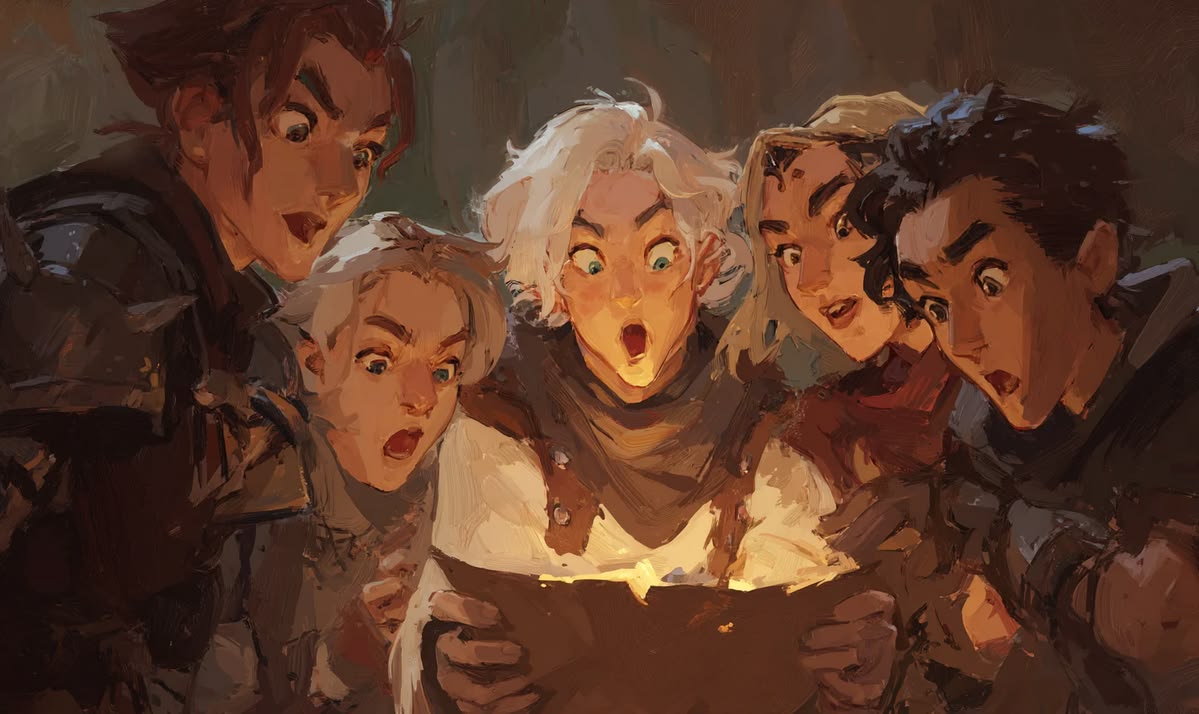
You already know this trope. You've watched it in Guardians of the Galaxy, read it in Harry Potter, felt it in Naruto. A group of people with nothing in common, no shared blood, no obligation to each other, end up caring more about each other than the families they were born into. That's found family, and it's one of the most emotionally powerful tropes in fiction. It works in every genre. Fantasy, science fiction, romance, horror, slice of life. Wherever characters are thrown together and forced to rely on each other, found family can grow.
This post explains what the found family trope is, where it comes from, why readers respond to it so strongly, and how it differs from related tropes like chosen family and biological family. Then I'll recommend 5 free web novels you can read right now on NovelDay, all tagged Found Family, ranging from a 2-hour read to an 8-hour binge. No paywalls, no premium tiers, no "wait 23 hours for the next chapter" timers. Just free fiction, updated regularly by independent authors.
If you've read my slow burn romance guide or my grimdark guide, this post covers a different dimension. Those focused on pacing and tone. This one focuses on the emotional structure that makes a story feel like home.
What Is the Found Family Trope?
Found family is a narrative trope where characters form deep, familial bonds with people they aren't related to by blood. Instead of inheriting a family, they build one. The connections come from shared experience, mutual trust, and chosen commitment, not from genetics or marriage.
The trope gets its name from the idea that the family was "found" rather than given. A character who's lost their biological family, or never had a functional one, discovers a sense of belonging with people who choose to be there for them. The choice is what makes it different. Biological family is an accident of birth. Found family is a decision.
The key characteristics:
- Absent or broken biological family: Most found family stories start with a gap. The protagonist's parents are dead, absent, abusive, or simply unable to understand them. The found family fills a space that blood relatives couldn't or wouldn't fill.
- Shared adversity: The bonds form through hardship. Characters who meet in ordinary circumstances might become friends. Characters who survive something together become family. The intensity of the shared experience creates a level of trust that ordinary friendship doesn't reach.
- Chosen commitment: The relationships are voluntary. No one is obligated to stay. That's what makes the commitment meaningful. When a character chooses to protect someone they aren't related to, the choice carries more weight than duty would.
- Complementary differences: Found families are usually made up of people who wouldn't naturally be friends. A noble and a commoner. A soldier and a scholar. An immortal and a child. The differences create friction, but they also make the group stronger than any individual.
- Unconditional acceptance: The core fantasy of found family is being accepted for who you are, not who you're supposed to be. Characters who were outcasts in their original families find that their strangeness is valued, not punished, in their chosen family.
There's no single formula. Some found families form slowly, over dozens of chapters of growing trust. Others click into place in a single scene of shared danger. What matters is that the bond is earned, not assumed.
Found Family vs Biological Family vs Chosen Family
The terms "found family" and "chosen family" are often used interchangeably, and for most purposes they mean the same thing. But there's a subtle distinction worth noting.
Biological family is the family you're born into. It's the default. You don't choose it. In fiction, biological family is often the source of conflict: parents who don't understand their child, siblings who are rivals, dynasties that demand obedience. The biological family represents obligation.
Chosen family is a broader term that includes any non-biological family unit people deliberately create. It's used in real-life contexts, particularly in LGBTQ+ communities, to describe networks of friends and partners who function as family. In fiction, chosen family can include adopted children, stepfamilies, and intentional communities.
Found family is a specific type of chosen family. The word "found" implies discovery. The characters didn't set out to build a family. They stumbled into each other, and the family emerged from the circumstances. A group of strangers trapped in the same situation slowly realize they've become each other's people. That's found family. The finding is the point.
In practice, most readers and writers use the terms interchangeably, and most found family stories include elements of both. The distinction matters more for writers trying to execute the trope than for readers trying to find books that feature it.
Why Readers Love Found Family Stories
Found family resonates because it speaks to a universal experience: the feeling that the people who understand you best aren't always the people who raised you. Anyone who has ever felt like an outsider in their own family, or who has found their real community among friends, recognizes the emotional truth of this trope.
Here's what found family readers are actually looking for:
The belonging. The core fantasy is simple. A character who has nowhere to go finds a place where they fit. Not because they changed to fit in, but because the group accepts them as they are. This is emotionally powerful in a way that transcends genre. A found family scene in a grimdark fantasy and a found family scene in a cozy slice-of-life story can both make readers cry, because the underlying need is the same.
The earned trust. Found family bonds are built, not given. The reader watches the trust develop, chapter by chapter, through small moments of vulnerability and large moments of sacrifice. When a character finally admits "you're my family," it hits harder than a biological family declaration would, because the reader saw the work that went into it.
The contrast. Found families are usually diverse in a way biological families aren't. Different backgrounds, different skills, different temperaments. This creates natural group dynamics that are more interesting than a nuclear family. The noble who learns humility from a street urchin. The immortal who learns to care about mortality from a child. The contrasts generate both humor and emotional depth.
The defiance. There's a rebellious quality to found family. The characters are rejecting the idea that blood is the only valid basis for family. In stories where the biological family is abusive or neglectful, the found family isn't just a comfort. It's an act of resistance. The character is saying: I deserve love, and I'll find it where I can.
Key Found Family Tropes and Variations
Found family isn't a single structure. It shows up in several recognizable patterns, each with its own emotional engine:
Orphans finding each other: The most classic version. Characters who've lost their families meet others in the same situation and form a new unit. This is the Harry Potter model. Harry, orphaned and neglected by his relatives, builds a family with Ron, Hermione, and the Weasleys. The loss creates the gap. The gap creates the need. The need creates the bond.
The reluctant guardian: A character who doesn't want responsibility ends up caring for someone who needs them. The guardian resists at first, then gradually commits. This is the The Last of Us model, and it's one of the most emotionally devastating variations because the guardian's transformation is the whole story. They go from "I don't care" to "I would die for you" and the reader feels every step.
The squad: A group of individuals with complementary skills are forced to work together and become a family through shared missions. This is the Guardians of the Galaxy model. The humor comes from the friction. The emotion comes from the moments when the friction drops and the loyalty shows.
The adopted household: Characters who are formally or informally adopted into an existing household. This can be a literal adoption, a "you live here now" situation, or a slow drift from roommate to family. The domesticity is the point. The story lives in the small moments: meals together, inside jokes, someone remembering how you take your coffee.
Strangers in exile: Characters who are displaced from their original world or society and find family among fellow exiles. The shared displacement is the foundation. They've all lost something, and they understand each other's loss in a way no one else can. This variation is common in portal fantasy and post-apocalyptic fiction.
Most found family novels blend two or three of these. A reluctant guardian story with squad dynamics and an adopted household gives the author multiple layers of relationship to develop, which means the found family can grow organically rather than being declared in a single scene.
5 Best Found Family Books to Read Free Online
The novels below are ordered by reading time, longest first. This puts the most substantial, developed binges at the top. As you scroll down, the time commitment drops, so you can pick an entry point that matches your schedule. Whether you want an 8-hour epic or a 2-hour read, there's a found family story here for you.
Every novel is free to read on NovelDay with no paywalls. Click any title to start reading immediately.
1. I Swear I Saw You Die [Vol 1 Complete]
![I Swear I Saw You Die [Vol 2 Complete]](https://novelday.net/api/novels/14777/image/1787397452)
Tim is immortal. Or he was. He's lost the immortality but kept the healing and regeneration, which still makes him nearly impossible to kill. He spends his days split between wasting his undying life and trying to be a decent father to his daughter, Mia. Then an encounter with an assassin shatters his routine and gives him a chance to give Mia a normal life, in exchange for his own.
The found family here isn't a group of friends. It's a father and daughter, but the twist is that Tim isn't Mia's biological father in any conventional sense. He's an immortal who chose to care for a child in a world that doesn't accommodate either of them. The story asks what happens when a being who has lived too long decides that one small human life matters more than his own. That's a found family premise at its most intimate: two people, choosing each other against a world that gives them no reason to.
This is the #1 weekly ranked novel on NovelDay as of writing this. It's also the longest read on this list at 8 hours and 20 minutes, with 59 chapters and counting. Volume 1 is complete, so you can binge a full arc without waiting for updates. If you've read To Your Eternity and wanted something with a darker edge and a father-daughter dynamic instead of a wandering immortal, this is it.
2. The Sky That Lied
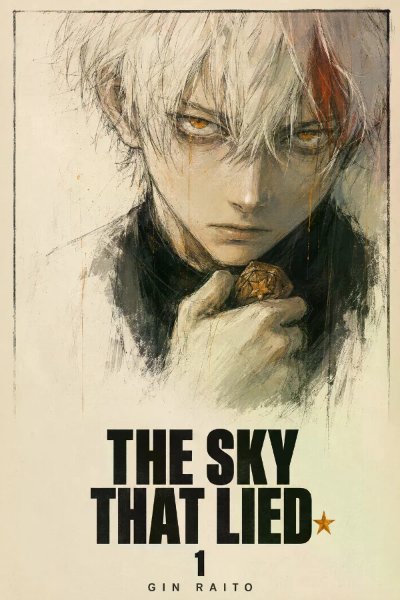
Shiro Aratani is a slum boy who carves stars to prove he exists. Kuro is the gilded boy who finds him, sharp and breaking under a weight he won't name. Valeria is the soldier who refuses to let either boy be erased. When their lives collide at an Academy that whispers about forbidden patterns, the three of them form a bond that none of their original worlds would allow.
This is a grimdark take on found family. The Academy setting creates the pressure cooker: three people from completely different social strata, thrown together in an institution that's designed to sort people into hierarchies. The found family emerges as an act of defiance against that sorting. Shiro has nothing. Kuro has everything and it's crushing him. Valeria has the training to protect them and the institutional constraints that make it dangerous to try. The trio works because each person has something the others need, and none of it comes from blood.
What sets this apart from the other novels on this list is the prose. Gin Raito writes with a literary precision that you don't often find in web fiction. The opening, about stars being liars, sets a tone that's closer to cathartic literary fantasy than to standard Academy progression. At 5 hours and 30 chapters, it's a substantial read that rewards attention. If you liked the dark Academy atmosphere of my dark academia guide but wanted more emotional depth, this is your next read.
3. A Measure of Magic
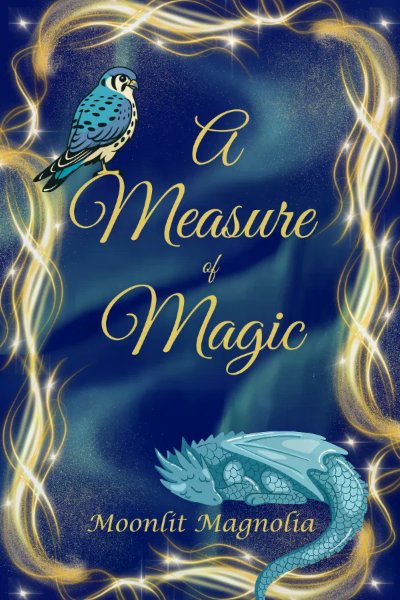
Elliana is the kingdom of Bryolan's most powerful mage and its newest baroness. Paige is a commoner with barely any magic who insists on being a healer anyway. They're not related by blood, but they're sisters in every way that matters. When a curse starts spreading through Bryolan, infecting everyone from commoners to the king, the two of them have to figure out who's behind it before the kingdom falls apart.
The found family here is the most straightforward on the list. Elliana and Paige are explicitly tagged as siblings not related by blood, and their relationship is the emotional core of the story. Elliana has the power and the title. Paige has the stubbornness and the compassion. Together they cover each other's blind spots. The dynamic reads like two people who chose to be sisters because the world gave them no one else they could trust completely.
This is the lightest novel on the list. No grimdark tone, no cosmic horror, no post-apocalyptic despair. It's high fantasy with a mystery plot, a friendship-that-became-family at its center, and a kingdom to save. If you've read The House in the Cerulean Sea by TJ Klune and wanted something with more plot and less coziness, this hits a similar emotional register with higher stakes. At 3 hours and 18 minutes with 22 chapters, it's a weekend read.
4. Witches of Mellgrah
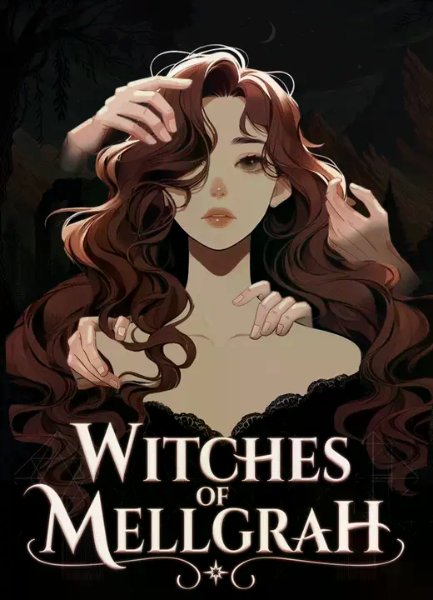
Maya is sixteen and has already lost everything. After a string of terrible losses, she's left in the care of a young stepmother who can't possibly fill the gap. Then she reaches for lightning, literally, and an invitation arrives to Mellgrah: a world where witches fled persecution long ago, where magic finds those who have suffered, and where you can never go home once you've accepted.
This is the most traditional found family setup on the list. An orphaned girl arrives at a school in a magical world and finds her people among the outcasts. The Academy setting, the roommates, the supernatural creatures lurking in the background. It's a structure that works because it mirrors the experience of going to school or college and finding your first real community. Maya doesn't just find friends. She finds a world where her suffering is the qualification for belonging, not a disqualification from it.
What makes this different from the others is the tone. It's tagged Dark and Horror alongside Found Family and Academy. This isn't a cozy magical school story. There are vampires, ghosts, and gore. The found family forms in a place that's genuinely dangerous, which makes the bonds more urgent. At 2 hours and 49 minutes with 15 chapters, it's the #18 weekly ranked novel with 335 views. If you wanted Harry Potter with teeth, this is the closest thing on the list.
5. Empire of Bound Souls
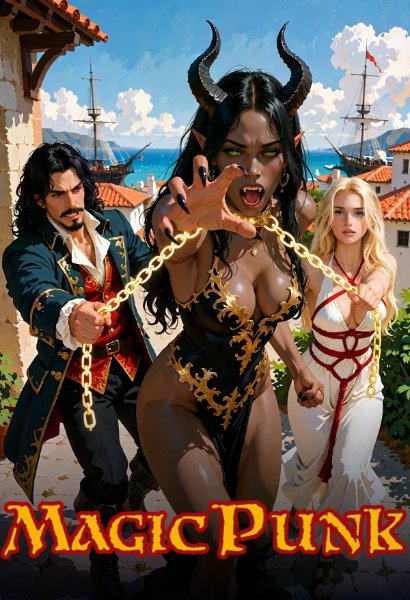
Sophie was raised to be sold. A dowry on legs, bred for whichever Great House would pay her family's price. She never expected freedom to come in the form of a collar. Two people hold her leash now: Jean, the uncle she was never allowed to want, and Kali, the Destroyer of Worlds, who is not up for sharing. For the first time in her life, Sophie belongs to no one but the two she chose.
This is the darkest take on found family on the list, and it comes with a content warning. The novel is tagged R-18, Mature, and Smut. It features incest, harem, and power-imbalance dynamics that are intentionally disturbing. The found family aspect is twisted: Sophie, Jean, and Kali form a unit, but it's a unit built from captivity, trauma, and forbidden desire, not from wholesome friendship. The trope is present, but it's been through a grimdark filter.
I include it because it represents the extreme end of what found family can look like in fiction. The core is still there: people who were failed by their original families building a new unit with people they choose. But the circumstances are so dark that the "choice" is complicated. At 2 hours and 1 minute with 33 chapters, it's the shortest read on the list. If you read my dark romance guide and wanted something even more intense, this is it. The author cites Kushiel's Dart and A Court of Thorns and Roses as comparisons, which gives you a sense of the register.
Where to Read More Found Family Fiction
The 5 novels above are every novel currently tagged Found Family on NovelDay that has at least 1 hour of reading content. New novels are added regularly as authors join the platform, so the tag page will have more over time.
If you want to explore more fiction on NovelDay, browse the full catalog at Browse or check specific genres. Found family shows up across genres, not just in one category. You'll find it in Fantasy, Romance, Adventure, and Psychological fiction alike.
For related reading guides:
- What is Slow Burn Romance? And Best Books to Read Free Online — romance where the relationship builds gradually, often alongside found family dynamics
- What is Grimdark? Definition, Meaning, and Best Books — dark fantasy where found family often forms in the bleakest circumstances
- 7 Best Dark Romance Books to Read Free Online — romance with morally gray protagonists and power imbalances, where found family takes darker forms
- 5 Best Dark Academia Books to Read Free Online — academic settings where found family forms among students and mentors
Every novel on NovelDay is free to read. No paywalls, no premium tiers, no "wait or pay" timers. Authors post chapters on their own schedules, and you can follow novels to get notified when new chapters drop. If you're a writer with a found family story of your own, you can publish it on NovelDay for free and keep all rights to your work.