What is an Unreliable Narrator? (And Best Books)
The first time I read an unreliable narrator, I did not know the term. I just knew that something was wrong. The narrator was telling me what happened, and I was believing them, and then the book pulled the rug out. The version of events I had accepted for 200 pages was not what had actually happened. I went back and re-read the first chapter and found the clues I had missed. That feeling — the moment you realize the person telling you the story has been lying to you, or to themselves, or simply does not have the full picture — is the single most effective trick in fiction. It turns the reader from a passive consumer into a detective.
This guide explains what an unreliable narrator is, the different types, how the technique works, and which free web novels on NovelDay use it most effectively. Every novel on this list has at least 2 hours of reading content, because unreliable narration needs space to build the gap between what the narrator says and what is actually true. A 40-minute story cannot earn that gap. A 15-hour story can make it devastating.
If you have read my psychological horror guide, you already know that unreliable narration is the engine that drives the best psychological fiction. This guide goes deeper into the technique itself and adds novels that were not on that list.
What is an Unreliable Narrator?
An unreliable narrator is a first-person narrator whose account of events cannot be trusted. The narrator might be deliberately lying, honestly mistaken, psychologically compromised, or simply lacking the information needed to understand what they are describing. The term was coined by literary critic Wayne C. Booth in his 1961 book The Rhetoric of Fiction, and it has since become one of the most powerful devices in fiction.
The key distinction is between the narrator and the author. The author is always in control. The narrator is a character, and characters have limitations. A reliable narrator reports events as they actually happened. An unreliable narrator reports events as they perceive, remember, or choose to present them, and the gap between perception and reality is where the tension lives.
Reading an unreliable narrator feels different from reading a reliable one. You are not just following the story. You are interrogating the person telling it. You notice when their account contradicts what other characters say. You notice when their emotional reactions do not match the events they are describing. You notice when they skip over something that should have been there. The technique works because reading is an act of trust, and the unreliable narrator exploits that trust until the moment the text reveals you should not have given it.
Types of Unreliable Narrators
Not all unreliable narrators are unreliable in the same way. The literary taxonomy includes several distinct categories, each of which creates a different kind of reading experience.
The Liar
The liar knows the truth and deliberately distorts it. This is the most active form of unreliability: the narrator is consciously manipulating the reader. The liar is often a criminal, a con artist, or a character with something to hide. The pleasure of reading a liar narrator comes from catching them in contradictions and figuring out what they are covering up. The Murder of Roger Ackroyd by Agatha Christie is the classic example, and it remains one of the most controversial uses of the technique in fiction history.
The Self-Deceiver
The self-deceiver is not lying to the reader. They are lying to themselves. This narrator has constructed a version of events that protects their self-image, and they believe their own account. The unreliability comes from the gap between their self-perception and reality, which the reader can see but the narrator cannot. Gone Girl by Gillian Flynn uses this technique through both of its narrators, each of whom has constructed a version of the marriage that flatters their own ego. The self-deceiver is often more unsettling than the liar, because you cannot catch them in a lie. They are telling the truth as they experience it.
The Naif
The naif is unreliable because they lack the knowledge, experience, or cognitive capacity to understand what they are describing. A child narrator is the most common form: the child reports events accurately but interprets them through a framework that misses the adult reality. The Curious Incident of the Dog in the Night-Time by Mark Haddon uses a naif narrator with autism who sees everything clearly but misunderstands the social dynamics driving the adults around him. The naif creates a specific kind of dramatic irony: the reader knows more than the narrator, and the tension comes from waiting for the narrator to catch up.
The Madman
The madman is unreliable because their perception of reality is compromised by mental illness, trauma, or supernatural influence. This narrator may hallucinate, experience time non-linearly, or be unable to distinguish between memory and fantasy. Fight Club by Chuck Palahniuk is the famous example, where the narrator's dissociative identity disorder means he has been reporting events that he could not have experienced the way he claims. The madman narrator is the staple of psychological horror.
The Amnesiac
The amnesiac is unreliable because they cannot remember events clearly. This narrator may have gaps in their memory, may conflate different events, or may be reconstructing their past from fragments that do not fit together cleanly. Before I Go to Sleep by S. J. Watson is built entirely around an amnesiac narrator who resets her memory every time she falls asleep.
Reliable vs Unreliable Narrator: What is the Difference?
A reliable narrator presents events as they actually happened, to the best of their knowledge. An unreliable narrator presents events as they perceive, remember, or choose to present them, with a gap between their account and reality. The difference is not about honesty alone. It is about the relationship between the narrator's account and the truth of the story.
In practice, the line is blurrier than it sounds. Every first-person narrator is somewhat unreliable, because no human being perceives events with perfect accuracy. The question is whether the author wants you to notice the gap. A reliable narrator's limitations are invisible: you accept their account and move on. An unreliable narrator's limitations are the point: the author wants you to notice that something is off, and to read more carefully because of it.
The test is simple: if you could remove the narrator and replace them with an omniscient camera without losing anything, the narrator is reliable. If removing the narrator would change the story, because their account is shaping your understanding of events, the narrator is unreliable.
How to Write an Unreliable Narrator
Writing an unreliable narrator is harder than writing a reliable one, because the author has to maintain two stories simultaneously: the story the narrator is telling, and the story that is actually happening. Here are the core techniques.
Plant contradictions. The narrator should say things that subtly contradict each other, contradict what other characters say, or contradict physical evidence in the story. The contradictions should be small enough to miss on a first reading but obvious in retrospect.
Use limited information. The narrator should not have access to information the reader needs. They can misinterpret what they see, jump to conclusions, or report events out of order. The reader pieces together the truth from what the narrator notices and what they miss.
Show the gap between perception and reaction. The narrator's emotional reactions should sometimes be disproportionate to the events they are describing. If a narrator describes a violent argument calmly but breaks down over a spilled glass of water, the reader starts to wonder what is really going on.
Let other characters be the truth-tellers. Secondary characters can contradict the narrator, express confusion about the narrator's account, or provide information the narrator does not have. The tension between the narrator's version and other characters' versions is what makes the technique work.
Reveal gradually. The unreliability should escalate, not arrive all at once. The reader should feel increasingly uneasy as the narrator's account becomes harder to trust, until the moment of full revelation confirms what they have been suspecting.
7 Free Web Novels With Unreliable Narrators to Read on NovelDay
These are the novels on NovelDay that use unreliable narration most effectively. Every novel on this list has at least 2 hours of reading content, because the technique needs space to build. They are ordered by reading time, longest first. If you want a deep binge, start at the top. If you want something you can finish in an afternoon, work your way down.
1. The Shattering Point
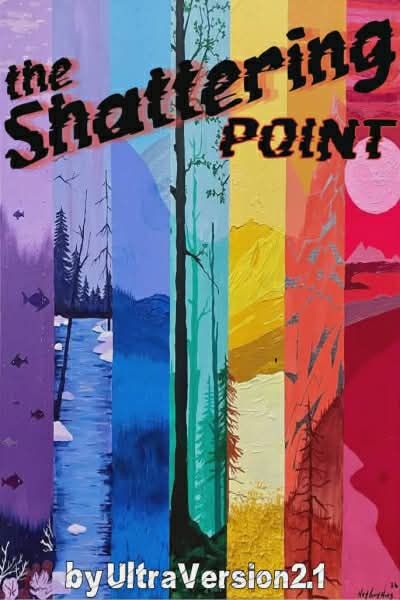
They woke up scattered outside their small hometown with paradoxical memories they cannot hold onto. For more than two years, they have fought to get back, but they could never have anticipated what awaits them. A cataclysmic collision with an impossible realm changes Earth forever. What if all the stories are true? What if they are all the same story?
The Shattering Point is the most structurally ambitious unreliable narrator on this list. The novel uses multiple points of view, and each narrator has memories that contradict the others' memories. Not in the usual way, where people remember things differently. These characters have memories of events that could not all have happened, and the story does not tell you which version is real. The paradoxical memory mechanic means the reader is holding three or four contradictory accounts of the same event in their head at once, trying to figure out which one is true. The author describes it as a multi-POV, multi-genre, multi-reality concept, and that is not marketing language. It is genuinely what the novel does.
What makes this different from the other novels on this list is that the unreliability is not a character trait. It is a physics problem. The narrators are not lying or self-deceiving. Their memories are genuinely paradoxical, and the story is about what happens when reality itself has become unreliable. If you liked the way Cloud Atlas by David Mitchell nested contradictory narratives inside each other, or the way The Three-Body Problem by Cixin Liu made the reader question whether the narrator's perception of physics was accurate, this is the NovelDay novel that operates in similar territory. Ranked #11 all-time on NovelDay.
Read The Shattering Point free on NovelDay →
2. I Swear I Saw You Die [Vol 2 Complete]
![I Swear I Saw You Die [Vol 2 Complete]](https://novelday.net/api/novels/14777/image/1787397452)
Tim is immortal. Or so everyone thought. Despite losing his immortality, his gift of healing and regeneration still makes him nearly unkillable. He spends each undying day torn between wasting his life away gallivanting outside of home and being a good father to his daughter, Mia, until an encounter with a would-be assassin shatters his way of living, giving him the chance to give Mia a normal life in exchange for his own.
The unreliable narration here is the self-deceiver type, and it is built into the premise. Tim's account of his own life is shaped by his need to believe he is still immortal, still in control, still the person he was before he lost the thing that defined him. The reader follows his version of events and gradually realizes that Tim's perception of time, his relationships, and his own abilities does not match what the people around him see. His daughter Mia is the truth-teller. Her perspective, when it surfaces, contradicts Tim's account in ways he cannot see because admitting the truth would mean admitting he is no longer what he was.
The novel is ranked #1 all-time on NovelDay, and the unreliable narration is a major reason readers stay through 61 chapters. The found-family dynamics give the self-deception emotional weight: Tim is not just lying to himself about his powers, he is lying to himself about what his family needs from him. If you liked the way Gone Girl by Gillian Flynn used dual narrators whose self-serving accounts gradually revealed the truth between them, this is the NovelDay novel that uses a similar structure, except the gap between perception and reality is driven by grief and love rather than malice. It also appears in my psychological horror guide and my found family guide.
Read I Swear I Saw You Die free on NovelDay →
3. Faces We Never Saw

Miyase Runa. Tojo Mika. Asakura Hina. Shirogane Yui. Four friends finding their way through high school. As their story begins, so too does the gradual unveiling of the hidden truths each of them carries within. Runa has always struggled academically. Her friends tried to help her. They failed. So they turned to the one person Runa never imagined she would have to speak to. Kuroiwa Rei. At first, everything was filled with doubt. Then, slowly, hope began to reveal itself. But at what cost?
Faces We Never Saw is the most subtle unreliable narrator on this list. There is no single liar. Instead, the novel uses four narrators who are all self-deceiving in different ways, and the reader has to hold their four accounts in tension to figure out what is actually happening. The premise sounds like a standard high school drama, but the structure is not. Each friend carries a hidden truth, and the story unveils those truths by showing you the same events from different perspectives. When the accounts contradict each other, you realize that none of these narrators is giving you the full picture. They are not lying. They are omitting. The omission is the unreliability.
What makes this worth reading is the gap between the surface tone and the underlying tension. The opening reads like a cozy school story. By chapter 10, you realize the cozy tone is itself a form of self-deception. The friends are papering over cracks that are widening with every chapter. If you liked the way A Little Life by Hanya Yanagihara used a warm surface to hide devastating truths, or the way The Secret History by Donna Tartt let you discover the narrator's unreliability through what he chose not to say, this is the NovelDay novel that does the same thing in a high school setting.
Read Faces We Never Saw free on NovelDay →
4. The Eyes Series (Books 1 and 2)
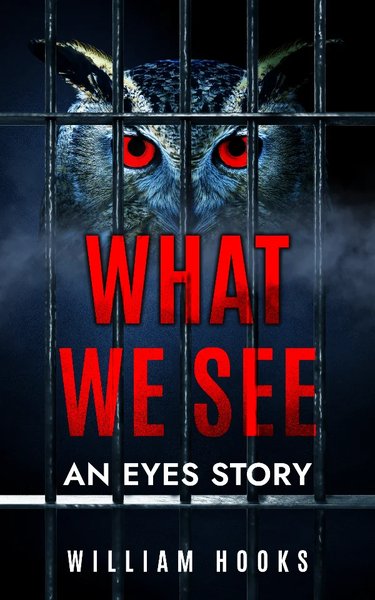
Desmond Little, who goes by Dez, grew up in the small town of Eyeville feeling like he was missing something his entire life. He was right. He follows an impulsive plan of his best friend Hooks into dire trouble, which gets worse when they are mixed into a strange conspiracy pertaining to Death Row inmates. Dez and eleven other prisoners are brought to a new home, and the program's true purpose is revealed: a collision with something beyond their understanding.
I am featuring both books as one entry because the story runs directly from What We See: An Eyes Story (Book One) (4hr 50min, 29 chapters) into What We Are: An Eyes Story (Book Two) (6hr 15min, 37 chapters). The unreliable narration is the amnesiac type, and it escalates across the series. Book 1 establishes the gaps in Dez's knowledge: he has felt like something was missing his entire life, and the conspiracy around the Death Row program is designed to exploit those gaps. Book 2 shifts to Ritz, the best friend of Hooks and Dez, whose bus crash separates him from the others and puts him in a situation where the things he thought he knew about his friends are no longer reliable.
The multiple-POV structure means the reader gets accounts from different characters, and the contradictions between those accounts are where the unreliable narration lives. Dez's version of events in Book 1 does not match Ritz's version in Book 2, and the reader has to figure out which one is closer to the truth. If you liked the way Before I Go to Sleep by S. J. Watson used memory gaps as the engine of the mystery, or the way The Girl on the Train by Paula Hawkins used three narrators whose accounts contradicted each other, this is the NovelDay series that does the same thing with a conspiracy-thriller frame. It also appears in my horror books guide.
Read The Eyes Series free on NovelDay →
5. This Is How I Lived [A Post-Apocalyptic Diary]
![This Is How I Lived [A Post-Apocalyptic Diary]](https://novelday.net/api/novels/14753/image/1784375449)
The sky keeps bleeding. The undead roam the streets mumbling to themselves. That is not even the worst of the apocalypse. There is also Lindsay. That is how the diary begins, and the dark humor sets the tone for 67 chapters of entries from a protagonist whose voice is sharp, funny, and increasingly unreliable about what is happening to her.
The diary format is one of the most natural homes for unreliable narration because the diarist is writing in real time, without the benefit of hindsight. She records her perceptions as they happen, which means she is wrong about things in real time. She lies to herself about how bad things are, about whether the people around her can be trusted, and about her own ability to survive. The gap between her confident, funny narration and the reality of the apocalypse is where the tension lives. You keep reading because the diary voice is entertaining, and then you realize that the entertaining voice is itself a coping mechanism. She is making jokes because the alternative is admitting how bad things are.
The 67-chapter count with a 3.5-hour reading time tells you the chapters are short. This is a diary. Entries are quick. But the cumulative effect of 67 short entries from a narrator who is slowly losing her grip on what is real is more unsettling than a single long chapter from a narrator who is obviously unreliable from page one. If you liked the way World War Z by Max Brooks used fragmented first-person accounts to build a picture that no single narrator could see, or the way Station Eleven by Emily St. John Mandel used a comic book within the novel as an unreliable mirror of the real events, this is the NovelDay novel that uses diary format to similar effect. Ranked #3 all-time on NovelDay.
Read This Is How I Lived free on NovelDay →
6. The Killer's Consultant [Crime Thriller, Death Note inspo]
![The Killer's Consultant [Kdrama Crime Thriller]](https://novelday.net/api/novels/14757/image/1786744871)
Everyone knows actor Seo Yujin. Beloved by millions and celebrated for his humility, he is the last person Detective Kang Minjae expects to meet during a murder investigation. But when a string of deaths leaves Minjae with no answers, he turns to the drama where the actor embodies a killer. With each new murder, the line between fiction and reality grows thinner. And as buried secrets come to light, Minjae discovers that the greatest deception is not the killer's identity but the story he has been told about why the killings started.
The Killer's Consultant is a crime thriller inspired by Death Note, and it uses the liar type of unreliable narration. The narrator is a consultant who works with celebrities, and the story follows his interactions with clients, his calm observations of the world around him, and his increasingly disturbing inner monologue. The unreliability comes from the gap between the narrator's calm, professional presentation and the reality of what he is doing. He describes his actions in the language of consultation and advice, but the reader gradually realizes that the advice he is giving is designed to produce specific outcomes that benefit him. The question is not whether the narrator is a killer but whether the reader can figure out what he is actually doing before the novel tells them.
What sets this apart from a standard crime thriller is the way the novel uses the actor-and-drama premise to layer the unreliability. The murders mirror a fictional TV drama, which means the narrator is operating inside a story-within-a-story, and the reader has to figure out which layer of fiction they are in at any given moment. If you liked the way Death Note used a cat-and-mouse structure where the reader knew more than the detective but less than the killer, this is the NovelDay novel that replicates that dynamic. Ranked #2 all-time on NovelDay, right behind I Swear I Saw You Die.
Read The Killer's Consultant free on NovelDay →
7. HORDE: Annunciation
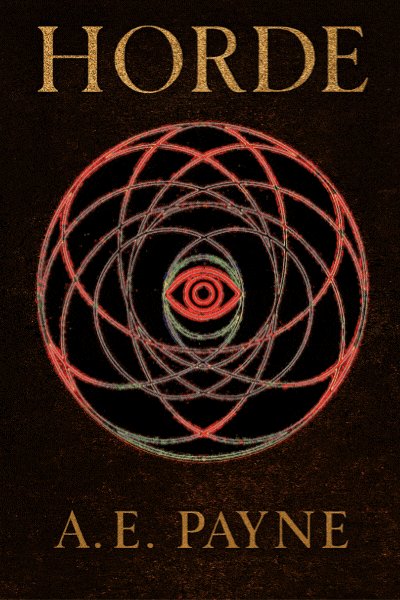
In an act of desperation, the historian Aurora Payne sold her soul. Now, the Devil has collected his due. But Aurora soon finds that the real Hell is hardly anything like its theological descriptions. Hell is not just a jail for sinners. It is a prison for the most destructive entity in the universe: the Horde, an ancient deity akin to a black hole, the mother of all demons and nightmares. The Celestials constructed Hell over 8,000 years ago to be its jail and have sent humans there to be its food. Forced into a cosmic order that treats humans as livestock, Aurora must choose between survival and keeping her soul intact.
HORDE: Annunciation uses a combination of the liar and self-deceiver types. Aurora is a historian, which means her instinct is to narrate events as if she is documenting them for the record. But her account of her own choices is shaped by her need to believe she made the right decision in selling her soul. She frames the Devil and Hell through her academic training, categorizing and analyzing when she should be panicking. The reader gradually realizes that her historian's detachment is not courage. It is denial. She is narrating her own damnation as if it is a research project, because the alternative is admitting what she actually did.
The novel uses the unreliable narration to explore questions about guilt, agency, and the stories people tell themselves to survive. Aurora's account of Hell is technically accurate in its details but emotionally dishonest in its framing, and the gap between the two is where the reader's unease lives. If you liked the way The Screwtape Letters by C.S. Lewis used a narrator whose perspective was technically accurate but morally inverted, or the way Paradise Lost by Milton made the reader sympathize with a narrator who was rationalizing his own fall, this is the NovelDay novel that does the same thing with a modern horror-fantasy frame. Ranked #12 weekly on NovelDay.
Read HORDE: Annunciation free on NovelDay →
Famous Unreliable Narrator Examples (And How These Compare)
If you are coming to this list from traditional publishing, you probably know the genre's biggest names. Here is how the novels above compare to the unreliable narrators that defined the technique.
Gone Girl by Gillian Flynn
Gone Girl is the modern gold standard of the self-deceiver narrator: both Nick and Amy Dunne present accounts that flatter their own egos, and the reader has to figure out where the truth lies between them. I Swear I Saw You Die is the NovelDay novel that uses a similar self-deception structure. Tim's account of his own immortality and his relationships is shaped by his need to believe he is still the person he was, and the reader gradually sees the gap between his self-image and reality. The difference is that Tim's self-deception is driven by love for his daughter rather than malice, which makes the revelation more tragic than shocking.
The Murder of Roger Ackroyd by Agatha Christie
The Murder of Roger Ackroyd is the classic liar narrator: the narrator is the killer, and the entire novel is a construction designed to hide that fact. The Killer's Consultant is the NovelDay novel that uses the same liar technique. The narrator presents his actions in the language of professional consultation, and the reader has to figure out what he is actually doing behind the calm, professional account. The difference is that The Killer's Consultant layers the lie inside a story-about-a-story structure, where the murders mirror a fictional TV drama, making the unreliability nested rather than flat.
Fight Club by Chuck Palahniuk
Fight Club is the definitive madman narrator: the protagonist's dissociative identity disorder means he has been reporting events that he could not have experienced the way he claims. The Shattering Point is the NovelDay novel that uses a similar perception-compromised structure, except the unreliability is not psychological but physical. The narrators' memories are genuinely paradoxical because reality itself has fractured. The difference is that in Fight Club, the narrator's perception is broken. In The Shattering Point, reality is broken, and the narrators are trying to describe it as accurately as they can.
The Curious Incident of the Dog in the Night-Time by Mark Haddon
The Curious Incident uses a naif narrator: a boy with autism who sees everything clearly but misunderstands the social dynamics around him. This Is How I Lived is the NovelDay novel that uses a similar limited-perspective structure, though the limitation comes from the diary format and the apocalypse rather than cognitive difference. The diarist reports what she sees, but her interpretation is shaped by stress, denial, and dark humor. The difference is that the naif in Curious Incident does not know he is unreliable, while the diarist in This Is How I Lived suspects she is but keeps writing anyway.
Frequently Asked Questions About Unreliable Narrators
What is an unreliable narrator in literature?
An unreliable narrator in literature is a first-person narrator whose account of events cannot be trusted. The narrator may be deliberately lying, honestly mistaken, psychologically compromised, or lacking the information needed to understand what they are describing. The technique was named by critic Wayne C. Booth in 1961, and it has since become one of the most common and powerful devices in fiction. The reader's job is to read between the narrator's lines and reconstruct the truth from the gaps, contradictions, and distortions in their account.
What is the difference between a reliable and unreliable narrator?
A reliable narrator presents events as they actually happened, to the best of their knowledge. An unreliable narrator presents events as they perceive, remember, or choose to present them, with a gap between their account and reality. The test is whether removing the narrator would change the story. If the narrator is just a transparent window onto events, they are reliable. If the narrator's account is shaping your understanding of events in a way that might not match reality, they are unreliable.
Why do authors use unreliable narrators?
Authors use unreliable narrators to create tension, irony, and reader engagement. When you cannot trust the narrator, you have to read more carefully, notice contradictions, and construct your own version of the truth. This makes the reading experience more active and more unsettling. The technique is especially effective in psychological horror, mystery, and thriller fiction, where the gap between what the narrator says and what is actually happening is the source of the genre's tension.
What are the types of unreliable narrators?
The main types are the liar (deliberately distorts the truth), the self-deceiver (believes their own distorted account), the naif (lacks the knowledge to understand what they are describing), the madman (perception is compromised by mental illness or supernatural influence), and the amnesiac (cannot remember events clearly). Many narrators combine types: a narrator might be both a self-deceiver and an amnesiac, or both a liar and a madman.
Who coined the term unreliable narrator?
The term was coined by American literary critic Wayne C. Booth in his 1961 book The Rhetoric of Fiction. Booth used the term to describe narrators whose credibility is compromised by their limitations, biases, or deliberate distortions. The technique itself predates the term by centuries: examples appear in Chaucer, Shakespeare, and 19th-century fiction, but Booth was the first to give it a name and analyze it systematically.
Start Reading Unreliable Narrator Fiction Free
The unreliable narrator is the technique that turns reading into an interrogation. You are not just following a story. You are questioning the person telling it, checking their account against what other characters say, and trying to figure out what is really happening beneath the version you are being given. The seven novels on this list cover every type of unreliable narration: the liar, the self-deceiver, the amnesiac, the madman, and the paradoxical-memory narrator whose reality itself has become unreliable.
All seven are free to read on NovelDay with no paywall, no premium tier, and no account required. Start with The Shattering Point if you want the most structurally ambitious unreliable narrator on the platform. Start with I Swear I Saw You Die if you want the most popular novel on NovelDay. Start with The Killer's Consultant if you want a liar narrator who is actively manipulating you.
If you want to explore more broadly, the Psychological tag on NovelDay collects every novel with psychological elements, and my psychological horror guide covers additional novels that use these techniques. The NovelDay library has over 100 free web novels across every genre, all server-rendered and free to read.
Are you a writer with a psychological horror, mystery, or unreliable-narrator story? Publish it free on NovelDay and reach readers who are actively searching for fiction that messes with their minds.