What Is a Novella? Definition, Word Count, and Why Web Fiction Revived It

A novella is the middle child of prose fiction: longer than a short story, shorter than a novel, and for most of the last century treated by bookstores as neither fish nor fowl. Too thin to charge full price for, too substantial to call a story, it became the form everyone loved and nobody knew how to sell.
Which is a shame, because the novella is arguably the most perfect container fiction has ever produced. One conflict, one cast, one arc, finished in a single sitting or two. And here is the part nobody told the publishing industry: the form did not die. It moved online, where nobody needs a spine width to justify a price tag, and quietly became the natural unit of serialized storytelling. If you have ever finished a web novel in a weekend, you have probably already read several novellas without knowing it.
What Is a Novella, Exactly?
The working definition: a novella is a work of prose fiction longer than a short story and shorter than a novel, typically between roughly 17,500 and 50,000 words depending on who is counting. The Science Fiction and Fantasy Writers Association, whose award categories are the closest thing the industry has to official lines, draws the boundary at 40,000 words: novelettes run 7,500 to 17,500, novellas run 17,500 to 40,000, and anything longer is a novel.
But the word count is the least interesting thing about it. What actually defines the novella is scope. A novella has room for exactly one story: one central conflict, a tight cast, a single emotional throughline. It is long enough for the characters to breathe and change, short enough that nothing can ramble. The form is compressed by design, and that compression is a feature, not a compromise.
Famous Novellas You Already Know
The easiest way to feel the shape of the form is to look at what already sits inside it. Some of the most assigned, most adapted, most quoted books ever written are novellas:
- The Metamorphosis by Franz Kafka: roughly 21,000 words
- The Old Man and the Sea by Ernest Hemingway: roughly 27,000 words, and it won a Pulitzer
- A Christmas Carol by Charles Dickens: roughly 28,000 words
- Animal Farm by George Orwell: roughly 30,000 words
- Of Mice and Men by John Steinbeck: roughly 30,000 words
- Heart of Darkness by Joseph Conrad: roughly 38,000 words
Notice what those books have in common besides length. Every one of them is a single situation explored to its limit, a man becomes a bug, a sailor battles a fish, a miser meets three ghosts, and the compression is why they endure. There is no fat to trim and no subplot to forget. When people say a book "stayed with them," they are very often describing a novella.
The Full Length Ladder
For orientation, here is the ladder of prose fiction by the commonly cited ranges:
- Flash fiction: under 1,000 words
- Short story: roughly 1,000 to 7,500 words
- Novelette: roughly 7,500 to 17,500 words
- Novella: roughly 17,500 to 40,000 or 50,000 words, depending on the source
- Novel: anything above that, with 70,000 to 100,000 as the commercial standard
If the numbers are what you came for, we measured what those ranges look like inside real serialized fiction in our data report on how long a novel actually is, including what a median web serial weighs in at. The short version: the categories were built for print, and online fiction politely ignores them. The boundaries themselves are worth keeping in mind, though, because they explain the novella's whole identity: it is the largest unit of fiction that can still be built around a single idea.
Novella vs Novel: It Is Not Just Length
The differences that matter are structural, and they follow from the length:
Scope. A novel can afford subplots, ensemble casts, and worldbuilding detours. A novella supports one conflict, and every page serves it. Read a novella and you will notice there is no B-plot waiting in the wings; the form does not allow one. That single-mindedness is also what makes the form such a good test of an idea. A premise that works for 40,000 words works everywhere; a premise that needs 200,000 words of scaffolding is a different beast.
Pace. Novels unfold. Novellas accelerate. The compressed canvas pushes the inciting incident forward and gives every scene double duty, which is why a good novella feels dense rather than short.
Reading experience. A novella is designed to be finished in one or two sittings, which changes what the ending can do. A story consumed in a single evening lands its final scene while the opening is still warm in your memory, and novella writers exploit that constantly.
Cast. Secondary characters in a novella get significance, not arcs. There is no room to grow anyone except the protagonist, which focuses everything emotional onto a single figure.
Endings. A novel can defer its reckoning for three hundred pages. A novella has to earn its ending fast, which is why the form produces so many famous final scenes and so little filler. When a novella is good, it is all payload.
The Form Publishing Abandoned
So why did the novella vanish from bookstore shelves? Economics, not quality. A 150-page paperback costs nearly as much to print and ship as a 400-page one, but customers will not pay the same price for it. Publishers responded rationally: they bought novels, and novellas retreated to literary magazines, small presses, and prestige one-offs. The form survived mostly as a flex, famous authors publishing a slim volume between epics. Even today, when a novella does get a print run, it usually arrives dressed as a tiny hardback with a gift-book price, because the only way to sell a short book is to make the shortness feel luxurious.
Then serialized fiction happened, and the economics inverted. Online, nobody prices by the page. A story can be exactly as long as it needs to be, and readers found that a tight 40,000-word arc, finished, is a better evening than the first 40,000 words of a saga that might never end. Serial platforms quietly reinvented the novella without naming it: the completed first act, the standalone Book One, the finished short serial. Some of the most satisfying reads in web fiction are novellas wearing a different label.
There is also a reader-side reason the form fits the internet. Web fiction is read on phones, in commutes, in the twenty minutes before sleep. A story that can be finished in an evening or two matches how people actually consume serialized work: dip into a serial for the chapters, but finish something whole when you want closure. The mega-serial answers the binge instinct; the novella-sized arc answers the appetite for an ending. Both live on the same platform now, and the healthiest reading habit uses each for what it is.
Seven of them are below, arranged by size so you can watch the spectrum in action, from a doorstop that dwarfs most printed novels all the way down to a finished work that sits squarely inside the official novella band.
7 Complete Reads, From Doorstop to Novella
Every pick below is a finished work, and every author is different.
1. The Weight of Falling Objects Book 1: The Oasis of the eye
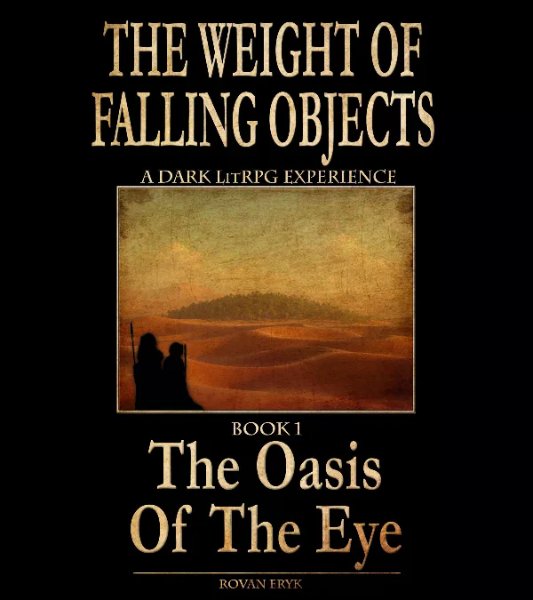
Start at the far end: a finished Book One of roughly 175,000 words, deep-desert epic fantasy about a dead city that has carried many names and forgotten all of them. This is what happens when nobody tells a writer that a novel should stop at 100,000 words: the canvas just keeps going until the story is done. It is the anti-novella, and it is proof that the spectrum runs in both directions. Worth starting here precisely because it shows the ceiling, everything below it on this list gets progressively leaner.
Read The Weight of Falling Objects Book 1: The Oasis of the eye on NovelDay
2. Carrion Mind
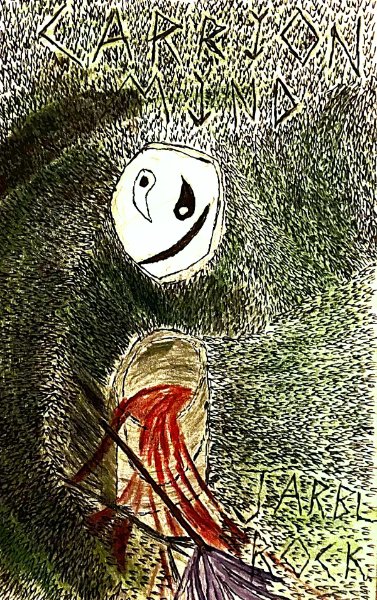
About 89,000 words and fully self-contained: a world where a dreamscape called the ether ways handles high-speed communication inside an otherwise primitive society, and the horror-tragedy that premise grows into. It shares a multiverse with the author's other work but reads as a standalone, which is very much in the novella spirit: one world, one wound, one sitting-heavy evening. At this size a horror-tragedy can sustain its dread from the first page to the last without a single breather chapter.
3. What We See: An Eyes Story (Book One)
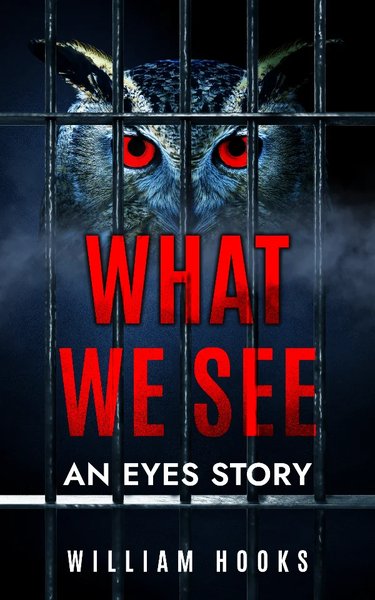
Roughly 72,000 words, a finished Book One. Dez never felt at home in the small town of Eyeville, and an impulsive, illegal plan with his best friend lands him inside a conspiracy involving Death Row inmates. Adult tags apply. Structurally it is doing exactly what a novella does, one protagonist, one trap closing, just wearing a serial's clothes. The prison-conspiracy hook is the kind of high-concept premise that thrives at this length, sharp enough to carry a Book One cleanly.
Read What We See: An Eyes Story (Book One) on NovelDay
4. A Heartfelt Dream
Around 61,000 words, and the setup is pure novella DNA: Jacob's ordinary Melbourne life changes after a five-minute encounter in a lift, a book given, a heart taken. One meeting, one bond, one story about whether life cooperates. Romance has always understood what a small canvas can hold, and this finished slice-of-life proves the genre did not need a saga to work. It is the lightest pick here, which makes it the best test of the idea that a short, complete story can still land.
Read A Heartfelt Dream on NovelDay
5. Digital Breaths [Act 1]: The Warden of the Grand Prison
![Digital Breaths [Act 1]: The Warden of the Grand Prison](https://novelday.net/api/novels/14754/image/1784375888)
Here is the thesis made literal: this is an "Act," about 54,000 words, which is to say a novella-sized unit of a larger serial, published complete. Twenty-five years ago a game called Lethe spawned an entity known as the Warden, a guard who helps the desperate and makes transgressors disappear without a trace. The internet-mystery premise is pure creepypasta energy, and the act structure is exactly how web fiction reinvented the novella by accident. If you want to watch the phenomenon in its purest form, this is the pick: a complete act, sized like the classics in the list above.
Read Digital Breaths [Act 1]: The Warden of the Grand Prison on NovelDay
6. This Is How I Lived [A Post-Apocalyptic Diary]
![This Is How I Lived [A Post-Apocalyptic Diary]](https://novelday.net/api/novels/14753/image/1784375449)
About 53,000 words across sixty-seven diary entries, so its chapters are micro but its arc is complete: the sky keeps bleeding, the undead mumble in the streets, and then there is Lindsay. Diary form is the oldest novella trick there is, compression as voice, and a finished post-apocalyptic journal is the kind of object print publishing never knew how to sell and the internet simply publishes. Sixty-seven entries also means it updates the novella's other signature, intensity, into something you can feel accumulating one dated entry at a time.
Read This Is How I Lived [A Post-Apocalyptic Diary] on NovelDay
7. The Killer's Consultant [Kdrama Crime Thriller]
![The Killer's Consultant [Kdrama Crime Thriller]](https://novelday.net/api/novels/14757/image/1786744871)
And here is the proof: about 42,000 words, dead center inside the official novella band, and it never once needed the label. A beloved actor famous for playing a killer, a detective out of leads, and a serial-murder case where performance and reality keep trading places. It is a complete, single-sitting-adjacent thriller that would be a prestige novella if a publisher had printed it. Online, it is just a really good finished story. End the list here on purpose: this is the size publishers said readers did not want, and it is the size web fiction keeps producing.
Read The Killer's Consultant [Kdrama Crime Thriller] on NovelDay
Frequently Asked Questions
How many words is a novella?
Most sources say between 17,500 and 40,000 or 50,000 words. The SFWA award categories, the closest thing to an official line, put novellas at 17,500 to 40,000, between novelettes below and novels above.
What is the difference between a novella and a novel?
Length first, scope second. A novella runs roughly 17,500 to 50,000 words and carries one conflict and one tight cast. A novel runs longer and can support subplots, ensembles, and sprawl.
What is the difference between a novella and a novelette?
A novelette sits a step lower on the ladder, roughly 7,500 to 17,500 words: too long to be a short story, too short to develop a full arc the way a novella can.
Can a novella be part of a series?
Absolutely. Many beloved series are built from novella-sized installments, and serialized fiction normalized it completely: acts, volumes, and Book Ones in the 30,000 to 60,000-word range are novellas in everything but name.
Are novellas harder to publish traditionally?
Historically, yes: a thin paperback costs nearly as much to produce as a thick one but cannot carry the same price. Digital publishing removed that constraint, which is one reason the form is thriving again online.
How long does a novella take to read?
At average reading speed, a 40,000-word novella takes roughly two and a half to three hours: a long evening, or two short ones. It is fiction measured in sittings, not weeks, and the finished feeling you get at the end is part of the point.
Why do readers love novellas if publishers avoided them?
Because readers were never the problem. Commitment is the real cost of a book, not the cover price, and a story you can finish this week will always beat a good book you might never finish. The novella's whole shape is built around that promise: start tonight, feel the ending land, and remember it tomorrow.
The Bottom Line
A novella is a complete story compressed to its perfect size: one conflict, one cast, one or two sittings. Bookstores could not figure out how to sell it, so it moved somewhere that never needed permission slips. The next time a story's description says "short" or "complete" or "Book One," check how long it actually is. There is a decent chance you are looking at a form with a very old name and a brand-new home.
Browse the NovelDay library and you will find the novella's descendants everywhere, finished acts, tight Book Ones, complete short serials. And if you are writing one, publish it on NovelDay and keep every right to it, with readers able to support you directly while you keep 100% of what they give. Around here, a 40,000-word arc is not too thin to matter. It is exactly the right size, and it always was.