High Fantasy vs Low Fantasy: What's the Difference? (And 7 Web Novels That Show the Spectrum)
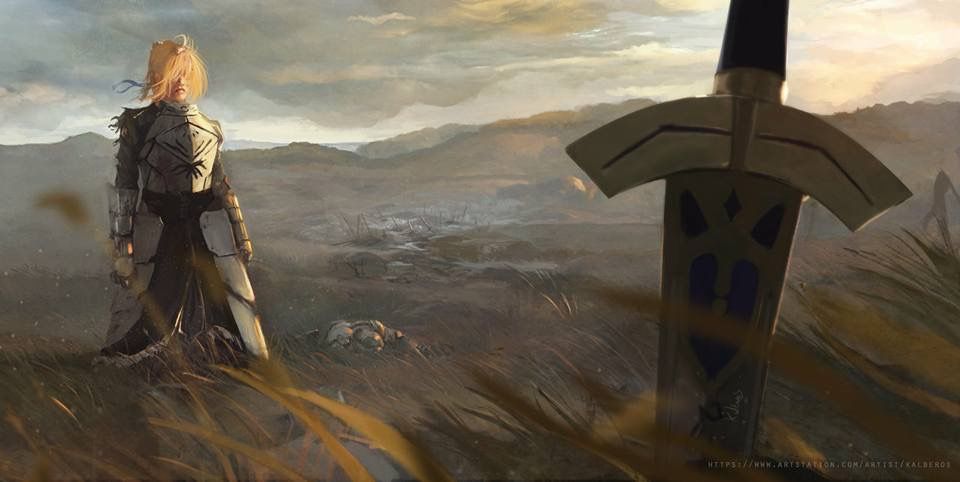
Ask five fantasy readers to define "high fantasy" and "low fantasy" and you will get five different answers. Half will tell you it is about how much magic a world has. The other half will tell you it is about stakes, or tone, or how gritty the mud is. They are all slightly wrong, and the real answer is simpler and more useful than any of those.
The distinction is not about the amount of magic, the size of the stakes, or the body count. It is about where the story happens. Once you see it that way, the confusing edge cases sort themselves out, and a whole shelf of modern fiction that never fit the old labels suddenly makes sense. Web fiction in particular has spent two decades colonizing the blurry middle between the two poles, which is why this guide ends with seven real examples from the NovelDay library rather than the usual lecture.
The Definition That Actually Works
The clean version, the one scholars use:
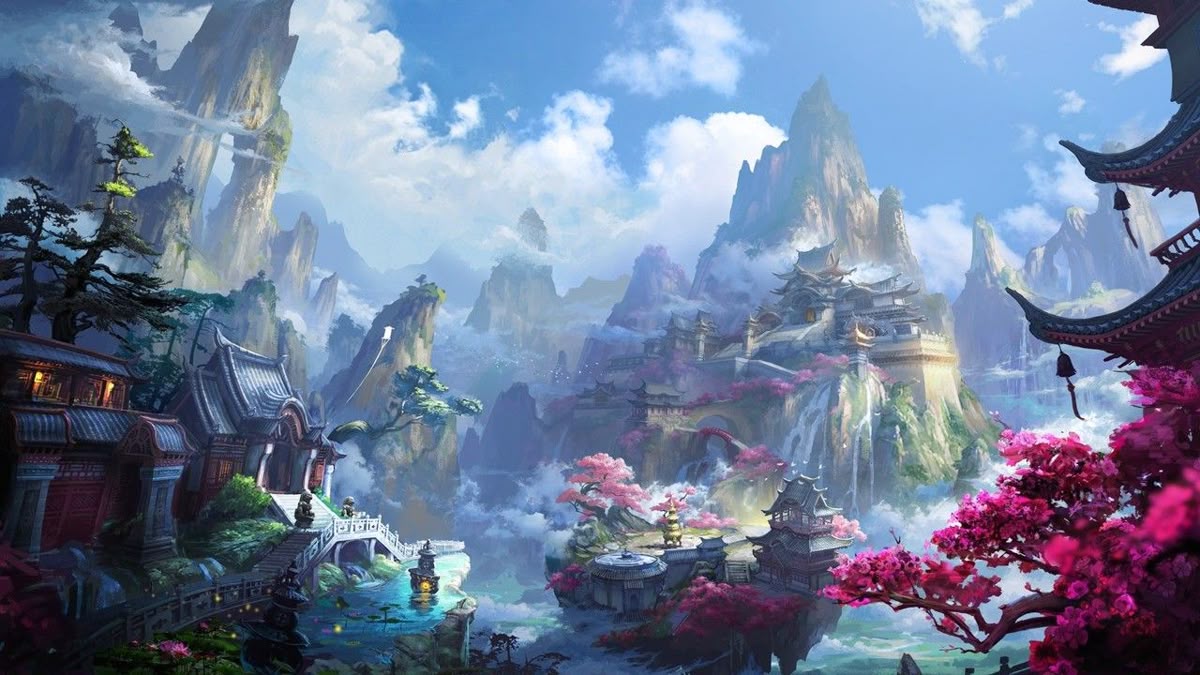
High fantasy is set in a secondary world. Middle-earth, Westeros, Roshar, Prydain. The world is not ours, was never ours, and operates on its own rules. The magic, the maps, the invented history, all of it belongs to a reality that does not overlap with ours.
Low fantasy is set in the primary world, ours, with magical intrusions. A werewolf in a modern suburb. A vampire working the legal system in historical Europe. Ghosts in the apartment building. The world looks like ours because it is ours, and the fantastic arrives as an intrusion, an invasion, or a secret hidden inside it.
That is it. Magic quantity does not decide the label. A low-fantasy world can be drowning in magic; what matters is that the baseline world is recognizable as our own. Likewise, high fantasy can be nearly magicless, which is exactly why A Song of Ice and Fire confuses people: Westeros feels gritty and low-magic, but it is a secondary world, so by the real definition it is high fantasy.
Where the Terms Came From
The labels are not marketing inventions. The low-fantasy concept comes from critic John Clute, and the most rigorous modern framing belongs to Brian Attebery and Farah Mendlesohn, who described low fantasy as intrusion fantasy: a story where the impossible enters a world that works like ours, and the narrative energy comes from the collision. The characters' disbelief is part of the text. A character in high fantasy is never surprised that dragons exist; a character in low fantasy absolutely is, and their shock is the genre.
This is also why the "amount of magic" definition refuses to die: in low fantasy, magic usually is rarer, not because the rules require it but because intrusion only reads as intrusion when the ordinary world dominates the page. Rarity is a symptom, not the definition.
The Grey Area Between Them
Three forms sit on the boundary and explain most of the confusion online:
Portal fantasy sends characters from our world into another (Narnia, the Wizarding World's hidden platforms). It starts low and lives on the crossing.
Urban fantasy is low fantasy's biggest commercial engine: present-day city, hidden supernatural society, protagonist who walks between both.
Boundary-collapse stories, the newest of the three, are about the wall between worlds falling down entirely. Apocalypse fantasies, "system arrives on Earth" serials, and invasion stories all live here, and web fiction has embraced them harder than any other medium.
High Fantasy: The Secondary World
The hallmarks of high fantasy: invented geography, deep invented history, magic woven into the fabric of reality, nonhuman peoples, and often a cosmological-scale conflict, good versus evil or order versus chaos. Tolkien defined the shape with The Lord of the Rings, and the genre's classics, The Wheel of Time, Mistborn, The Stormlight Archive, all follow it.
What high fantasy offers that nothing else does is total immersion. There is no familiar world to fall back on, so the worldbuilding itself becomes the attraction: its economies, its religions, its magic systems, which is part of why magic system design matters so much in the genre. The weakness is access: a thick secondary world takes fifty pages just to orient a new reader.
Low Fantasy: The Intrusive World
Low fantasy's hallmarks are nearly the mirror image: a familiar setting, magic that is rare or hidden, and conflicts scaled to lives rather than worlds. Harry Potter, despite its enormous magic content, is the famous example: the wizarding world hides inside ours, which makes it low fantasy (or more precisely, portal fantasy, the subcategory where characters cross between worlds). Urban fantasy is low fantasy's dominant modern form: The Dresden Files, Neverwhere, American Gods.
What low fantasy offers is friction. Magic rubbing against mortgages, monsters intersecting with bus routes. The supernatural means more when it intrudes on a life that looks like yours, and the intrusion itself, the discovery or the secret, becomes the engine of the story. If you want to see how intimate that perspective can get, our first vs third person guide digs into why close POV suits it so well.
The Spectrum Nobody Talks About
Here is where it gets interesting, because a huge share of modern fiction, especially web fiction, refuses to sit at either pole.
Portal fantasy and isekai start in the primary world and move to a secondary one, the bridge between the two categories. Transmigration and reincarnation stories send a modern mind into a fantasy world, importing low-fantasy familiarity into a high-fantasy setting. And then there are the stories where the boundary itself collapses: a recognizable world being invaded, transformed, or revealed as magical all along. Web serials, unconstrained by bookstore shelving, have colonized this whole middle territory, and some of the most interesting writing happening in fantasy right now lives there. None of these hybrid forms needs a publishing imprint's permission to exist, which is precisely why they multiplied first in fan fiction and serial fiction, the places where nobody was checking whether a manuscript fit a category before readers could find it.
7 Web Novels That Show the Spectrum
Enough theory. Here is the full range, from a story about the boundary itself collapsing, through low-fantasy intrusions on our world, to a true secondary-world epic, with the isekai middle in between.
1. Stillore: Shard and Canvas
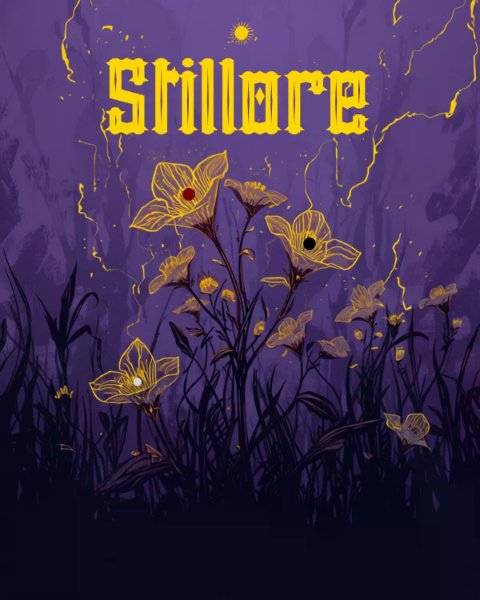
By Ludwika · ~35.5 hour read · Ongoing · Fantasy, Mystery, Supernatural
Lance Klint is eighteen, a caring delivery guy searching for a sister who disappeared without a trace, until a failed delivery tears his world open: a forgotten pantheon, horrors beyond comprehension, and a reality being rebuilt around the madness consuming his home archipelago. Stillore is the boundary-collapse case made flesh: a world that felt like ours until the otherworldly began swallowing it whole. If you want to feel the line between low and high fantasy dissolve in real time, this is the longest, strangest demonstration on the platform. At thirty-five hours and counting, it also answers a question the old taxonomy never had to: what happens when a world spends years of serialized chapters slipping from one category into the other.
Read Stillore: Shard and Canvas on NovelDay
2. The System Administrator
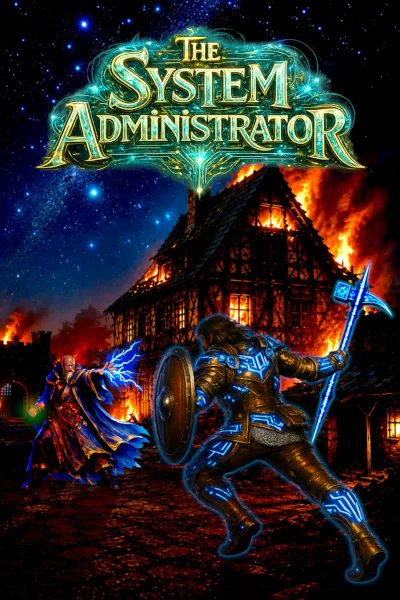
Brian is an IT professional ripped out of his body on Earth and dropped into someone else's on a brutal secondary world, one governed by a System full of bugs, and some of those bugs are aimed directly at him. Read the premise twice and it is the spectrum argument in miniature: our world supplies the protagonist, the far pole supplies the world, and the System is the bridge between them. This is high fantasy wearing a debug console, and a neat proof that progression mechanics and secondary-world stakes stopped being opposites a long time ago. At nearly seventeen hours it is also the meatiest middle-spectrum binge in this list.
Read The System Administrator on NovelDay
3. Of Crimson and Ash
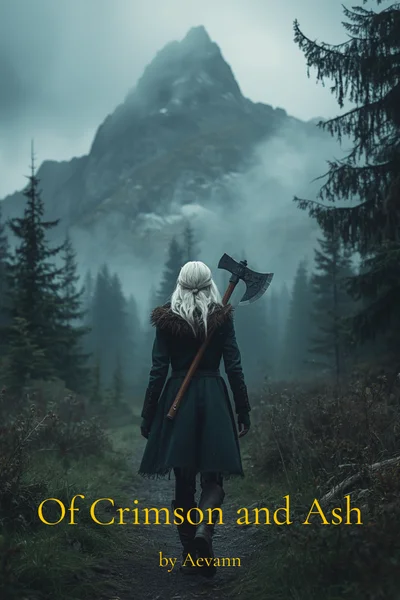
Textbook low fantasy: a vampire, in Europe, working as a mercenary and gaming the legal system while her true nature stays one mistake from exposure. The world is recognizably historical, mud, courts, suspicion, and the supernatural arrives through a single predator hiding inside it. This is what the "intrusion" model looks like when the intruder is the protagonist, and the tension comes not from a dark lord's army but from a village learning what she is. Low fantasy at this scale is less about good versus evil than about concealment: every ally gained is a secret kept, and every town is both an opportunity and a threat.
Read Of Crimson and Ash on NovelDay
4. In the Shadow of Moonlight
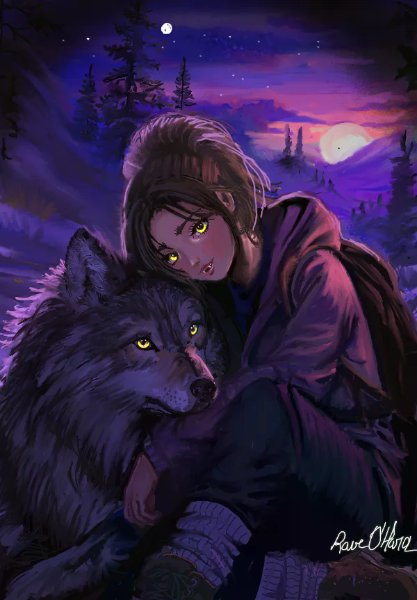
Low fantasy's most emotional register. Sophia Jones's life is painfully real: a dead mother, a father lost to alcoholism, a refuge in the wolves she loves. Then a local legend actually works and she becomes a werewolf. The magic is an intrusion into an ordinary grieving life, which is the genre in a sentence, and the story keeps its feet in our world even as the moonlight changes her. Mature tags apply; this is the grown-up side of low fantasy, where the intrusion costs the protagonist something real rather than granting an adventure.
Read In the Shadow of Moonlight on NovelDay
5. The Legendary Demon Hunter's Cursed Brother
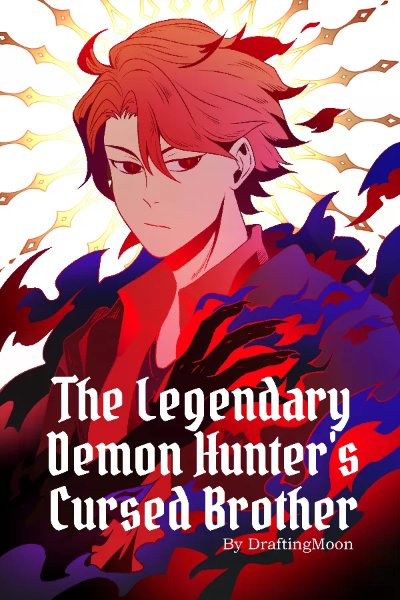
The spectrum's middle, twice over. Evan transmigrates, classic isekai move, but instead of landing in a shiny secondary world he wakes up on a post-apocalyptic Earth crawling with demons, cursed, and saddled with a trolling System. Our world, transformed into the fantasy setting. The result reads as neither pure high nor pure low: it is the collapsed version, a primary world that has already been conquered by the fantastic.
Read The Legendary Demon Hunter's Cursed Brother on NovelDay
6. The Gods They Made Of Us
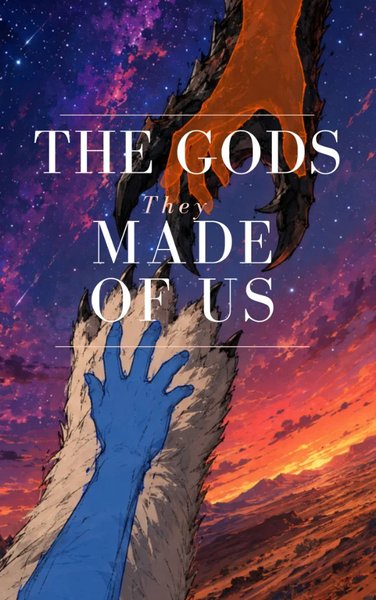
Crystal Fenn gets her university acceptance letter and her house raided on the same day: falsely accused of being the child of a terrorist shapeshifter, and watching the person she loves become the monster she will have to face. Hidden magical beings inside an ordinary modern life is the oldest low-fantasy structure there is, the supernatural concealed under suburbia, and the story runs it with real stakes instead of wish fulfillment.
Read The Gods They Made Of Us on NovelDay
7. I Was Isekai'd with My Wife and Now She's the Final Boss of the Fandom
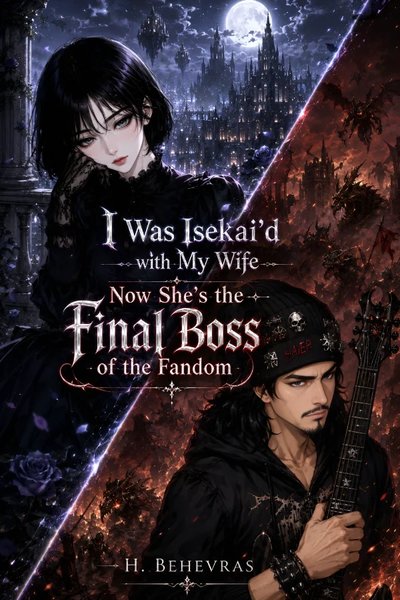
The bridge form, literalized. Truck-kun does its thing, our-world protagonists land in a fantasy world, and the catch is that the wife is now the final boss. Isekai is the genre where the high/low distinction stops being academic: the whole premise is a portal between a primary world and a secondary one, and the comedy comes from dragging ordinary domestic life across that line.
Read I Was Isekai'd with My Wife and Now She's the Final Boss of the Fandom on NovelDay
So Which Should You Read (or Write)?
Choose high fantasy when you want total escape: a world with no resemblance to ours, built from the ground up, where the immersion itself is the reward. Reach for it when you are ready to invest pages in learning a world before the plot pays off.
Choose low fantasy when you want the fantastic to collide with the familiar. The supernatural means more when it has something ordinary to break, and the stories tend to be faster out of the gate because no orientation is needed.
Choose the middle when you want both at once, and honestly, that is where most web fiction lives now. Portal fantasy, isekai, transmigration, boundary-collapse stories: the modern serial reader expects to walk through the wardrobe and bring a piece of home with them.
Writers should note the practical angle too: low fantasy needs less worldbuilding overhead and hooks faster, high fantasy earns bigger payoffs at a slower pace, and the hybrid middle is what serial platforms reward because it delivers both instantly familiar characters and an infinite world to grow into.
One last clarification, because this trips people constantly: high versus low is a setting axis, not a tone axis. Grimdark, the brutal, cynical flavor of fantasy, can exist at either end: grimdark explained covers that whole separate spectrum. Likewise morally grey characters appear in both. A cozy high-fantasy tea shop and a nihilistic low-fantasy crime saga are opposite ends of an entirely different map.
Frequently Asked Questions
Is Harry Potter high or low fantasy?
Low fantasy, technically portal fantasy, because the story happens in our world with the magical one hidden inside it. The sheer amount of magic does not move it to high fantasy; the setting does that.
Is Game of Thrones high or low fantasy?
High fantasy by the strict definition, because Westeros is a secondary world. It feels like low fantasy because it is gritty, political, and nearly magicless for the first book, which is exactly the confusion the "magic quantity" misconception causes.
Does low fantasy mean less magic?
No. Low fantasy describes the setting, not the quantity. A low-fantasy story can be drenched in magic; what makes it low is that the magic happens in or intrudes on a world recognizably ours.
Is isekai high fantasy or low fantasy?
It is the bridge between them. The protagonist starts in the primary world and crosses to a secondary world, so isekai stories are structurally portal fantasy, which sits under the low-fantasy umbrella even when most of the book happens in the other world.
What is the difference between high fantasy and epic fantasy?
They overlap heavily but are not synonyms. High fantasy is defined by setting (secondary world); epic fantasy is defined by scale (world-spanning stakes and scope). Most epic fantasy is also high fantasy, but a small-scale secondary-world story can be high fantasy without being epic.
Why does the distinction matter?
For readers, it predicts the reading experience: low fantasy gives faster orientation and everyday friction, high fantasy gives deeper immersion at the cost of a slower start. For writers, it is a worldbuilding workload decision before it is anything else.
Bottom Line
High fantasy builds a world; low fantasy intrudes on ours; and the space between them, portals, isekai, worlds being remade, is where web fiction has quietly built its home. The spectrum is not a grading system, and neither end is better; it is simply a map that tells you what kind of journey you are signing up for before page one. Browse the NovelDay library across the whole spectrum, or if you are writing your own secondary world (or hiding magic in ours), publish it on NovelDay where none