First Person vs Third Person: Which POV Should Your Story Use?
Before a writer decides on plot, characters, or even genre, one decision quietly shapes everything downstream: who is telling this story, and from where? First person or third person is not a stylistic preference. It is a structural choice that decides what readers can see, how close they feel, and what you are allowed to hide.
Ask in any writing community and you will get strong opinions in both directions, plus a lot of "it depends." It does depend, but on specific things, and this guide names them. We will look at what each point of view actually does, where each one fails, how to choose, and seven web novels on NovelDay that show both choices working (New to serial fiction? Our beginner's guide to writing a web novel covers the basics first.), verified from their opening chapters rather than their blurbs.
First Person: What It Does Best
First person puts the reader inside a single head: "I did this, I saw that, I felt this." The camera is bolted to the narrator's skull, and everything reaches you through their vocabulary, their blind spots, and their version of events.
What it buys you:
- Instant intimacy. No other POV closes the distance between reader and character this fast. In serial fiction, where you have maybe three paragraphs before a reader bounces to the next novel, that speed matters.
- Voice. A strong first-person narrator makes the prose itself a character. Snark, denial, dread, self-justification, all of it lives in the word choice.
- Built-in mystery. The reader can only know what the narrator knows, so secrets and reveals manage themselves. It is also the natural home of the unreliable narrator: a biased "I" can lie to the reader while believing every word.
What it costs you:
- A locked camera. If your narrator is not in the room, neither is the reader. Big battles, conspiracies, and parallel plotlines become things your narrator hears about secondhand.
- "I" fatigue. Every sentence starts to sound the same, and beginners produce pages of "I walked, I saw, I felt" before realizing it.
- The narrator must survive. A first-person teller retroactively narrating their own death story is a problem you have to solve, not ignore.
Third Person: What It Does Best
Third person narrates from outside the characters: "she did this, he saw that." It splits into two working modes. Third limited stays near one character at a time, hearing their thoughts but not wearing their skin. Third omniscient floats anywhere, knowing everything, including things no character knows.
What it buys you:
- Scale. Multiple leads, multiple continents, a war seen from both sides. If your story is bigger than one skull, third person is how you hold it.
- Controlled distance. You can zoom into a character's thoughts in one paragraph and pull back to history or setting in the next. First person cannot leave the head; third person chooses its altitude.
- Dramatic irony. The reader can watch the villain load the trap while the hero walks toward it. That tension is nearly impossible in strict first person.
What it costs you:
- Distance. Done carelessly, third person reads like a report: characters doing things rather than anyone experiencing them.
- Filter bloat. "She saw," "he felt," "she noticed" pile up between the reader and the moment.
- Head-hopping. Omniscient freedom seduces beginners into jumping between minds inside one scene, which reads as loss of control, not range.
The Rare Third Option: Second Person
Second person narrates to "you." You turn the corner. You see the body. It is rare in novels but common in interactive fiction, and web fiction borrows it more than traditional publishing does. When it works, it creates a strange, propulsive intimacy, the feeling of being pulled through the story by the collar. When it fails, readers resist being told what they did, thought, and felt, which is a lot of trust to demand page after page. Use it for short pieces or deliberate experiments, not by default.
How to Choose: Four Questions
Strip the debate down and the choice comes out of four honest answers:
1. How many heads does the story need? If the plot lives in one character's experience, first person is the natural fit. If it needs a war room, a family, or a continent, third person carries the weight.
2. How close do readers need to feel? Romance, horror, and personal stakes reward first person. Sweeping epics and ensemble casts reward third.
3. Does the narrator need to lie, hide, or misunderstand? First person makes deception natural; the reader shares the blind spot instead of spotting it. A biased "I" is a feature, not a bug.
4. What does your genre expect? Conventions are not laws, but they are expectations. Progression fantasy, LitRPG, and cozy serials lean heavily first person. Epic fantasy, romance, and literary fiction lean third. You can break the convention, but know you are spending reader trust to do it.
7 Web Novels That Show Both POVs Working
Theory only goes so far. These seven web novels on NovelDay each made a different POV choice, and reading their openings shows why the choice fit the story. Ordered by length, longest first.
1. Of Crimson and Ash
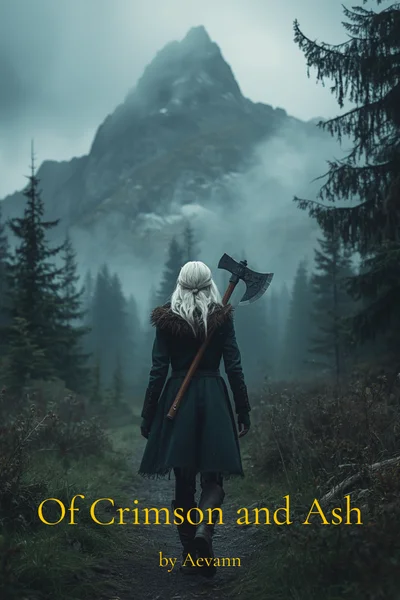
Karya is a vampire working as a traveling mercenary, enriching herself through the legal system and fleeing towns whenever her identity slips out. The narration is dry, observant, and quietly funny about the men underestimating her.
First person is doing real work here: you are inside the head of a predator who is pretending to be harmless, and the comedy and tension both live in the gap between what she thinks and what she lets people see. Third person would report the con. First person lets you run it with her.
Start reading Of Crimson and Ash →
2. Heirs of Hyarch
A noblewoman hiding a dangerous talent, a fugitive thaumaturge seeking to make amends, a journeyman healer looking for a home, and a battle-weary warrior caught between duty and love, drawn together in a kingdom broken by civil war while ancient magic stirs underneath.
Four leads, each carrying private stakes into a shared conflict: no single head can hold this story. Third person is the only structure that fits, and the opening shows why. The novel can sit with each heir in turn while the war moves around all of them.
Start reading Heirs of Hyarch →
3. The 90's Kid
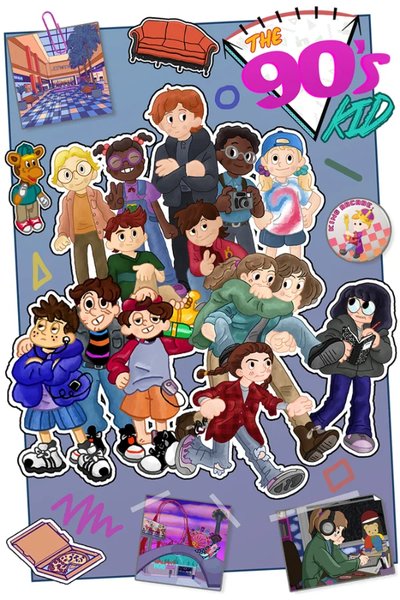
Wes walks through a portal in his pantry door and lands in his own childhood in 1995, ten years old again, with decades of adult knowledge and a whole town of secrets he never noticed the first time.
Third person is the sneaky-correct choice here. First person would trap the whole book inside Wes's nostalgia. Third limited stays near him while still letting the story glance at what the adults around him were doing, which is the entire premise: the childhood you lived versus the one that was actually happening.
4. Faces we never saw
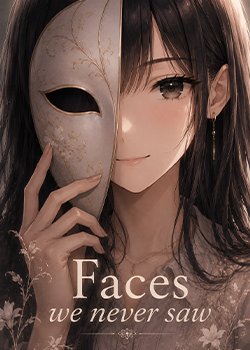
After carrying a burden alone for too long, the narrator finally asks for help, and gets pointed toward Kuroiwa Rei, a classmate she has only ever known through unpleasant rumors. A school-life drama about the faces people wear and the ones nobody gets to see.
This is the intimacy case for first person. The story is built out of small social distances: rumor versus reality, the face shown versus the face kept. Locking the reader inside one anxious, observing head is not a limitation here. It is the subject.
Start reading Faces we never saw →
5. Rosetta's Last Stand

Food-obsessed aliens offer to save a war-torn Earth, for a price. Thirty-four years later, a produce clerk named Rose gets a phone call that sends her chasing a trail of secrets about what the rescue really cost.
Third person earns its keep on scope alone. The story needs the war, the aliens, the decades of altered history, and a produce aisle, sometimes in the same chapter. First person could show Rose, but third person lets the book breathe around her and keeps the cosmic absurdity visible instead of filtered through one voice.
Start reading Rosetta's Last Stand →
6. The Forbidden Son of Saint Caldzand
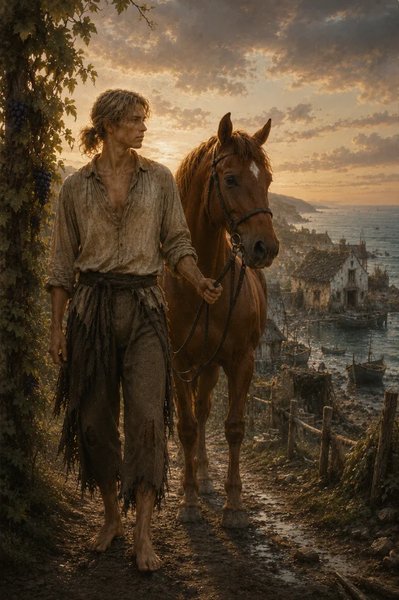
Abel is a village boy in a kingdom where magic runs through noble blood, meant to live and die quietly. Then a violent vision of a mysterious man breaks the fragile safety he has relied on.
First person keeps the reader as ignorant as Abel, which is the engine of the book. He does not understand what he is seeing, what he might be, or who benefits from telling him, and because we ride inside his limited view, every revelation lands on us the way it lands on him.
Start reading The Forbidden Son of Saint Caldzand →
7. Godfated
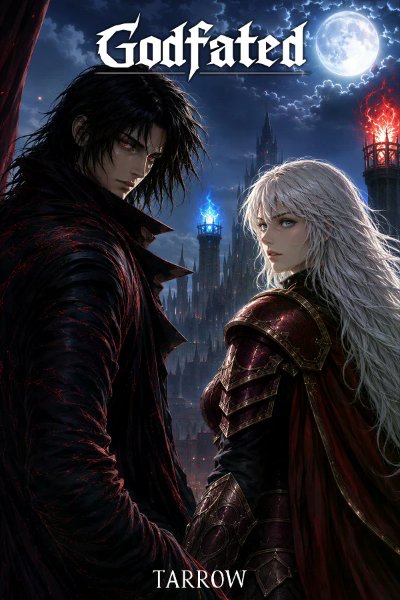
A god wakes after thousands of years sealed away with a single memory left, his own betrayal. A mortal girl names him Death and accidentally binds their souls together. He has to rebuild an identity on one unverifiable memory.
Third person does something subtle here: it watches him reconstruct himself from a slight distance, which lets the reader doubt what he believes. Strict first person would force you to accept his account; third person lets you question it. Same story, different trust relationship, and that is the whole point of choosing a POV.
For the deception side of this decision, our guide to unreliable narrators digs into what first person can hide. And if you are still shaping the character behind the voice, our piece on character development covers how growth reads differently inside versus outside the head. Browse the NovelDay library when you want to see both choices in the wild.
POV Mistakes That Lose Serial Readers
Web fiction has an extra pressure traditional publishing does not: readers judge your POV choice inside the first three paragraphs, in a feed full of alternatives. The mistakes that cost you them are specific:
Opening with a camera instead of a person. First chapters that spend five hundred words on weather and scenery before a single human does anything read as third-person-omniscient at its worst. Pick a head and get inside it fast, whichever person you chose.
First-person summaries. "I woke up. I went to work. I felt tired." When a first-person narrator reports events without reacting to them, the POV's whole advantage disappears. If your "I" has no opinions, third person would serve you better.
Third-person distance by accident. "She watched as the building exploded, and she felt afraid." The watching and the feeling are filters that push the reader out of the moment. Cut the verbs of perception and the sentence gets closer for free.
Using the wrong person for the secret. If your plot twist depends on a fact the protagonist knows but the reader must not, strict first person forces you to make your narrator play dumb, and readers feel the cheat. Third limited handles the same secret cleanly because the narration was never required to share everything the character knows.
Treating the choice as permanent. Draft a chapter in one POV and it still feels flat? Rewrite it in the other. Writers discover the right person by accident all the time, and in serial fiction you find out within a chapter or two rather than after a finished manuscript.
Can You Switch POV Mid-Story?
Sometimes, with structure. Alternating first-person chapters between two leads works when each voice is distinct and the chapter heading names the head. Frame devices, like an "I" who turns out to be watching the main story in third person, can carry a whole book. What almost never works is drifting between POVs inside a scene. Readers forgive almost any structure they can predict, and punish any structure they cannot.
Serial fiction adds one more option worth knowing: interludes. A main story in first person can run occasional third-person interlude chapters showing what the antagonist or a side character is doing while the narrator is elsewhere. Royal Road and Scribble Hub readers are trained on this pattern, and it solves the locked-camera problem without surrendering the intimacy that made first person the right choice for the main thread. Just label the interlude clearly, or your comments will fill with confused readers asking why the narrator changed.
Frequently Asked Questions
Is it better to write in first or third person?
Neither is objectively better. First person wins on intimacy, voice, and deception. Third person wins on scale, flexibility, and dramatic irony. The right answer is whichever serves your specific story, which is why the four questions above matter more than any rule.
What is the difference between first person and third person limited?
First person narrates as "I" from inside the character. Third limited narrates as "he" or "she" while still following one character's knowledge and thoughts. The practical difference is distance: third limited can step outside the character's head for a sentence or a scene, while first person never can.
Which POV is most popular in web novels?
It depends on the genre. LitRPG, progression fantasy, and isekai skew heavily first person because the fantasy is being the protagonist. Epic fantasy, romance, and ensemble stories skew third. On serial platforms both are common, and readers follow whichever voice the genre trained them to expect.
Can a novel have two narrators in first person?
Yes, dual first-person is common in romance especially. It works when the voices are genuinely different and each chapter or section clearly signals whose head you are in. If readers cannot tell the narrators apart after three sentences, the device is failing.
Why do so many LitRPG and isekai novels use first person?
Because the core fantasy is inhabiting the protagonist. First person sells the "this is happening to me" immersion that power fantasy runs on, and it keeps the reader's knowledge exactly as incomplete as the newcomer's, which makes every system reveal land twice.
Is head-hopping the same as omniscient third person?
No, and the difference is control. Omniscient narration moves between minds deliberately, with the narrator's own steady voice guiding the reader. Head-hopping is an uncontrolled leak between limited perspectives inside a scene, and it reads as a mistake because it is one.
Writing a web novel and still torn between "I" and "she"? Publish on NovelDay and let real readers tell you which voice your story needed. The comment section is the best POV test ever invented.