10 Best Psychological Horror Novels to Read in 2026
10 free psychological horror novels that mess with your mind. Serial killers, unreliable narrators, and slow-burn dread. Read free on NovelDay.
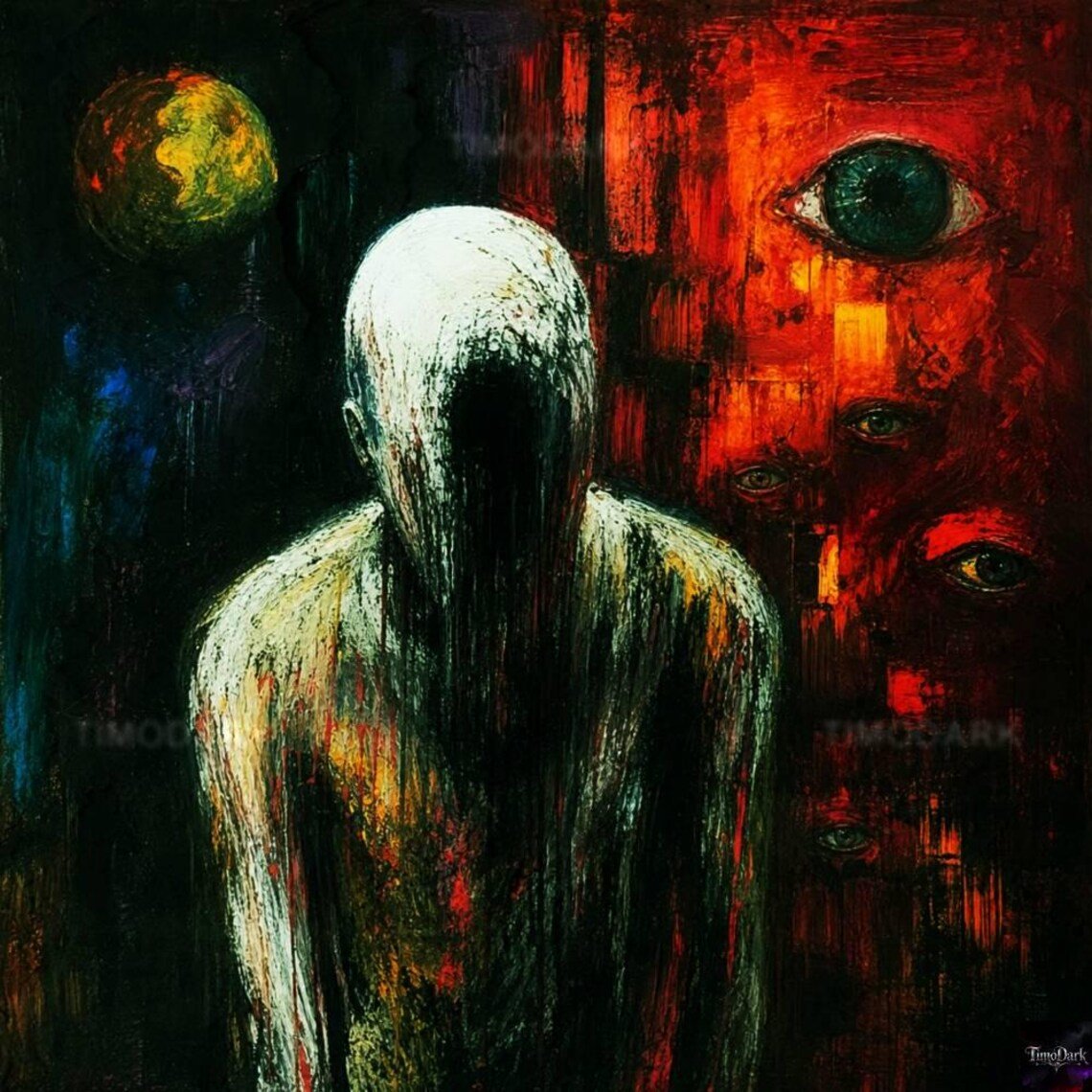
I went looking for psychological horror web novels because I was burned out on progression fantasy and LitRPG. Every list I found recommended the same titles, the same tropes, the same storylines. I wanted something different. Something that would mess with my head instead of my stat sheet.
So I started digging through the horror and psychological catalogs on NovelDay, and what I found surprised me. There's a quiet wave of serialized horror that lives in your head, not on a character sheet. Unreliable narrators. Memory loss. People who might be the villain and don't know it. Chapter by chapter, the dread builds, and you can't stop reading because you need to know what's real.
Every novel on this list is free to read, updated chapter by chapter, each written by indie authors who write because they have a passion for sharing their stories.
Here are fourteen worth your time.
What Is Psychological Horror?
If you're coming from LitRPG or action fantasy, this genre feels like a different language. No power system. No leveling up. No clear progression. The tension comes from uncertainty. About the narrator, about reality, about whether the protagonist is the hero or the problem.
Think Death Note more than Friday the 13th. Think Shutter Island, Gone Girl, The Silent Patient. The horror is in what you don't know, not what you see. And in web novels, where stories unfold over dozens or hundreds of chapters, that uncertainty has room to breathe in a way movies and standalone novels can't match.
The psychological tag on NovelDay covers everything from crime thrillers to supernatural dread to character studies about people slowly losing their grip. I've split the recommendations below by what kind of psychological horror each one does best, because "psychological horror" is a wide net, and what you want depends on your taste. If you want a deeper dive into the narrative technique behind many of these stories, check out our guide on unreliable narrators.
For Slow-Burn Dread
1. I Swear I Saw You Die
![I Swear I Saw You Die [Vol 2 Complete]](https://novelday.net/api/novels/14777/image/1787397452)
Tim is immortal. Or so everyone thought. When he loses his immortality but keeps his healing gift, he's still nearly impossible to kill. But near-impossible isn't the same as invincible, and the story is less about whether Tim survives and more about what being unkillable does to a person over time.
This novel is weekly rank 1 as of writing this blog, and it is for a good reason. The dialogue is sharp, the humor lands, and the world has a gritty crime thriller feel that sets it apart and is loved by readers.
What sets Tim apart from the other protagonists on this list is the humor. Most psychological horror grinds you down with unrelenting dread. Tim's story keeps you laughing while it quietly asks whether a person who can't die ever learns how to live. The crime-thriller pacing and sharp dialogue make this the most accessible entry point if you're new to the genre. 62 chapters across two volumes — enough to sink into for a long weekend.
Read it if you like: Death Note, The Boys, morally grey immortals who might be the villain.
Read I Swear I Saw You Die free on NovelDay →
2. This Is How I Lived
![This Is How I Lived [A Post-Apocalyptic Diary]](https://novelday.net/api/novels/14753/image/1784375449)
The sky keeps bleeding. The undead roam the streets mumbling to themselves. And then there's Lindsay.
This is a post-apocalyptic diary, and the diary format is the key to everything. The protagonist isn't a hero. She's a person trying to document what's happening to her, and the gap between what she writes and what's actually happening is where the psychological horror lives. The zombies and the post-apocalyptic setting are the surface. The real story is about how a person holds themselves together when everything has fallen apart, and whether the version of events you're reading is the version that actually happened.
67 chapters. This is one of the deepest reads on the list. If you want something to binge over a week, this is it. Fans of our dystopian books list will recognize the post-apocalyptic territory, but the diary format here makes it something entirely different.
If The Walking Dead seasons 1-3 were your thing, or you loved the oral history format of World War Z, this is the web novel version. Diary-format horror where the narrator might be unreliable.
Read This Is How I Lived free on NovelDay →
3. Feasting on Immortals
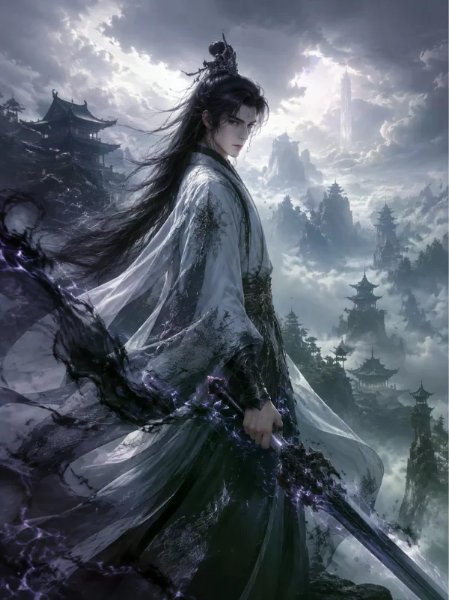
Fang Cheng has a demonic sword lodged in his soul. It whispers for blood, for carnage, for the sweet taste of human fear. To keep it from taking over, he forces every monster and villain he meets to say three words out loud: "You are a good person." The more they say it, the more he believes it. The more he believes it, the less he turns into a mindless killing machine.
This is psychological horror wearing a cultivation skin. You're watching someone lose their grip on whether they're the hero or the monster, and the story doesn't let you off the hook. Fang Cheng tells himself he's saving a dying world. The people he roasts alive might disagree. The twisted personality tag is the real genre here. A protagonist whose moral compass is being corroded by the thing keeping him alive — the sword that demands blood is also what keeps him from becoming a mindless killing machine, and watching that balance slip chapter by chapter is what makes this different from standard cultivation novels where the protagonist simply gets stronger.
77 chapters means there's a deep archive to sink into, and the slow moral unraveling gives the psychological horror room to breathe across arcs rather than resolving in a few chapters. Readers who enjoyed our wuxia vs xianxia guide will find the cultivation framework familiar, but the psychological horror layer makes this something else entirely.
Fans of Dao of the Bizarre Immortal or Reverend Insanity will recognize the shape of this protagonist immediately. The difference is how close the camera stays to his rationalizations.
Read Feasting on Immortals free on NovelDay →
For Crime, Mystery, and the Horror of Other People
4. The Killer's Consultant
![The Killer's Consultant [Kdrama Crime Thriller]](https://novelday.net/api/novels/14757/image/1786744871)
Everyone knows actor Seo Yujin. Beloved by millions, celebrated for his humility. And he's the last person Detective Kang Minjae expects to encounter during a murder investigation. But when a string of deaths leaves Minjae with no leads, he turns to the drama where Yujin played a killer. With each new murder, the line between fiction and reality gets thinner.
This is the most Death Note-adjacent novel on NovelDay, and it's not shy about the inspiration. It's in the title. What makes it psychological horror rather than a standard crime thriller is the obsession. Minjae doesn't just want to solve the case. He needs to understand Yujin, and the closer he gets, the more the question shifts from "who is the killer?" to "how much of the performance was ever a performance?"
This novel consistently stays in the top 3 of the weekly rankings. If you're hesitating because of the chapter count, the author has already started work on volume 2 and it should be coming out soon.
Read it if you like: Death Note, Mindhunter, K-dramas where everyone is hiding something.
Read The Killer's Consultant free on NovelDay →
5. What We See: An Eyes Story
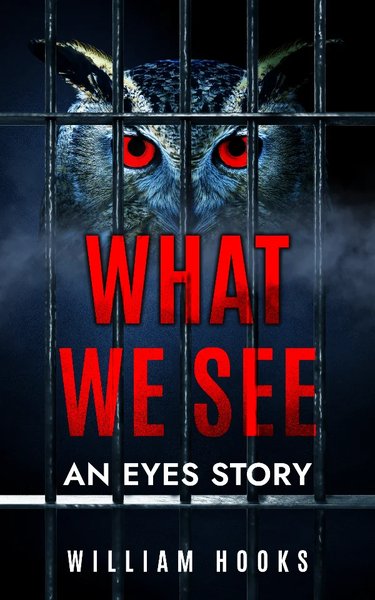
Dez has never felt at home in the small town of Eyeville. He follows his best friend into an impulsive plan that goes wrong, and they end up mixed into a strange conspiracy surrounding Death Row inmates. Dez and eleven other prisoners are brought to a new home where their chance at survival turns into peril as the program's true purpose is revealed. Meanwhile, a former member of a secretive super-corporation called THE COMPANY is investigating the same operation. The closer he gets, the more the bodies pile up.
What makes this psychological horror rather than action thriller is the helplessness. Dez isn't a hero fighting back. He's a kid who got pulled into something he doesn't understand, and the supernatural elements mean the rules of what's happening to him aren't even the rules of the world he knows. People trapped in a system designed to break them, and you watch it work. What sets this apart from the other entries is the dual perspective — Dez trapped inside the program while a former COMPANY operative digs in from the outside, and the bodies piling up between them as both men close in on the same truth.
It is a 5-hour read with 29 chapters across Book One, and Book Two is already in progress — you can jump straight into it after finishing this one.
If Squid Game hooked you, or the corporate conspiracy angle of The Boys, this is the web novel version. Horror where the institution is the monster.
Read What We See free on NovelDay →
6. What We Are: An Eyes Story (Book Two)
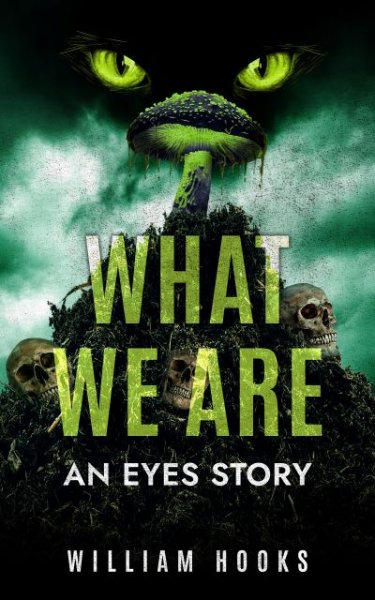
Ritz is the best friend of both Hooks and Dez — the protagonists of Book One. The manipulations of the former lead the three into a perilous situation they could never have predicted. But Ritz is separated from the others when his bus crashes, and he is faced with a threat potentially all the more deadly than The Eyes.
While Ritz struggles for his life, THE COMPANY at the forefront of A-World matters is getting involved. What makes Book Two psychological horror rather than a continuation of Book One's conspiracy thriller is the isolation. Ritz is alone. He doesn't have Dez's support network or Thurgood's outside perspective. He's a kid who fell into the same trap as his friends but landed somewhere worse, and the story makes you feel that separation in every chapter. The Horror, Psychological, and Mystery genre tags all pull in the same direction here — a character trying to piece together what's happening to him while the ground keeps shifting.
37 chapters and growing. You can read this as a continuation of Book One, or on its own if you don't mind landing mid-story. The dual-narrative structure is denser than Book One, but the payoff is worth it.
Read it if you like: Squid Game Season 2, The Boys, sequels where the side character becomes the protagonist and the stakes get personal.
Read What We Are: An Eyes Story Book Two free on NovelDay →
7. HORDE: Annunciation
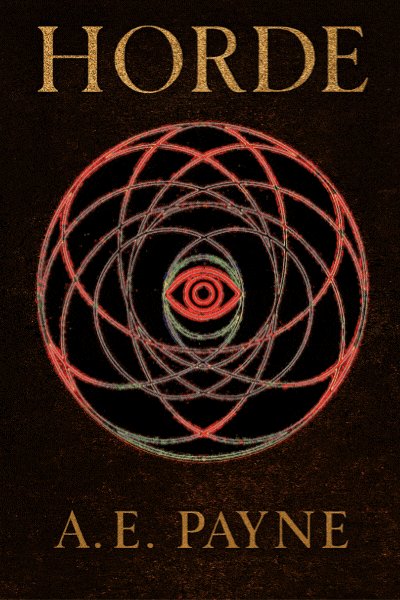
In an act of desperation, the historian Aurora Payne sold her soul. Now, the Devil has collected his due. But Aurora soon finds that the real Hell is hardly anything like its theological descriptions.
Hell is not just a jail for sinners. It's a prison for the most destructive entity in the universe: the Horde. An ancient deity akin to a black hole, the Horde is the mother of all demons and nightmares. The Celestials constructed Hell over 8,000 years ago to be Its jail and have sent the humans there to be Its food. Forced into a cosmic order that treats humans as livestock, Aurora must choose between survival and keeping her soul intact.
What makes this psychological horror rather than supernatural fantasy is the unreliable narrator tag. Aurora is a historian, and historians document. But what happens when the person documenting the story has already sold her soul to get there? Every observation is filtered through someone who made a deal she can't take back, and the story doesn't let you forget it. The grimdark and dark tags are earned — this is cosmic horror with a personal lens, and the romance subplot doesn't soften the edges. If anything, it makes them sharper.
24 chapters across Book 1 of the HORDE series. A shorter read, but dense. The philosophical and psychological layers mean you'll be thinking about Aurora's choices long after you close the tab.
Read it if you like: The Sandman, Good Omens (but darker), stories where the narrator made a deal with the devil and you're not sure she regrets it.
Read HORDE: Annunciation free on NovelDay →
For Supernatural Psychological Horror
8. The Shattering Point
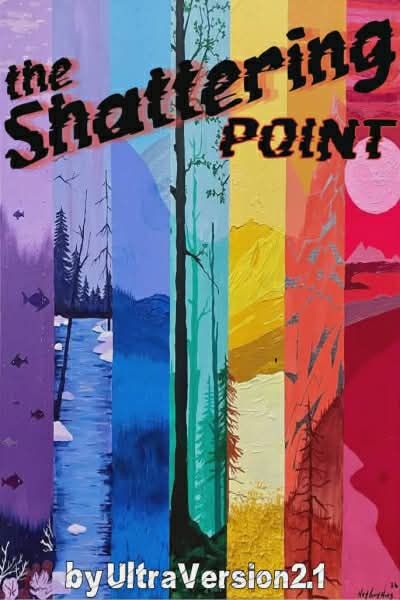
They woke up scattered outside their small hometown with paradoxical memories they can't hold onto. For more than two years, they've fought to get back. They could never have anticipated what's waiting for them.
The Shattering Point is hard to describe without spoiling it, because the core horror is that nothing is stable. Not memory, not reality, not identity. Multiple POVs, multiple worlds, and the slow revelation that all of them might be the same story told wrong. What makes this different from the other novels here is the scope — where most psychological horror keeps its cast small and its setting tight, this one spreads across worlds and timelines and still makes the uncertainty feel personal. You're not watching one person question their reality. You're watching several people question realities that might all be the same one.
For those wondering, this is a 15-hour read. Don't be misled by the 49-chapter count. The chapters are long. Grab a coffee and settle in. Readers who enjoyed our sci-fi books list will find familiar territory here. The Shattering Point lives at the intersection of science fiction and psychological horror.
If you watched Dark on Netflix and liked it, or Westworld, this is the web novel equivalent. Stories where reality is negotiable.
Read The Shattering Point free on NovelDay →
9. The Sky That Lied
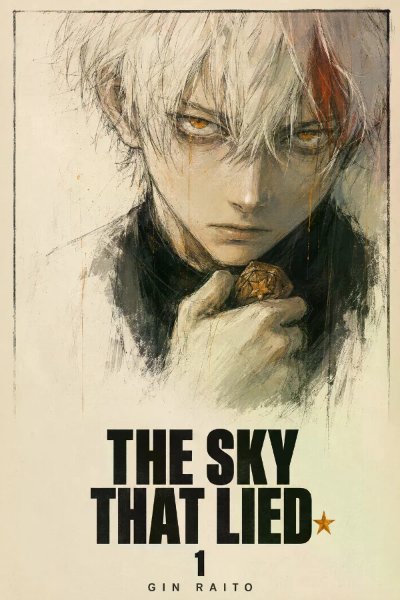
Stars are liars. Not because they speak, but because the people who record them bury their secrets in blood.
Shiro Aratani is a slum boy who carves stars to prove he exists. Kuro is the boy who finds him, gilded, sharp, and breaking under a weight he won't name. Valeria is the soldier who refuses to let either boy be erased. When their lives collide, a forbidden pattern forms, one the powerful would bury, one the Academy whispers about.
The psychological horror here is institutional. This is a school life story set in a world where the people in power have decided what the truth is, and anyone who contradicts it disappears. A system that decides who gets to exist and who gets erased, and Shiro carving stars to prove he's real is the kind of detail that stays with you long after you close the tab. What makes this different from the other entries is the cast. Shiro, Kuro, and Valeria aren't fighting the system so much as trying to survive being erased by it, and the way their three perspectives overlap is what gives the horror its weight.
This is a good 5-hour read. The author has also spent time adding characters in the characters tab, so if you connect with them, give them a like to boost their ranking.
Read it if you like: The Magicians (the books, not the show), The Secret History, academic settings where the institution is the monster. Fans of our dark academia list will feel the overlap.
Read The Sky That Lied free on NovelDay →
10. Digital Breaths: The Warden of the Grand Prison
![Digital Breaths [Act 1]: The Warden of the Grand Prison](https://novelday.net/api/novels/14754/image/1784375888)
25 years ago, one of the biggest internet mysteries began from one of the most popular games of the 2000s. Lethe. The game produced an entity displaying anomalous properties: the Warden, a Lethe guard who has been known to aid those in dire need in the real world, and punish those who have committed severe transgressions. The latter disappear without a trace. Now, John Bielik of Digital Investigations is diving deep into the darkest recesses of the internet to uncover why an NPC can interact with the real world, and what happened to the people who vanished.
This is psychological horror wearing a creepypasta skin. No jump scares. Just the slow realization that something from inside a game is reaching out, and the amnesia tag means the people who encountered the Warden don't fully remember what happened to them. John Bielik's investigation, told through witness testimonies and case files, makes you the detective, and the answers are worse than the questions. What sets this apart is the format: it reads like an internet deep-dive, the kind of thing you'd find on a forum at 2 AM, except the mystery is actually unfolding and the NPC might be real.
24 chapters with the mystery deepening every installment. Act 2: Returnal is also available if you want to continue the story. If you've ever gone down a late-night internet rabbit hole about haunted games or anomalous NPCs, this is the novel version of that feeling.
Read it if you like: Ben Drowned, Petscop, The Stanley Parable, internet horror that makes you question whether the game is just a game.
Read Digital Breaths free on NovelDay →
11. Carrion Mind
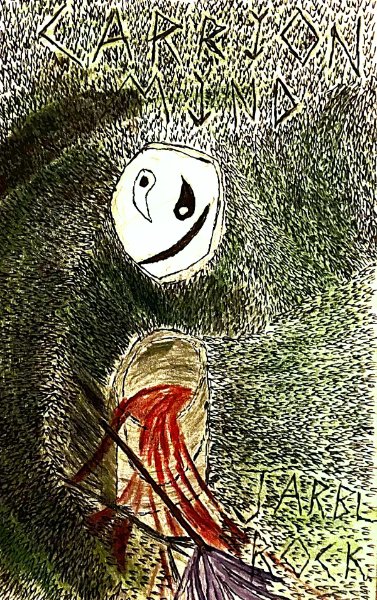
Douglass Draemin is a scrubber. His job is to clean up the stains left behind by the human conscious in the ether ways, a dreamscape used for high-speed communication in a society with otherwise unadvanced technology. The stains accumulate if left unchecked, and when they do, they cause a widespread disease. His life is upended when a large number of scrubbers working inside military camps by the border are murdered.
On his way to do his part to stop an outbreak, he meets a peculiar woman who disturbingly smiles mischievously in the face of the filth of the human mind.
What makes Carrion Mind psychological horror rather than fantasy is the premise itself. The ether ways are built from human consciousness, and the "stains" are the accumulated psychological waste of an entire society. Douglass is literally cleaning up other people's mental filth, and the question the novel asks is what that does to a person over time. The woman who smiles at the filth isn't a monster in the traditional sense, she's someone who finds the horror of the human mind amusing, and that's worse. The Horror, Psychological, and Tragedy genre tags all pull in the same direction: a story about what happens when you spend your life wading through the worst of what people think, and someone else finds it funny.
32 chapters. The dreamscape setting sets this apart from everything else on the list, it's not a game world, not a post-apocalyptic wasteland, not a school. It's the inside of a collective mind, and the horror is what's been left there.
Read it if you like: Paprika, Inception, stories where the dreamscape is the battlefield and the enemy is what people think when no one's watching.
Read Carrion Mind free on NovelDay →
12. Digital Lost
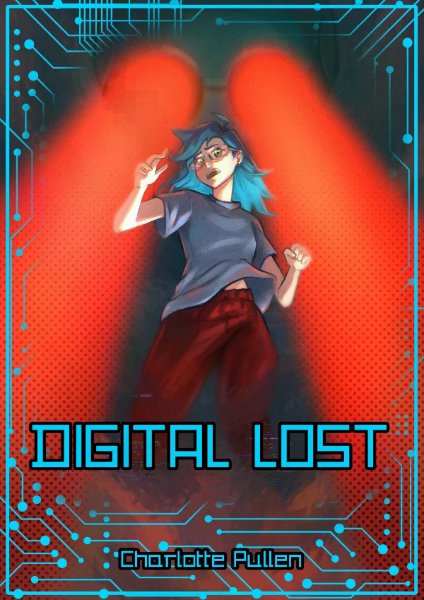
Thrown into a strange place, Alpha must learn where she is and how to get home. She can't recall what she is supposed to look like, but it certainly isn't... this.
Bugs, glitches, and bad programming are everywhere. She needs to get as much help as possible to make it through. If only these nightmares would just stop, she is already trying to save herself from one already.
What makes Digital Lost psychological horror rather than a game adventure is the identity loss. Alpha doesn't just not know where she is. She doesn't know what she looks like. She doesn't know what she's supposed to be. The Horror, Psychological, and Adventure genre tags create a triangle, the adventure pulls you forward, the horror keeps you on edge, and the psychological layer makes you question whether Alpha is even a person. The glitches aren't just game mechanics. They're moments where reality breaks, and each one takes another piece of who she used to be.
27 chapters. If Digital Breaths (entry #10) hooked you with its game-world horror, this is the companion piece, a different author, a different game world, but the same fundamental question: what happens to your mind when the rules of reality stop working?
Read it if you like: Tron: Legacy, Sword Art Online (but the Abridged version), stories where the protagonist doesn't know who they are and the world won't stop glitching.
Read Digital Lost free on NovelDay →
For the Long Haul
13. Denpa Skies
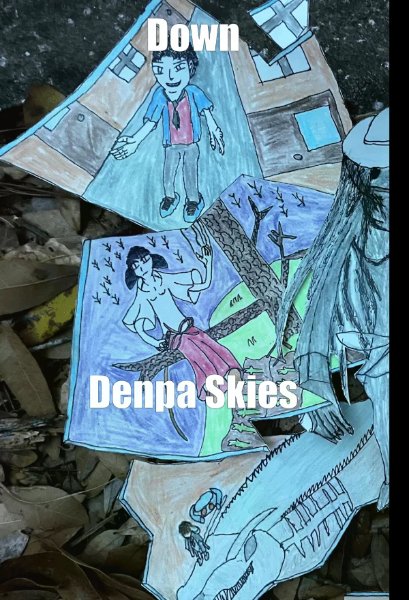
Six souls were taken and placed inside games designed by spirits from beyond, for the purpose of a mysterious ceremony. Inside the games, the six must change to change the world, or risk throwing away their one chance at redemption. Only they don't understand what's at stake. As far as they're aware, these are the same homes they've always lived in.
The cover style is the author's own, and at 106 chapters, this is one of the longest psychological horror reads on the list. It earns its length. The structure is unusual. Six characters across six different game-worlds (an RPG, an otome game, a farming sim, a crafting sandbox, a dating sim, and an urban supernatural game), each with their own genre and tone, all slowly converging.
The horror is in the disconnect. Each character thinks they're living their normal life. They're not. They're in a game they don't remember entering, and the truth of what's happening to them is worse than anything they're facing in their "games." Over a hundred chapters, the six storylines pull together, the RPG, the otome game, the farming sim, the crafting sandbox, the dating sim, and the urban supernatural game, and the slow convergence is where the devastation lives. What makes this different from everything else on the list is the sheer scale: six protagonists, six genres, one unraveling mystery, and none of them know they're playing.
If you want a psychological horror novel you can live in for a month, this is the one. Danganronpa fans and anyone who played I Was a Teenage Exocolonist will recognize the shape. Stories where the game is the cage and the player doesn't know they're playing.
Read Denpa Skies free on NovelDay →
14. Stillore: Shard and Canvas
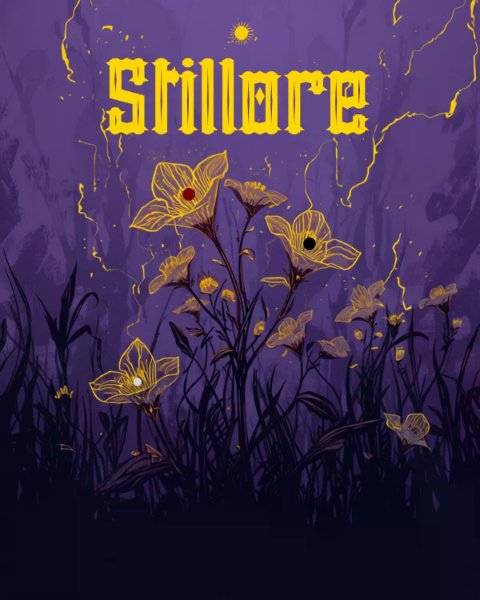
"Human madness shines brightest at the dawn of the end."
After a century of war and disasters that the Archipelago of Andimica has chosen to forget, an uneasy peace holds the city of Bayork together. Beneath it, something stirs. Hel Frequency, an energy whose existence science has only begun to name, is bleeding into the world, and the organisations that want to control it are already moving.
Lance Klint is eighteen, a caring delivery guy, and a brother searching for a sister who disappeared without a trace. During a failed delivery, he finds himself halfway between his old world and the new reality built by horrors beyond human comprehension and the very madness that is consuming the world. Lance will understand that nothing is quite what it really is, and that no coincidences were behind his tragedy.
At 33 hours and 115 chapters, Stillore is the longest read on this list by a wide margin. It earns every hour. What makes this psychological horror rather than urban fantasy is the tag list: psychological, twisted personality, grimdark, gore, amnesia, mystery, thriller, supernatural. This isn't a story about a hero fighting monsters. It's about a boy who discovers that the world he lives in has been lying to him, that his sister's disappearance is connected to something ancient and wrong, and that the madness consuming the city might be the most honest thing about it.
The multiple-POV structure and the sheer scope mean you're not just following Lance. You're following the conspiracies, the organisations, the people who know what Hel Frequency is and want to control it. The Horror, Psychological, Urban, and Mystery genre tags create a story that shifts between cosmic horror and personal loss, and the 33-hour runtime gives the psychological unraveling room to breathe in a way shorter novels can't match.
If you want a psychological horror novel you can live in for a month, longer than Denpa Skies, longer than anything else on this list, this is the one. Fans of our grimdark guide will recognize the tone, and Umineko When They Cry readers will recognize the structure: a story where the mystery is the horror, and the horror is that the truth might be worse than the lies.
Read Stillore: Shard and Canvas free on NovelDay →
Famous Psychological Horror vs. NovelDay Equivalents
If you're coming to web novels from traditional publishing, here's how the novels on this list compare to the books and shows you might already know.
Shutter Island (Dennis Lehane) → The Shattering Point. Both are about the instability of memory and identity. Both make you question whether the protagonist is the hero or the problem. The difference is scale. Shutter Island keeps it to one man on one island. The Shattering Point spreads the uncertainty across multiple worlds and timelines.
Death Note (Tsugumi Ohba) → The Killer's Consultant. Both are cat-and-mouse stories where the detective and the killer are mirrors of each other. Both ask how much of the pursuit is about justice and how much is about obsession. The Killer's Consultant adds the K-drama layer, the suspect is a beloved actor who played a killer on screen.
Gone Girl (Gillian Flynn) → I Swear I Saw You Die. Both feature narrators who might not be telling you the truth, and both make you complicit in the deception. The difference is tone. Gone Girl is cold and calculated. I Swear I Saw You Die is funny, warm, and then quietly devastating.
The Silent Patient (Alex Michaelides) → HORDE: Annunciation. Both feature narrators who have made a choice they can't take back and who document their own descent. The Silent Patient keeps it in a therapist's office. HORDE opens up into cosmic horror, but the psychological core is the same: a woman who sold her soul and is now telling you the story.
Danganronpa → Denpa Skies. Both trap characters in game-worlds they don't recognize as games. Both use genre conventions (RPG, otome, farming sim) as cages. The difference is that Danganronpa tells you it's a game from the start. Denpa Skies lets the characters figure it out over a hundred chapters.
Frequently Asked Questions
What makes psychological horror different from regular horror?
Regular horror threatens you from the outside. A monster, a killer, a haunted house, the threat is external and visible. Psychological horror threatens you from the inside. The threat is uncertainty: about the narrator, about reality, about whether the protagonist is the hero or the problem. Think Friday the 13th (regular horror) versus Shutter Island (psychological horror). In web novels, the serialized format makes psychological horror particularly effective because the uncertainty builds over dozens or hundreds of chapters, giving the dread room to compound in a way standalone novels and films can't match.
Are these psychological horror novels actually free to read?
Yes. Every novel on this list is free to read on NovelDay, with no paywalls, no premium locks, and no chapter unlocks. You can read every chapter of every novel without paying. The novels are serialized, updated chapter by chapter by their authors, so some are ongoing and some are complete. The metadata line for each entry tells you the reading time, chapter count, and whether the story is ongoing or complete.
Which psychological horror novel should I start with?
If you're new to psychological horror, start with The Killer's Consultant. It's the most accessible entry point, a crime thriller that slowly reveals its psychological horror teeth, with a clear cat-and-mouse structure and only 19 chapters. If it hooks you, I Swear I Saw You Die is your next stop. If you want something longer, Stillore: Shard and Canvas is the deepest read on the list at 33 hours and 115 chapters.
Can I write my own psychological horror on NovelDay?
Yes. NovelDay is built for serialized fiction. If you're a writer thinking about serializing your own psychological horror, or any fiction that isn't LitRPG, you can publish chapter by chapter, build an audience, and get feedback from readers as you go. Every author on this list started with chapter one and built their story from there. The platform is free to use, and you retain full ownership of your work.
What I Noticed After Reading Fourteen of These in a Row
A few things stood out. Worth knowing if you're hunting for more on your own.
Unreliable narrators are the foundation. Almost every novel on this list has a narrator who might not be telling you the truth, or might not know the truth themselves. That's what makes serialized psychological horror work. You're not just reading a story. You're reading a story through a filter, and the filter might be cracked. Browse more psychological novels to find your own, and check out our guide on unreliable narrators for a deeper dive into the technique.
Slow burn beats jump scares. The best psychological horror doesn't shock you. It makes you uncomfortable, and then it keeps you there. This Is How I Lived does this across 67 chapters. The Killer's Consultant does it in 19. The length doesn't matter. The sustained unease does.
The horror is usually personal. No novel on this list features a monster as the primary threat. The threats are memory loss. Moral compromise. Institutional power. Obsession. Identity. The scariest thing in psychological horror isn't what's outside the door. It's what's behind your eyes.
Format matters. Diary entries. Unsent texts. Multiple POVs with contradictory memories. The structure of the story is part of the horror. When a web novel uses its format to hide information from you, that's psychological horror doing its best work.
Where to Read These Novels
All fourteen novels are free to read on NovelDay, updated chapter by chapter. No paywalls, no premium locks. Just serialized fiction, the way it's meant to be.
- Browse all horror web novels
- Browse all psychological web novels
- Browse grimdark novels for darker reads
- Browse supernatural novels for things that go beyond the natural
- Browse the full library for more free serialized fiction
If you're new to psychological horror, start with The Killer's Consultant. It's the most accessible entry point on the list, a crime thriller that slowly reveals its psychological horror teeth. If it hooks you, I Swear I Saw You Die is your next stop.
And if you're a writer thinking about serializing your own psychological horror, or any fiction that isn't LitRPG, NovelDay is built for exactly that.
Want more recommendations? Follow The Storyteller's Journal for weekly lists, genre guides, and reviews of the best serialized fiction on the web. You might also enjoy our best horror books list, our grimdark guide, and our sci-fi recommendations.