7 Best Dystopian Books to Read Free Online
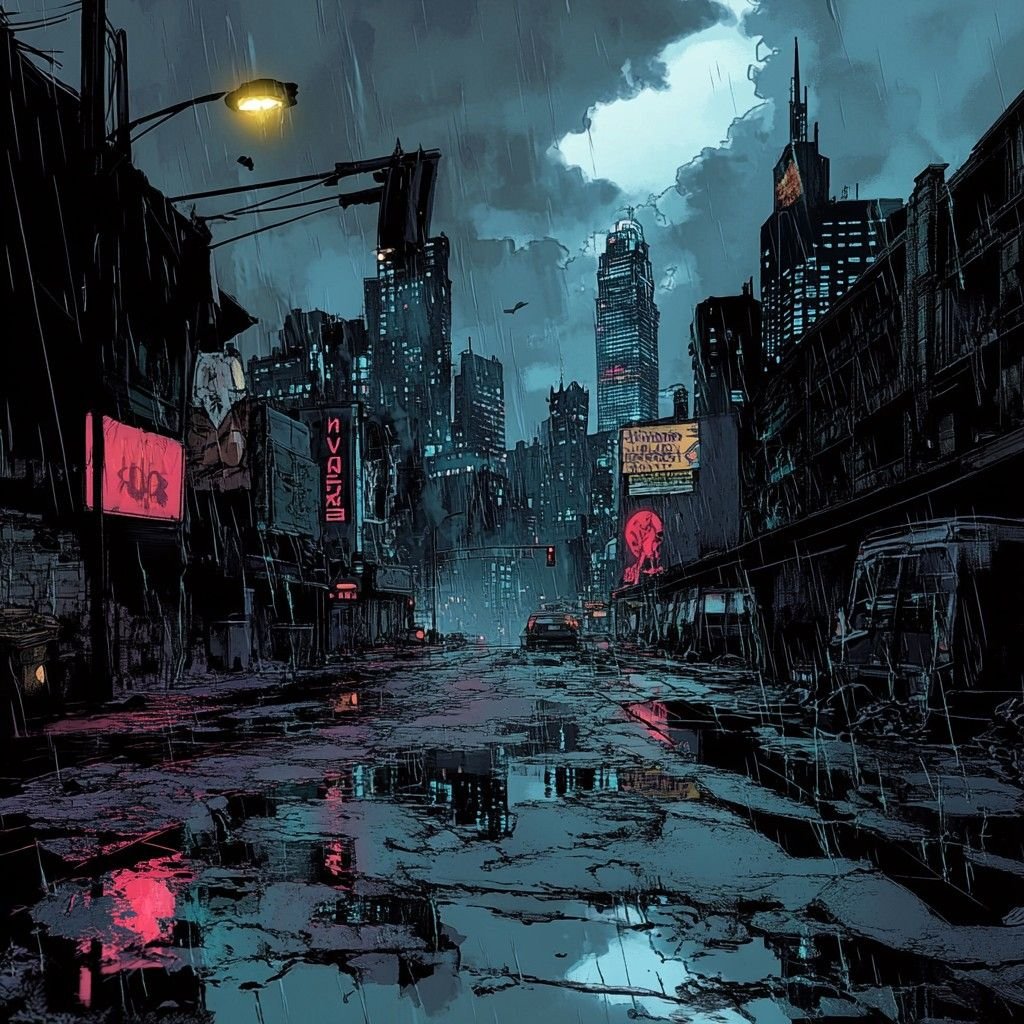
Dystopian fiction asks the question that every other genre avoids: what if the world we built to protect us becomes the thing we need protection from? The best dystopian books do not just show a broken society. They show people living inside it, making compromises, surviving, and sometimes fighting back against systems that were designed to crush them. From totalitarian empires to post-apocalyptic wastelands to digital prisons, the genre spans every kind of collapse imaginable.
This is a list of 7 free dystopian books you can read right now on NovelDay, ranging from a 14-hour apocalyptic epic to a 2-hour descent into Hell itself. No paywalls, no premium tiers, no "wait 23 hours for the next chapter" timers. Just free fiction, updated regularly by independent authors who write because they have stories to tell.
If you have read my horror books guide or my grimdark guide, you know that NovelDay's catalog leans dark. Dystopian fiction sits right at the intersection of horror, science fiction, and social commentary, and these seven novels represent the strongest collapse-and-survival stories on the platform.
What Makes Dystopian Fiction Worth Reading?
Dystopian novels work differently from other genres. A romance asks whether two people will end up together. A mystery asks who did it. A thriller asks whether the hero will survive. Dystopian fiction asks something harder: what kind of society do we deserve, and what happens when the answer is "not this one"?
The genre splits into several branches. Social dystopia focuses on oppressive governments, surveillance states, and engineered inequality (think The Hunger Games or 1984). Post-apocalyptic dystopia deals with the aftermath of collapse: survivors scavenging through ruins, rebuilding fragile communities, fighting over dwindling resources (think The Road or Station Eleven). Technological dystopia explores digital prisons, virtual hells, and systems that trap people inside machines (think The Matrix or Ready Player One gone wrong).
All seven novels on this list fall into at least one of those branches. Some span all three. What they share is a refusal to look away from the worst-case scenario, and a focus on characters who have to make impossible choices inside systems they did not build and cannot escape.
The 7 Best Dystopian Books to Read Free Online
These are ordered by reading time, longest first. If you want a deep binge, start at the top. If you want something you can finish in an afternoon, work your way down.
1. The Shattering Point
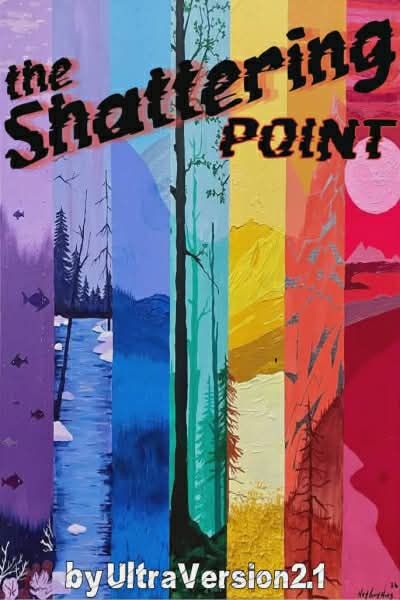
The Shattering Point opens with a group of people waking up scattered outside their small hometown with memories they cannot hold onto. For more than two years, they have fought to get back home, but nothing prepared them for what they find when they finally arrive. The world they left behind has been replaced by something that wears the same face but operates by completely different rules.
What makes this novel fit the dystopian shelf is not just the apocalypse tag or the zombies tag or the post-apocalyptic tag. It is the way the story treats collapse as a process, not an event. The characters do not wake up to a single disaster. They wake up to a world that has been quietly rewritten while they were gone, and the horror comes from discovering layer after layer of what changed. Multiple POV chapters show different survivors experiencing the same collapse from different angles, and the truth about what happened to their town unfolds across 48 chapters of steadily tightening dread.
This is the longest novel on the list and the one that most rewards a binge read. The author blends science fiction, horror, and survival into something that reads like a cross between Station Eleven and The Mist, with a time-travel mechanic that adds a layer of temporal disorientation to the physical collapse. If you want one dystopian novel to sink into for two weeks, this is it.
Read The Shattering Point free on NovelDay →
2. The Weight of Falling Objects Book 1: The Oasis of the Eye
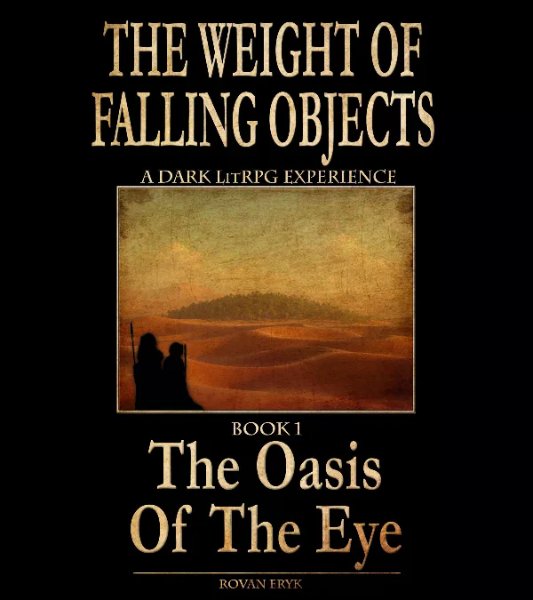
Deep in the inaccessible depths of the desert, several hundred miles east of the dead cities that comprise the arc of the Varkhana ruins, there is another dead city, a place far more ancient. That is the opening image of The Weight of Falling Objects, and it tells you exactly what kind of dystopian novel you are walking into. This is not a story about a society that collapsed yesterday. This is a story about a world where civilization died so long ago that the ruins have ruins, and the survivors have forgotten what the original cities were even called.
The protagonist arrives in this dead zone with nothing but a sword, a mysterious past, and a system that grants power through slow, painful growth. The dystopian element is not a government or a corporation. It is the environment itself: a desert that stretches in every direction, dotted with the corpses of civilizations that tried and failed to rebuild. The survival tag is not decorative. The character genuinely struggles to find water, shelter, and safety across 39 chapters of methodical, atmospheric world-building.
If you like your dystopian fiction with a literary sensibility and a philosophical edge, this is the novel on the list that takes itself most seriously. The prose is deliberate, the pacing is slow-burn, and the world feels genuinely ancient. It also crosses over into progression fantasy territory, so readers who enjoy Cradle or He Who Fights with Monsters will find a familiar power structure wrapped in a much darker setting.
Read The Weight of Falling Objects free on NovelDay →
3. The Spartan of Invicta
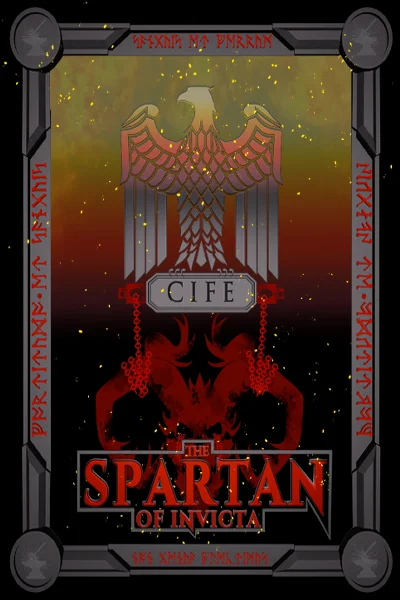
The Empire of Invicta does not run on mercy. It runs on Houses, Board-chambers, forged gods in warplate, and the living weapons called Vardengard: engineered killers bound by code, collar, and creed. That is the world The Spartan of Invicta drops you into, and it is one of the most fully realized dystopian empires on NovelDay.
This is social dystopia dressed in science-fantasy armor. The Empire controls its citizens through engineered soldiers, manufactured deities, and a rigid class system that treats human beings as resources to be allocated. The protagonist navigates this hierarchy from the inside, which means the reader sees the machinery of oppression up close rather than from a safe distance. The 82-chapter count is the highest on this list, and the author uses that space to build out the Empire's political structure, military doctrine, and the personal cost of serving a system that owns you body and soul.
What sets this apart from standard dystopian fare is the military angle. This is not a story about a rebel overthrowing a regime. It is a story about a soldier living inside one, and the moral compromises that survival requires. If you liked the Imperial sections of Andor or the clone-ethics of Red Rising, this is the NovelDay novel that scratches the same itch.
Read The Spartan of Invicta free on NovelDay →
4. The Eyes Series (Books 1 and 2)
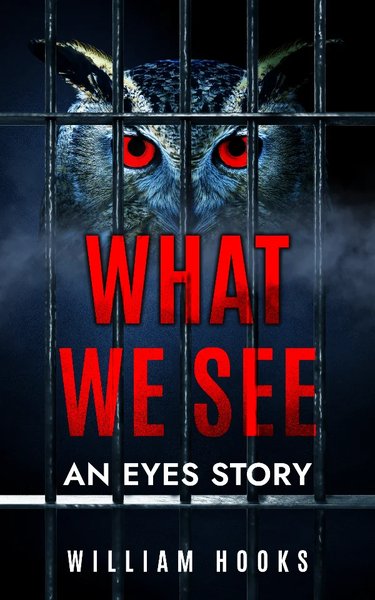
Desmond Little, who goes by Dez, grew up in the small town of Eyeville feeling like he was missing something his entire life. He was right. The Eyes Series is a two-book sci-fi horror saga about genetic modification, evil organizations, and the slow discovery that the world you grew up in was designed by people who do not think of you as a person.
I am featuring both books as one entry because the story runs directly from What We See: An Eyes Story (Book One) (4hr 50min, 29 chapters) into What We Are: An Eyes Story (Book Two) (6hr 15min, 37 chapters). Together, that is 11 hours and 66 chapters of escalating conspiracy, and the dystopian element gets stronger as the series progresses.
Book 1 establishes the town of Eyeville and the creeping wrongness beneath its surface. Book 2 expands the scope to reveal the organizations behind the genetic experiments, the gods they serve, and the androids and zombies they deploy as weapons. The dystopian core is not a government but a corporate-scientific conspiracy that has been running for generations, and the horror comes from watching Dez realize how deep the manipulation goes.
If you want a dystopian series that blends body horror with institutional evil, this is the darkest entry on the list. It shares DNA with Severance and The Boys in its depiction of organizations that treat human beings as raw material.
Read The Eyes Series free on NovelDay →
5. Digital Lost
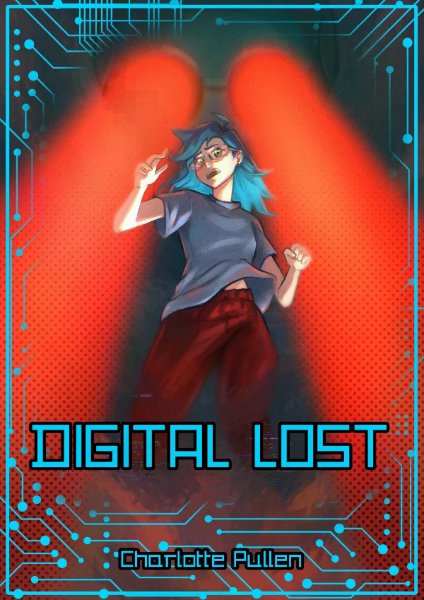
Thrown into a strange place, Alpha must learn where she is and how to get home. She cannot recall what she is supposed to look like, but it certainly is not this. Bugs, glitches, and bad programming surround her. That is the setup of Digital Lost, and it is the most literal technological dystopia on this list: a character trapped inside a broken digital world that was built by someone who either did not finish the job or did not care.
The dystopian element here is not a society but a system. Alpha navigates a world of corrupted code, malfunctioning environments, and entities that behave like programs running on bad instructions. The survival tag is active because the digital world is genuinely dangerous: glitches can kill, and the system's rules are inconsistent enough that nothing is safe. The psychological tag comes from Alpha's fragmented memory and her struggle to reconstruct her identity from the pieces the system left intact.
If you have ever read The Matrix fan fiction and wished someone would write the version where the simulation is actively falling apart, this is that novel. It is the shortest "complete" story on the list that still delivers a full narrative arc, and the digital-prison angle makes it a unique entry alongside the post-apocalyptic and social-dystopia novels.
Read Digital Lost free on NovelDay →
6. This Is How I Lived [A Post-Apocalyptic Diary]
![This Is How I Lived [A Post-Apocalyptic Diary]](https://novelday.net/api/novels/14753/image/1784375449)
The sky keeps bleeding. The undead roam the streets mumbling to themselves. That is not even the worst of the apocalypse. There is also Lindsay. That is how This Is How I Lived introduces its world, and the dark humor sets the tone for everything that follows. This is a post-apocalyptic diary written in the epistolary format, and the diary structure makes it one of the most intimate dystopian novels on the platform.
The all-time rank of #3 on NovelDay is not an accident. This is the highest-ranked novel on this list, and it earned that position through 67 chapters of diary entries that mix genuine horror with a protagonist whose voice is sharp, funny, and increasingly unreliable. The zombies are the visible threat, but the real dystopian element is the social collapse: the way survivors turn on each other, form fragile alliances, and break them when the pressure gets high enough.
The epistolary format means you get the protagonist's thoughts in real time, including the moments she lies to herself. That makes this the most psychologically intimate entry on the list. If you liked the journal entries in World War Z or the diary format of I Am Legend, this is the NovelDay novel that carries that tradition forward. It also crosses over with my psychological horror guide, where it was originally featured.
Read This Is How I Lived free on NovelDay →
7. HORDE: Annunciation
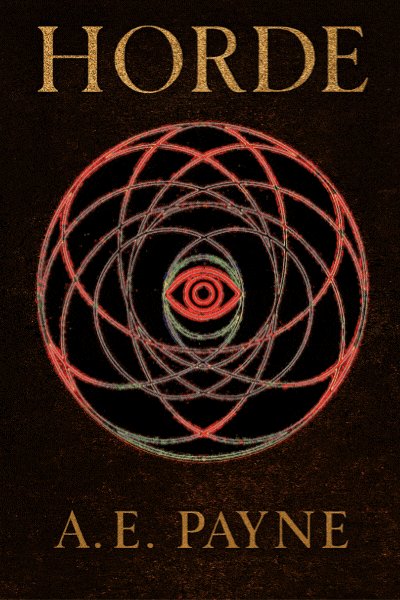
In an act of desperation, the historian Aurora Payne sold her soul. Now the Devil has collected his due. But Aurora soon finds that the real Hell is hardly anything like its theological descriptions. That is the premise of HORDE: Annunciation, and it is the most unconventional dystopia on this list. Hell itself is the dystopian system: a bureaucracy of suffering with its own rules, hierarchies, and power structures, and Aurora has to navigate it as a newly arrived soul who refuses to accept that this is all there is.
The apocalypse tag is active because the story deals with the end of the world on a cosmic scale, not just a personal one. The survival tag is active because Hell is a place where everything is trying to consume or corrupt you. And the dystopian element is the system itself: a hierarchy of demons, gods, and damned souls that operates with the cold efficiency of a totalitarian regime. Aurora's background as a historian gives her a unique perspective on the machinery of Hell, and the author uses that to explore themes of institutional evil, religious corruption, and the way power structures persist even after the apocalypse.
This is the shortest entry on the list, but it is also the most densely written. The author packs more world-building into 23 chapters than most novels manage in 80, and the prose has a literary quality that elevates it above standard horror-fantasy. If you want a dystopian novel that takes you somewhere no other book on this list goes, HORDE: Annunciation is the one that literally goes to Hell.
Read HORDE: Annunciation free on NovelDay →
What Should I Read First?
If you want the longest, most ambitious dystopian epic on the list, start with The Shattering Point. It has the most content, the highest all-time rank, and the broadest scope of any novel here.
If you want the most traditionally post-apocalyptic story, start with This Is How I Lived. The diary format, the zombies, and the all-time #3 rank make it the most accessible entry point.
If you want a dystopian empire with military politics and engineered soldiers, start with The Spartan of Invicta. It has 82 chapters of world-building and the most developed political system on the list.
If you want something short and intense, start with HORDE: Annunciation. It is 2.3 hours of literary horror-fantasy set in Hell, and it moves fast.
More Dystopian and Dark Fiction on NovelDay
If you finish these seven and want more, the Survival tag on NovelDay collects every novel with survival elements, including several that overlap with the Sci-Fi genre and the Horror genre. The Grimdark tag is also worth exploring if you like the darker end of the dystopian spectrum, and my grimdark guide covers 5 more novels that share the bleak, morally complex tone of the novels on this list.
For readers who want to explore the full catalog, the NovelDay library has over 100 free web novels across every genre, all server-rendered and free to read with no account required. And if you are a writer with a dystopian, post-apocalyptic, or survival story of your own, you can publish it free on NovelDay and reach readers who are actively looking for exactly that kind of fiction.
Famous Dystopian Books (And How These Compare)
If you are coming to this list from traditional publishing, you probably know the classics. Here is how the novels above compare to the dystopian books that defined the genre.
The Hunger Games by Suzanne Collins
The Hunger Games defined modern YA dystopia: a totalitarian regime that sacrifices children for entertainment, a reluctant hero who becomes a symbol of rebellion, and a love triangle that humanizes the politics. If that is what you are looking for, The Spartan of Invicta is the closest match on this list. It shares the engineered-soldier concept, the oppressive empire, and the focus on a protagonist surviving a system that treats people as resources. The difference is that The Spartan of Invicta is adult science-fantasy rather than YA, and the protagonist is inside the military machine rather than rebelling against it from the outside.
1984 by George Orwell
1984 is the grandfather of social dystopia: surveillance, thought control, manufactured truth, and a protagonist who works inside the system that oppresses him. The surveillance-state angle appears in The Eyes Series, where the conspiracy is not a government but a corporate-scientific organization that has been watching and manipulating people for generations. If you want the version where Big Brother is a lab coat instead of a bureaucrat, that is the series to read.
The Road by Cormac McCarthy
The Road stripped post-apocalyptic fiction down to its barest elements: a father and son walking through ash, with no explanation of what happened and no hope that anything will improve. This Is How I Lived is the NovelDay novel that carries that same intimate, diary-driven approach to survival. The difference is that This Is How I Lived has zombies, dark humor, and a protagonist whose voice is sharp enough to make you laugh between the horrors. It is less bleak than McCarthy but no less committed to showing what collapse feels like from the inside.
Station Eleven by Emily St. John Mandel
Station Eleven is literary post-apocalyptic fiction that focuses on what survives after collapse: art, memory, community, and the fragile connections between strangers. The Weight of Falling Objects is the NovelDay novel that shares that literary sensibility. It is set in a world where civilization died so long ago that the ruins have ruins, and the protagonist's journey through the dead cities has the same contemplative, archaeological quality that made Station Eleven stand out from the survival-fiction pack.
The Matrix (film)
The Matrix is the definitive technological dystopia: a simulated world that traps humanity while machines use their bodies as batteries. Digital Lost is the NovelDay novel that takes this concept and makes the simulation broken rather than perfect. Instead of a seamless illusion, Alpha navigates a world of glitches, corrupted code, and entities running on bad instructions. It is the version of The Matrix where the system was never finished, and the bugs are lethal.
Frequently Asked Questions About Dystopian Books
What is a dystopian book?
A dystopian book is a novel set in an imagined society where life is dehumanized, oppressive, or collapsed. The genre typically features a totalitarian government, a post-apocalyptic wasteland, a technological prison, or some combination of all three. The protagonist usually lives inside the dystopian system and must either survive it, escape it, or overthrow it. Dystopian fiction is distinct from post-apocalyptic fiction in that it focuses on the system of oppression itself, not just the aftermath of disaster. However, the two genres overlap heavily, and many novels on this list qualify as both.
What are the best dystopian books of all time?
The most commonly cited classics are 1984 by George Orwell, Brave New World by Aldous Huxley, Fahrenheit 451 by Ray Bradbury, The Handmaid's Tale by Margaret Atwood, and The Hunger Games by Suzanne Collins. For modern dystopian fiction, The Road by Cormac McCarthy, Station Eleven by Emily St. John Mandel, and The Power by Naomi Alderman are widely recommended. The seven novels on this list are free web novels that cover the same thematic territory as those classics, with the advantage of being ongoing serials that update regularly.
Are dystopian books still popular?
Yes. Dystopian fiction has been one of the most consistently popular genres in both traditional publishing and web fiction for over a decade. The Hunger Games trilogy, the Divergent series, and The Maze Runner series proved that there is a massive audience for collapse-and-rebellion narratives, and that audience has migrated to web fiction platforms as readers seek longer, serialized stories. On NovelDay, the survival and post-apocalyptic tags are among the most active, and several of the novels on this list rank in the top 20 of all-time readership.
What is the difference between dystopian and post-apocalyptic?
Dystopian fiction focuses on a society that is functioning but oppressive: the system works, but it works against the people living inside it. Post-apocalyptic fiction focuses on the aftermath of a collapse: the system is gone, and the story is about survival in the ruins. Many novels combine both. A society can be dystopian before the apocalypse and post-apocalyptic after it. On this list, The Spartan of Invicta is primarily dystopian (the Empire is functional but oppressive), while This Is How I Lived is primarily post-apocalyptic (the collapse has already happened). The Shattering Point spans both, showing the transition from one to the other.
Where can I read dystopian books for free?
All seven novels on this list are free to read on NovelDay with no paywall, no premium tier, and no account required. NovelDay is a free web fiction platform where independent authors publish serialized novels chapter by chapter. You can browse the full catalog at the NovelDay library, or filter by genre using the Sci-Fi genre page and the Horror genre page, both of which include dystopian and post-apocalyptic novels.
Start Reading Dystopian Fiction Free
Dystopian fiction is not just about despair. It is about what people do when the systems around them fail. The seven novels on this list cover every branch of the genre: social dystopia, post-apocalyptic survival, technological imprisonment, and cosmic collapse. They are all free to read on NovelDay, all written by independent authors, and all updated regularly as new chapters are published.
Pick the one that sounds right for you, open the first chapter, and start reading. No paywall, no signup, no wait. And if you finish all seven and want more, the library has over 100 more free web novels waiting.
Are you a writer with a dystopian, post-apocalyptic, or survival story? Publish it free on NovelDay and reach readers who are actively searching for exactly that kind of fiction.