Best LitRPG Books: Serials Where the Grind Pays Off
LitRPG is the genre that asks: what if the story admitted it runs on rules? Levels, classes, stat sheets, skill trees, system messages popping up mid-fight. Done badly it is a spreadsheet wearing a plot. Done well, it is the most honest form of power fantasy ever invented, because you watch the protagonist earn every single point. The eight LitRPG books below are all free to read on NovelDay, ordered longest first, and they cover the genre's whole range: apocalypse systems, VR worlds, reincarnation, satire, and one story where the system itself is the villain.
The LitRPG Shelf, Ordered by Depth
1. The System Administrator
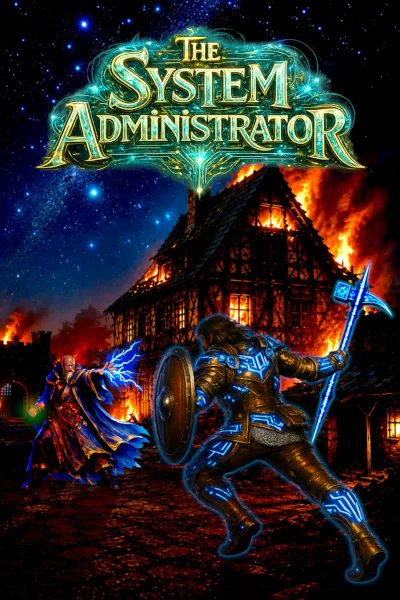
Brian is an IT professional ripped into another world governed by a system with bugs, and some of those bugs are specifically out to hurt him. It is a brilliant inversion: the man who spent his career fixing broken software is now trapped inside the broken software, and the world it runs is brutal. Over 150 chapters of system mechanics used as both tool and antagonist, which makes it the closest thing on the platform to a flagship LitRPG.
Read The System Administrator on NovelDay
2. Denpa Skies
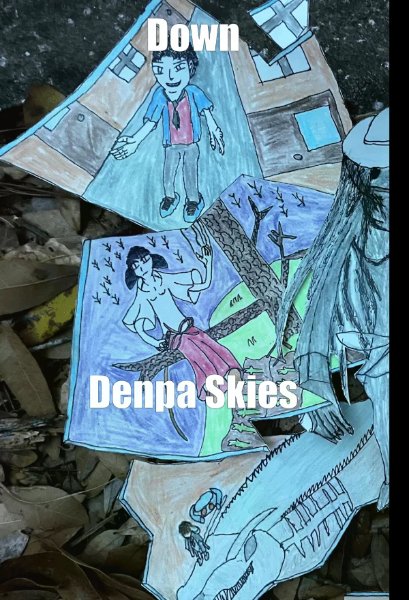
A braided novel built from game-world frames: a neighborhood displaced into a fog world modeled on a classic RPG, an otome game where a summoned mage faces the friend the fae took from her, and darker threads underneath. Denpa Skies uses game logic the way literary fiction uses dream logic, to talk about fate and grief. If you want LitRPG that behaves like psychological horror, this is the strange, ambitious one.
3. The Legendary Demon Hunter's Cursed Brother
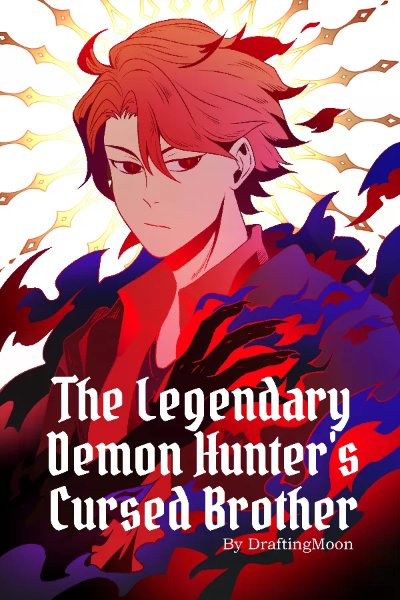
Evan transmigrates to a monster-overrun post-apocalyptic Earth as the brother of the actual Legendary Demon Hunter, cursed so disaster keeps finding him, saddled with a System that seems designed to troll him at every opportunity, and possibly about to be exorcised by his own sibling for looking like a demon wearing Evan's face. This is LitRPG played as sibling drama: real stat screens, real progression, and a System that is an antagonist in its own right. If you want your numbers honest and your stakes personal, start here.
Read The Legendary Demon Hunter's Cursed Brother on NovelDay
4. Digital Lost
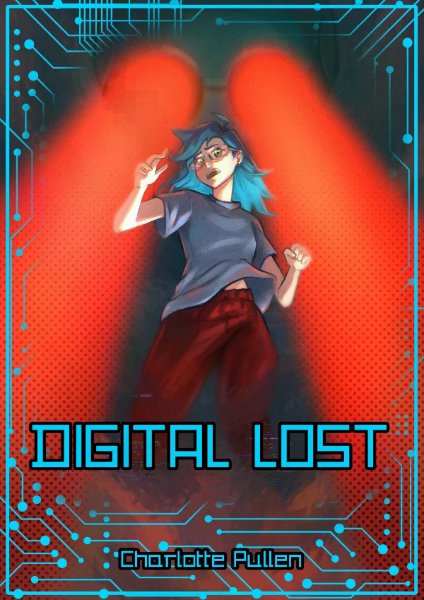
Alpha wakes in a corrupted digital world with no memory of what she is supposed to look like, surrounded by bugs, glitches, and nightmares that will not stop. Digital Lost treats the game world as a trap rather than a playground, and because it is a complete story at 27 chapters, it makes an ideal first LitRPG for readers who want the full arc in one sitting.
5. Welcome Traveler
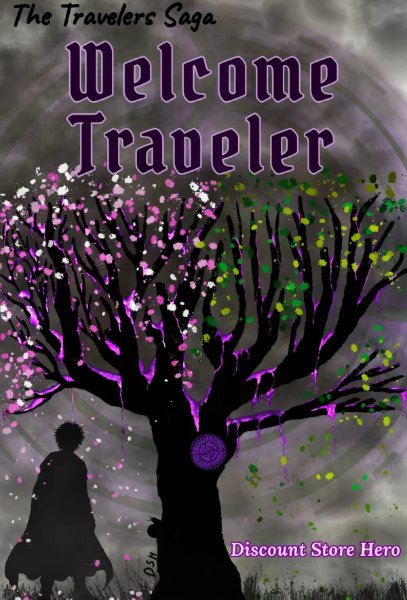
Kai wakes in a grave that should not exist yet, three chimes ringing through a frozen world that offers nothing to help him survive, and something has already noticed him. The world of Thunder Hallows runs on cycles and Realms, and a Traveler arriving means the cycle has started again. Atmospheric and patient, this is LitRPG for readers who like their systems mysterious and their worlds genuinely cold.
Read Welcome Traveler on NovelDay
6. The Bromeliad 2: Bartleby & The Copper Fleas
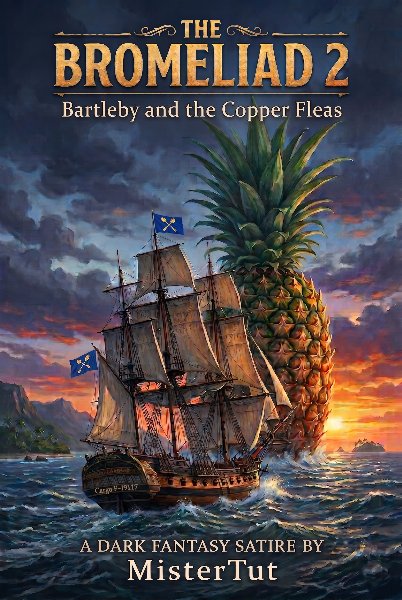
To free his friend Yarrow, Bee goes undercover on a colonial adventure to subvert a rival trade union's occult plans. Yes, trade union. The Bromeliad is absurdist satire wearing LitRPG clothes: in the grand game of life, its tagline goes, when we are not leveling up we are just line items waiting to be expensed. Dark, funny, and the only entry on this list that will make you laugh at a stat sheet.
Read The Bromeliad 2: Bartleby & The Copper Fleas on NovelDay
7. The Advent of the Soul Tree
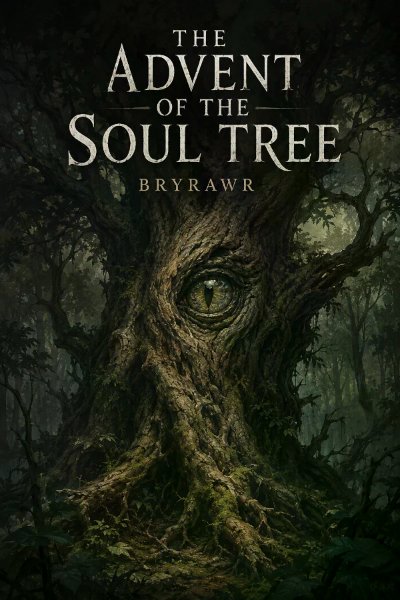
Dendron died a nobody and woke up as a tree, rooted and alone in a forest of monsters and cultivators. He cannot grind combat skills because he cannot move, so the progression runs through his soul and his roots instead. A reincarnation LitRPG that asks what leveling looks like when the character sheet belongs to a plant, and answers it better than you would expect.
Read The Advent of the Soul Tree on NovelDay
8. Timeless Empress
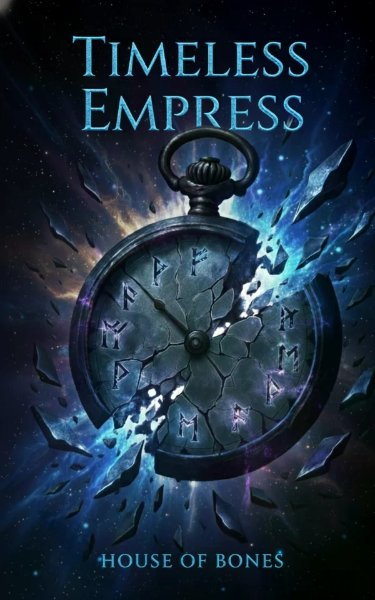
In the chaos between worlds, Anja Kyrov stole Time itself from a Regressor, claiming a SoulRune she had no right to. Now the power is consuming her from within and acting as a beacon to things that want it back. A younger serial, but its hook (a thief carrying a stolen system-granted power she cannot control) is the freshest premise on this list.
Read Timeless Empress on NovelDay
The Flavors of LitRPG
One reason this list looks so varied is that LitRPG quietly split into subgenres, and the eight picks map onto almost all of them. System apocalypse stories take a real world and patch game rules onto it overnight: The System Administrator's bug-ridden governing system is the genre's flagship shape, and The Legendary Demon Hunter's Cursed Brother runs the same trick as comedy, with a System that actively trolls its host. Trapped-in-a-game stories (VRMMO and its descendants) put characters inside a constructed world: Digital Lost plays this as horror rather than adventure. Reincarnation LitRPG gives the protagonist a second life inside a quantified world: Welcome Traveler and The Advent of the Soul Tree both work this vein, the latter with the twist that the reincarnated body is a tree.
Then there are the genre's oddball wings. Comedy LitRPG treats the system as a joke the characters are in on, which is where the satirical Bromeliad lives. Psychological LitRPG uses mechanics to destabilize rather than empower: Denpa Skies uses game frames the way literary fiction uses dream sequences. And hidden-system stories bury the mechanics inside a larger mystery, which is Timeless Empress's stolen SoulRune in a nutshell. If a pick on this list did not fit your taste, the odds are good a different subgenre will.
A Word on the Ones We Left Out
Honest lists leave things off. Adventures In The Bargain Bin is a newer LitRPG entry whose retail-hell premise deserves a mention, and When reality began reading me flips the formula entirely with a story where the world treats the protagonist as the text. The Disposable Cast Handbook for When You Get a System pairs system mechanics with a hero who refuses to sign the contract, and Suspended in a Sunbeam is a slice-of-life take on the same tropes. All four are young serials, so think of them as the next wave rather than oversights. The picks above all clear a bar most lists never mention: enough published chapters to prove the author can sustain the thing. A brilliant first ten chapters is a trailer, not a recommendation, and if a newer serial keeps updating and earning its ratings, it may well displace something here. That is what a living list should do.
What Counts as LitRPG, Exactly
The line people argue about is this: a game inside the story is not enough. Fantasy with a video-game setting is game-adjacent. LitRPG specifically means the story's world has explicit, legible mechanics: levels that rise, stats that quantify, skills that unlock in menus the characters can see. The numbers are diegetic, part of the world itself. If the protagonist can open a screen and read their own strength score, you are reading LitRPG.
The borderline cases are where it gets fun. A story where everyone in the world sees the system except the protagonist is still LitRPG, because the rules exist objectively. A story where a character believes there is a system but never shows it to the reader is adjacent at best. The reliable test is whether the mechanics can be checked: if another character could look up the same stat and get the same number, the system is real, and the book is LitRPG.
That is also why the genre overlaps so heavily with its neighbors. System-apocalypse stories give Earth a rules patch overnight. Cultivation LitRPGs swap stat sheets for soul realms. Isekai LitRPGs drop an Earth-native into a world that was always quantified. Our complete LitRPG guide maps the whole taxonomy and where it came from, so we will keep this section short.
Why the Genre Exploded
Two reasons, both structural. First, LitRPG externalizes progress. Every story promises character growth, but LitRPG renders it as legible numbers the reader can track chapter to chapter. That turns the serial format itself into part of the pleasure: the wait between chapters is a wait between measurable upgrades. Second, it borrows mastery from gaming. Anyone who has specced a build understands instinctively why allocating points to wisdom over strength matters, and LitRPG weaponizes that intuition for stakes that are life and death instead of cosmetic.
There is a third reason that gets discussed less: LitRPG democratized complexity. For decades, intricate magic systems and sprawling power curves were the domain of thousand-page epic fantasy, accessible mostly to readers already fluent in the genre. A level-up needs no translator. The reader who bounced off a dense secondary-world tome can follow "Strength increased to 14" instantly, which is a big part of why the genre pulls in readers who never considered themselves fantasy people. The stats are a bridge, not a barrier.
The result is a genre uniquely at home in web serials. A 300-chapter LitRPG can sustain escalation for years because the ladder never runs out, which is exactly why readers binge them like seasons of television rather than books. And it is a genuinely young genre: the term is barely a decade old, the conventions are still mutating in public, and the weirdest experiments (tree protagonists, satirical unions, horror-first game worlds) are happening on serial platforms right now rather than on bookstore shelves.
How to Choose Your First LitRPG
Readers arrive at the genre looking for different things, and the genre's range means the "best" entry point depends on the itch. If you want the deepest, most traditional experience, start with The System Administrator: it is the longest serial here and uses its system as both tool and antagonist. If you want something finished so you can judge the genre on a complete arc, Digital Lost and The Bromeliad 2 are your two ends of the spectrum, dread and comedy respectively. If you are coming from isekai or portal fantasy, Welcome Traveler will feel familiar fastest. And if your taste runs literary, Denpa Skies is the proof that the genre's machinery can carry grief as well as stats.
One honest warning for newcomers: LitRPG is front-loaded. Serials tend to explain their systems in the first ten chapters, which can read dense before the story finds its rhythm. Push through the setup. The genre's payoffs are cumulative, and the chapter where a build finally clicks is the chapter all the setup was buying. Veteran readers learn to read the status screen the way sports fans read a stat sheet, and that fluency is half the fun.
A second warning worth knowing: the genre's biggest failure mode is the spreadsheet problem. Some serials fall in love with their own stat blocks until the numbers crowd out the people. Every pick on this list was chosen for keeping the mechanics in service of the story rather than the other way around. If you try a LitRPG elsewhere and find yourself skimming blue boxes, it is not you; it is a genre still learning its own dosage, and the serials here are the ones that got it right.
Listen to LitRPG Instead
LitRPG is one of the best genres for audio, because system messages, quest updates, and combat narration all read naturally aloud. Most of the serials above carry NovelDay's audiobook narration, free for registered readers: synchronized text highlighting, playback speed, and a sleep timer for the inevitable one-more-level problem. The feature walkthrough explains how listening works, and our audiobook apps comparison shows how the free tier stacks against paid platforms.
If You Like the Genre's Edges
LitRPG bleeds into neighboring genres, and a couple of our other lists chase those edges. If what you actually want is the crawl, the party, and the escalating dungeon, our books like Dungeon Crawler Carl list is the better fit. If it is the weak-to-godlike hunter fantasy you are after, the Solo Leveling read-alikes cover that lane. Both lists share DNA with this one but pick for different appetites.
Reading LitRPG on NovelDay
The LitRPG genre page lists every tagged serial, and the neighboring system and game shelves catch the stories that use mechanics without the full label. The library sorts everything by genre and status if you want to filter for completed runs, and the weekly rankings show which systems readers are grinding through right now.
And if this list reads like a genre you could write: LitRPG is arguably the friendliest genre to debut in, because readers arrive already fluent in the grammar. Publishing on NovelDay is free, the rights stay with you, and reader support (Patreon, Ko-fi, PayPal) is paid to you directly with no platform cut.
Common Questions About LitRPG
What does LitRPG stand for? Literary role-playing game: fiction where game mechanics (levels, stats, classes, system messages) exist inside the story's world rather than just its framing.
What is the difference between LitRPG and GameLit? GameLit is the umbrella for any story involving games or game worlds. LitRPG is the stricter subset where quantified mechanics are legible inside the fiction: the character can see their own numbers.
Do I need to be a gamer to enjoy LitRPG? No. The best LitRPGs explain their systems in context and use them for stakes, not trivia. If you have never specced a character in your life, Digital Lost or Welcome Traveler work as ordinary fantasy-horror with an extra layer.
Is any of this behind a paywall? No. Every chapter of every serial on this list is free on NovelDay. Signing up (free) unlocks bookmarks, synced progress, and narration on audio-enabled titles.
Is LitRPG the same as progression fantasy? They overlap but are not identical. Progression fantasy is any story about measurable growth; LitRPG is the version where the measurement wears game mechanics. All LitRPG is progression fantasy, but a cultivation epic with no stats is progression without the RPG.
Any finished reads here? Digital Lost and The Bromeliad 2 are complete. The rest are ongoing serials with regular updates, which for LitRPG is the point: the build keeps building.
Where should a LitRPG newcomer start? The System Administrator if you want the full meal, Digital Lost if you want a finished story first, or The Bromeliad 2 if you want to laugh at the genre while learning it. All three are representative enough that whichever hooks you will tell you which lane of the genre to explore next.
Why are LitRPG books so long? Because the genre's core pleasure is cumulative progression, and progression needs room. A build that takes three hundred chapters to complete is the point, not the padding; readers are there for the grind as much as the payoff, the way a seasons-long television drama earns its finale through accumulated investment.
Do these have audio versions? Most picks here are narrated on NovelDay, free for registered readers. Narrated serials show a headphones icon beside their chapters.