Wuxia vs Xianxia: What's the Difference?
The first time someone told me that Crouching Tiger, Hidden Dragon was not xianxia, I argued with them for twenty minutes. I was wrong, but I was wrong for a good reason. Both wuxia and xianxia share a vocabulary: qi, dao, martial arts, ancient China. Both feature fighters who can do things no real human can do. Both come from the same Chinese literary tradition. The difference is not in the vocabulary. It is in the ceiling. Wuxia asks how strong a human can become. Xianxia asks whether a human can stop being human entirely. Everything else flows from that distinction.
This guide breaks down the difference between wuxia and xianxia, explains the related category of xuanhuan, and points you to free xianxia web novels you can read right now on NovelDay. Every novel on this list has at least 2 hours of reading content, because cultivation stories need space to build their power systems. The xianxia catalog on NovelDay is still growing, so this guide features 2 novels rather than padding the list with shorter works that do not have enough content for the cultivation arcs to develop. If you have ever finished Cradle or A Will Eternal and wondered what to read next, or if you are trying to figure out whether Crouching Tiger, Hidden Dragon counts as xianxia (it does not), this is the guide for you.
What is Wuxia?
Wuxia (武侠) literally translates to "martial heroes." It is a Chinese fiction genre about martial artists who train their bodies and minds to achieve superhuman but still fundamentally human abilities. The setting is usually historical China, often the jianghu, a metaphorical martial-arts underworld that exists parallel to ordinary society. The heroes fight with swords, spears, fists, and technique. They can leap across rooftops, deflect arrows, and strike with enough force to shatter stone, but they cannot fly, summon lightning, or live for a thousand years.
The core philosophy of wuxia is that power comes from discipline. A wuxia hero is someone who has trained harder than anyone else, mastered a specific style or technique, and earned their strength through sweat and sacrifice. The genre is deeply concerned with morality: loyalty, righteousness, revenge, and the code of the xia (the knight-errant). The best wuxia stories are not about who is the strongest fighter. They are about what a fighter does with their strength when the world asks them to compromise.
Famous wuxia examples: The Legend of the Condor Heroes by Jin Yong (the most influential wuxia author of all time), Crouching Tiger, Hidden Dragon (both the novel by Wang Dulu and the Ang Lee film), A Hero Born by Jin Yong, and the entire wuxia film tradition from Bruce Lee to Jackie Chan to Donnie Yen.
Key wuxia traits:
- Power comes from physical training, technique, and discipline
- Heroes are human. They can be wounded, age, and die
- Setting is historical China, usually the jianghu (martial world)
- Combat is grounded in martial arts styles, weapons, and strategy
- Themes focus on loyalty, revenge, righteousness, and the warrior's code
- Qi exists but is used to enhance physical abilities, not to reshape reality
What is Xianxia?
Xianxia (仙侠) translates to "immortal heroes." It is a Chinese fantasy genre about cultivators who practice cultivation (xiuzhen) to transcend mortality and become xian (immortals or celestial beings). The setting can be historical China, but it often expands into entirely fictional worlds with their own cosmologies, heavenly realms, and spiritual dimensions. The heroes do not just fight with swords. They fly, summon elemental energy, reshape matter, and eventually ascend to higher planes of existence.
The core philosophy of xianxia is that power comes from understanding the dao (the Way). A xianxia hero is someone who cultivates their qi through meditation, alchemy, and spiritual practice, advancing through a series of cultivation realms that each grant dramatically greater power. The genre is deeply concerned with transcendence: escaping the cycle of reincarnation, defying heaven, and achieving immortality. The best xianxia stories are not about who wins the fight in front of them. They are about whether the protagonist can survive the tribulation that stands between them and the next realm of power.
Famous xianxia examples: A Will Eternal by Er Gen, Cradle by Will Wight (the most popular English-language xianxia-inspired series), I Shall Seal the Heavens by Er Gen, Against the Gods by Mars Gravity, Desolate Era by I Eat Tomatoes, and the web novel Coiling Dragon by I Eat Tomatoes.
Key xianxia traits:
- Power comes from cultivation: meditation, alchemy, and spiritual practice
- Heroes can become immortal. They fly, summon energy, and defy death
- Setting often includes heavenly realms, spiritual dimensions, and fictional worlds
- Combat involves elemental attacks, magical artifacts, and supernatural techniques
- Themes focus on transcendence, defying heaven, and escaping mortality
- Qi is the foundation, but it is cultivated into spiritual energy that reshapes reality
Wuxia vs Xianxia: The Core Differences
Here is the short version: wuxia is about how strong a human can become. Xianxia is about whether a human can stop being human. Everything else flows from that distinction.
AspectWuxiaXianxia Power sourcePhysical training, technique, disciplineCultivation: meditation, alchemy, spiritual practice Power ceilingSuperhuman but mortal. Can leap rooftops, deflect arrowsImmortal. Can fly, summon lightning, reshape matter SettingHistorical China, the jianghu (martial world)Historical China, fictional worlds, heavenly realms CombatSwords, spears, fists, martial arts stylesElemental attacks, magical artifacts, supernatural techniques LifespanNormal human lifespan. Heroes age and dieCultivators can live hundreds or thousands of years Core questionWhat does a warrior do with their strength?Can a mortal transcend humanity and become immortal? QiEnhances physical abilities (speed, strength, endurance)Cultivated into spiritual energy that reshapes reality ThemesLoyalty, revenge, righteousness, the warrior's codeTranscendence, defying heaven, escaping reincarnation Famous exampleCrouching Tiger, Hidden DragonCradle by Will Wight The confusion between the two genres usually comes from the shared vocabulary. Both use qi. Both feature martial arts. Both are set in or inspired by ancient China. But the way they use those elements is completely different. In wuxia, qi is the internal energy that lets a master strike harder and move faster than an ordinary fighter. In xianxia, qi is the raw material that a cultivator refines into spiritual energy, which they then use to fly, summon fire, and eventually ascend to a higher realm of existence.
What is Xuanhuan? (The Third Category)
If you have seen the terms wuxia and xianxia, you have probably also seen xuanhuan (玄幻), and you may be wondering where it fits. Xuanhuan translates roughly to "profound fantasy" and it is the catch-all category for Chinese fantasy that does not fit neatly into either wuxia or xianxia. Xuanhuan novels often blend elements of xianxia cultivation with Western fantasy, science fiction, or entirely original power systems.
The key distinction: xianxia is specifically rooted in Daoist philosophy, Chinese mythology, and the concept of cultivation toward immortality. Xuanhuan can borrow from Daoism but is not bound by it. A xuanhuan novel might have cultivation, but it might also have Western-style magic, bloodline abilities, or a power system based on something entirely invented by the author. Coiling Dragon by I Eat Tomatoes is often classified as xuanhuan because it blends xianxia-style cultivation with Western fantasy elements like dragons and battle-qi.
On NovelDay, several novels in the Eastern genre are tagged with both Xianxia and Xuanhuan, reflecting how porous the boundary between those categories can be in practice.
The Cultivation Realm System (How Xianxia Power Works)
If you are new to xianxia, the cultivation realm system is the most important concept to understand. Most xianxia novels divide the path to immortality into a series of realms, each representing a major breakthrough in the cultivator's power and understanding of the dao. The exact names and numbers vary by novel, but the structure is consistent across the genre.
A typical cultivation progression looks something like this:
- Qi Condensation — The cultivator learns to gather and refine qi
- Foundation Establishment — The cultivator builds their spiritual foundation
- Core Formation — The cultivator forms a golden core of compressed spiritual energy
- Nascent Soul — The core develops into a spiritual entity (the nascent soul)
- Spirit Severing — The cultivator severs ties to mortal concerns
- Void Refinement — The cultivator begins to understand the void
- Body Integration — Body and soul are unified with spiritual power
- Ascension — The cultivator ascends to a higher realm of existence
Each realm can take years or decades to achieve, and the jump in power between realms is enormous. A Foundation Establishment cultivator can defeat any Qi Condensation cultivator regardless of technique, because the gap in raw spiritual energy is too large to overcome with skill alone. This is why xianxia novels often feel like progression fantasy: the entire genre is structured around the protagonist's climb through the realms, and each breakthrough is a major narrative event.
If this sounds familiar, it is because xianxia is the genre that inspired the progression fantasy movement in English web fiction. Will Wight's Cradle series is explicitly modeled on xianxia cultivation, and many of the conventions of progression fantasy (realms, breakthroughs, power scaling) come directly from the xianxia tradition.
Free Xianxia Web Novels to Read on NovelDay
The xianxia catalog on NovelDay is still growing, and only two novels currently meet the 2-hour reading time threshold needed for the genre's power systems to develop properly. Both are real user-authored works by NovelDay writers, not scraped content. They are ordered by reading time, longest first.
1. Feasting on Immortals
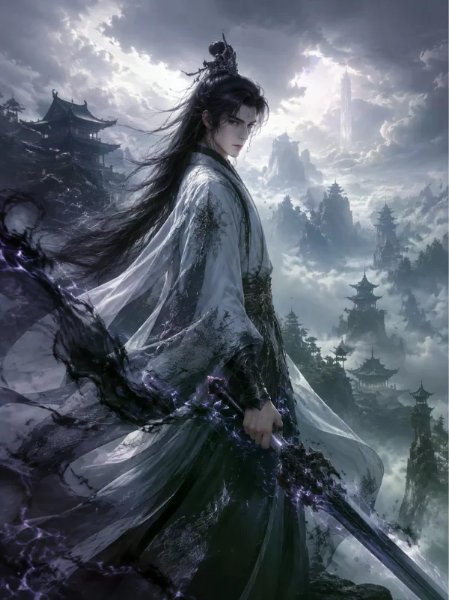
Fang Cheng has a demonic sword lodged in his soul. It whispers for blood, for carnage, for the sweet taste of human fear. To keep it from taking over, he forces every monster and villain he meets to say three words out loud: "You are a good person." The more they say it, the more he believes it. The more he believes it, the less he turns into a mindless killing machine. Not only that, but he also has to keep doing good deeds and keep killing those bad people who slandered him. A mad cultivator who devours villains must save a dying world. But in a world of scheming gods and demons, is he the savior or the worst monster of all? He tells himself he is the hero. The people he roasts alive might disagree.
Feasting on Immortals is the most traditional xianxia novel on NovelDay. It is built on the Daoist cultivation system, set in ancient China, and centered on a cultivator whose power comes from spiritual practice. But the novel uses that traditional framework to tell a story that is darker and more self-aware than most xianxia. Fang Cheng is a cultivator with a demonic sword in his soul, which means his cultivation is constantly at war with the corruption the sword feeds into him. The "you are a good person" mechanic is his coping mechanism: he forces the world to affirm his goodness because the alternative is admitting the sword is winning. That is a xianxia cultivation conflict filtered through a psychological horror lens.
What sets this apart from standard xianxia is the moral inversion. In most xianxia, the cultivator climbs the realms to become more powerful and more enlightened. In Feasting on Immortals, the cultivator climbs the realms while the reader increasingly suspects that he is the monster, not the hero. The author does not tell you whether Fang Cheng is right or wrong. The novel lets you watch him roast villains alive while insisting he is doing good, and leaves the judgment to you. If you liked the way Prince of Thorns by Mark Lawrence made you follow a protagonist who was genuinely terrible while still rooting for him, or the way A Will Eternal by Er Gen used comedy to mask the darkness of its cultivation system, this is the NovelDay novel that combines both. Ranked #23 all-time on NovelDay.
Read Feasting on Immortals free on NovelDay →
2. The Crazy Daughter of the Duke's Family

Celia had fought creatures called Visitors for as long as she could remember. Together with Pan, a Visitor of Special Grade himself, her single goal was to survive. Yet after dying an unexpected death one day, she woke up and found herself as that one inconsequential, short-lived villainess from The Saintess' Unbreakable Shield, a novel she used to read. Rowena Dynari van Varnhagen, the daughter of the only Grand Duke of the Arlen Empire. Said villainess, equipped with a few minor personality quirks, offended the female lead at the beginning and was promptly cut right out of the story. What now? Determined not to let people trample on and use her again, Celia decides to fight for a life worth living.
The Crazy Daughter of the Duke's Family is an isekai reincarnation story with xianxia cultivation elements, and the combination is more natural than it sounds. The reincarnation mechanic is the novel's version of a cultivation reset: Celia dies in one world and wakes up in another with her memories intact, which gives her the same kind of insider advantage that a cultivator gets from understanding the dao. She knows the story she has been dropped into, she knows which characters are dangerous, and she knows what happens to the villainess she has become. That knowledge is her cultivation resource, and she uses it to climb from a disposable character to someone who can fight back.
What makes this novel work is the contrast between the villainess role Celia has been dropped into and the fighter she actually is. The story expects Rowena to be a minor obstacle who gets removed early. Celia has spent an entire lifetime fighting Visitors, and she is not interested in playing a role that ends with her being discarded. The cultivation-adjacent progression comes from her building power inside a world that has already decided she is irrelevant. If you liked the way The Beginning After the End by TurtleMe used reincarnation as a cultivation restart, or the way My Next Life as a Villainess used isekai meta-knowledge as a survival tool, this is the NovelDay novel that combines both with a martial-arts fantasy frame.
Read The Crazy Daughter of the Duke's Family free on NovelDay →
Wuxia vs Xianxia vs Xuanhuan: Quick Reference
If you need a one-sentence summary of each genre:
- Wuxia: Martial arts heroes who push the human body to its limit. Think Crouching Tiger, Hidden Dragon.
- Xianxia: Cultivators who transcend mortality and become immortal. Think Cradle or A Will Eternal.
- Xuanhuan: Chinese fantasy that blends xianxia with other traditions (Western magic, original power systems). Think Coiling Dragon.
The genres exist on a spectrum. A novel can start as wuxia (martial arts training) and evolve into xianxia (cultivation toward immortality) as the protagonist discovers that qi can do more than enhance physical abilities. Many of the most popular Chinese web novels sit on this boundary, which is why the terms get confused so often.
Frequently Asked Questions
Is Cradle wuxia or xianxia?
Cradle by Will Wight is xianxia (specifically xianxia-inspired progression fantasy). The series uses a cultivation realm system, features ascension to higher realms, and centers on a protagonist who refines qi into increasingly powerful spiritual energy. While it includes martial arts combat in the wuxia tradition, the power ceiling is clearly xianxia: characters fly, summon elemental attacks, and eventually ascend beyond the mortal world. Cradle is the most popular English-language example of the xianxia genre, and it is largely responsible for introducing xianxia conventions to Western readers.
Is Crouching Tiger, Hidden Dragon wuxia or xianxia?
Crouching Tiger, Hidden Dragon is wuxia. The characters are martial artists who have trained to superhuman levels, but they do not cultivate qi into spiritual energy, they do not ascend to immortal realms, and they cannot fly (they can leap with extraordinary grace, which is a wuxia convention). The film is one of the most famous wuxia examples in Western cinema, and it is a good reference point for what wuxia looks like at its most polished. If you watch it expecting xianxia, you will be confused by the absence of magic.
What does xianxia mean?
Xianxia (仙侠) literally translates to "immortal heroes." The word xian (仙) means immortal or celestial being, and xia (侠) means hero or knight-errant. The genre is about heroes who pursue immortality through cultivation, a spiritual practice rooted in Daoist philosophy. The term is used both for the Chinese web novel tradition and for the English-language novels it has inspired, such as Cradle and A Will Eternal.
What does wuxia mean?
Wuxia (武侠) literally translates to "martial heroes." The word wu (武) means martial or military, and xia (侠) means hero or knight-errant. The genre is about martial artists who achieve superhuman but still mortal abilities through physical training and discipline. The term has been used in Chinese literature since the Tang Dynasty, and the modern wuxia tradition was shaped by authors like Jin Yong and Gu Long in the 20th century.
Do I need to read wuxia before xianxia?
No. The two genres are independent, and you can start with either. If you prefer grounded martial arts stories with moral complexity, start with wuxia. If you prefer power-scaling progression fantasy with cultivation realms and ascension, start with xianxia. Many readers discover xianxia first through novels like Cradle or A Will Eternal and then explore wuxia afterward. On NovelDay, the Eastern genre page collects all the novels in both traditions.
What is cultivation?
Cultivation (xiuzhen, 修真) is the core practice of xianxia novels. It is a spiritual discipline through which a cultivator refines their qi (life energy) into increasingly powerful forms, advancing through a series of realms that each grant greater power and longer lifespan. Cultivation typically involves meditation, alchemy, and the study of the dao (the Way). The goal is to transcend mortality and become a xian (immortal). The cultivation realm system is what makes xianxia a progression genre: each realm is a milestone, and the protagonist's climb through the realms is the central narrative arc.
Start Reading Xianxia Free
The difference between wuxia and xianxia comes down to one question: is the protagonist trying to become the strongest human, or trying to stop being human entirely? Wuxia answers the first question. Xianxia answers the second. Both genres have produced some of the most popular web fiction in the world, and the xianxia tradition in particular has shaped the entire progression fantasy movement in English web fiction.
The novels on this list are free to read on NovelDay with no paywall, no premium tier, and no account required. Start with Feasting on Immortals if you want the most traditional xianxia on the platform, a dark cultivation story about a man with a demonic sword in his soul. Start with The Crazy Daughter of the Duke's Family if you want isekai reincarnation crossed with cultivation.
If you want to explore more broadly, the Eastern genre page on NovelDay collects every novel in this category, and my progression fantasy guide covers the broader genre that xianxia helped create. The NovelDay library has over 100 free web novels across every genre, all server-rendered and free to read.
Are you a writer with a wuxia, xianxia, or xuanhuan story of your own? Publish it free on NovelDay and reach readers who are actively searching for Eastern fantasy fiction.