How Long Is a Novel? Word Counts by Genre, Plus Data From 123 Real Web Serials

Ask a traditional publisher how long a novel is and you will get a tidy answer: somewhere between 70,000 and 100,000 words, depending on genre. Ask a web serial author the same question and you will get a shrug, because the honest answer is "however long it takes." Both answers are correct. They are just describing two different species of book.
This guide gives you the standard word counts the publishing industry expects, then does something most articles on this topic cannot: it shows you real numbers. We pulled the actual word counts, chapter counts, and completion data for every novel currently published on NovelDay, all 123 of them, to see what "a novel" looks like when nobody is counting pages for a print run.
The Standard Answer: Novel Length by Genre
Traditional publishing settled on its ranges for practical reasons: printing costs, shelf space, and what a debut author can reasonably sell. Agents still filter queries by these numbers, so if you are aiming at agents, treat them as soft requirements.
- Literary fiction: 80,000 to 100,000 words
- Fantasy and epic fantasy: 100,000 to 120,000 words, with established authors routinely going higher
- Science fiction: 90,000 to 120,000 words
- Romance: 50,000 to 90,000 words, with category romances at the low end
- Mystery and thriller: 70,000 to 100,000 words
- Horror: 80,000 to 100,000 words
- Young adult: 55,000 to 80,000 words
- Middle grade: 30,000 to 50,000 words
The unwritten rule for debuts: stay under 100,000 words unless you are writing epic fantasy, and even then, an agent will raise an eyebrow at 150,000. The range exists because every extra page costs money to print and every extra pound costs money to ship.
Below the Novel: Novellas, Novelettes, and Short Stories
The thresholds most commonly cited come from award categories like the Hugos and Nebulas, and they are useful orientation points even outside publishing:
- Short story: under 7,500 words
- Novelette: 7,500 to 17,500 words
- Novella: 17,500 to 40,000 words
- Novel: 40,000 words and up, though most publishers treat 70,000 as the practical floor for an adult book
So technically, anything over 40,000 words qualifies as a novel. Commercially, adult fiction under about 60,000 words is a hard sell to publishers, which is why the "real" answer you will hear from agents sits higher than the technical one.
What We Found: Real Numbers From 123 Web Serials
Here is where it gets interesting. Web serials are not bound by print economics, so what do they actually look like? We measured the full NovelDay catalog:
- Median length of an ongoing serial: roughly 26,000 words. Half of all works in progress sit below what traditional publishing would even call a novel yet.
- Median length of a completed work: roughly 53,000 words. When a web serial actually ends, it tends to land right at the low end of the traditional novel range, or just into novella-plus territory.
- The longest work on the platform: over 530,000 words, and still growing. That is longer than The Fellowship of the Ring, The Two Towers, and The Return of the King combined.
- Median chapter length: about 2,100 to 2,200 words, which tracks with what we found in our data-driven guide to web novel chapter length.
- Completion rate: only about 19% of the catalog is marked complete. Ongoing is not a phase for most serials. It is the natural state.
The distribution tells the real story. About 46% of the catalog sits under 20,000 words, a spread of early-stage serials and shorter works. Another 20% falls in the 20,000 to 50,000 band, roughly novella territory by the old map. Then 18% lands between 50,000 and 100,000, the classic novel zone. And 16% of the catalog has already passed 100,000 words, a threshold only a small fraction of traditionally published debuts ever cross.
Why Web Novels Break the Rules
None of this is an accident. Web serials are long because the format rewards length in ways print never could.
There is no printing cost. A 400,000-word serial costs the same to host as a 40,000-word one. The single biggest force compressing traditional novels simply does not exist.
There is no debut ceiling. Nobody is querying an agent at 150,000 words. Readers choose serials chapter by chapter, so an author's first work can grow to whatever size the story needs.
Length is the retention engine. A serial with 80 chapters has 80 entry points in search results, 80 reasons for a reader to come back, and 80 chances for a cliffhanger to work. On platforms built around update schedules, a long novel is not bloated. It is healthy.
The reader expectation inverts. Print readers sometimes hesitate before a thick book. Serial readers actively hunt for long ones, because a finished 30,000-word story is an afternoon and an ongoing 200,000-word saga is a hobby. This is also why the same reader who would never buy a 600-page debut will happily commit to a serial twice that length, one update at a time.
Every chapter is a new front door. A printed novel earns one listing per title. A serial earns an indexed page per chapter, plus a fresh bump every time it updates. Length is not just a feature of web novels. It is part of how they get found at all.
A Note on Reading Time
Word counts are how writers measure; hours are how readers feel it. At an average adult reading speed of around 250 words per minute, the median ongoing NovelDay serial, roughly 26,000 words, is just under two hours of reading. The median completed work at 53,000 words is about three and a half hours. And the longest title on the platform, over 530,000 words, works out to a 35-hour read, comparable to an entire season of prestige television.
That spread is the point of the format. A reader can finish a complete novella-length story on a Sunday afternoon or settle into a serial that will still be updating next year, growing a little longer with every release. Both experiences live in the same library, often from the same authors, and both are legitimately and correctly called novels.
See the Range: 7 Novels, 7 Different Answers
Abstract numbers only go so far. Here is what "novel length" actually looks like across the platform, from a quarter-million-word epic down to a serial sitting right at the median.
1. Denpa Skies

Six souls wake up inside six different games: a classic RPG, an otome, a farming sim, a dating sim, a crafting sandbox, an urban supernatural story. They appear in each other's worlds without knowing it, and the tragedies buried in their pasts surface one parallel story at a time. At 243,000 words across 113 chapters, it is the kind of novel that could only exist as a serial. Six nested worlds need room, and roughly 2,150 words per chapter gives each game space to breathe. This is the long tail of the distribution made flesh: a story that would be unpublishable at a third of a trilogy in print and is perfectly at home here.
2. The Weight of Falling Objects Book 1: The Oasis of the Eye
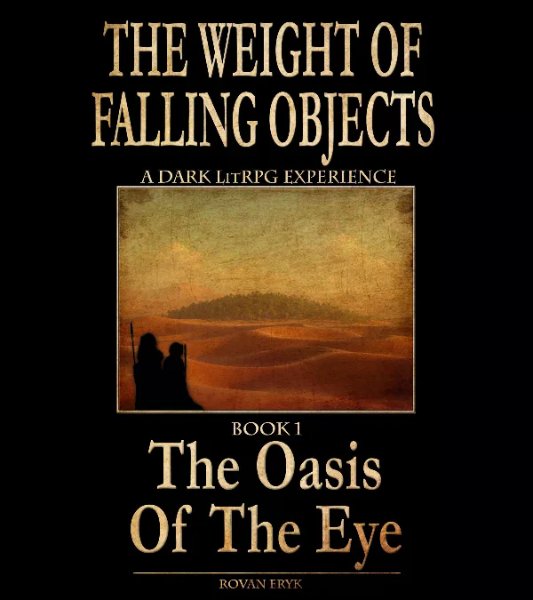
East of the dead cities of the Varkhana ruins lies something older, and a map a thousand years out of date is not going to help. This dark LitRPG runs 175,000 words in just 39 chapters, an average of about 4,500 words per chapter, more than double the platform median. It proves a useful point: a completed web novel does not have to shrink to trad length. It finished when the story finished, at a size that would make a print publisher sweat, and it is only Book 1.
Read The Weight of Falling Objects Book 1: The Oasis of the eye on NovelDay
3. Digital Lost
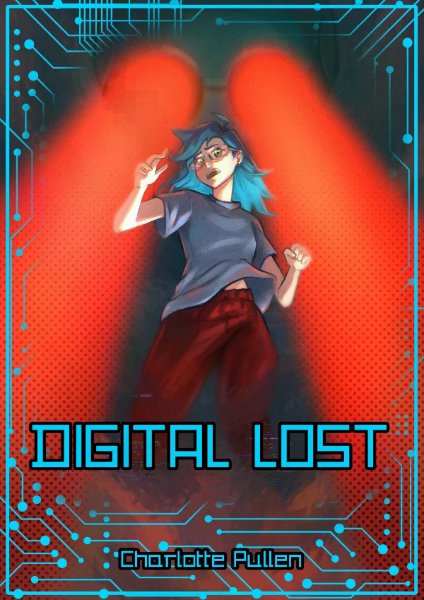
Alpha wakes in a strange place with no memory of what she is supposed to look like, and whatever she is now, it is not that. Bugs, glitches, and bad programming are everywhere, and getting home means surviving all three. At 89,000 words across 27 chapters, Digital Lost sits almost exactly on the traditional science fiction range, proof that the web format and the conventional novel length are not opposites. Some stories simply are 90,000 words long, wherever they are published.
4. Romeo & Juliet: A Modern Retelling
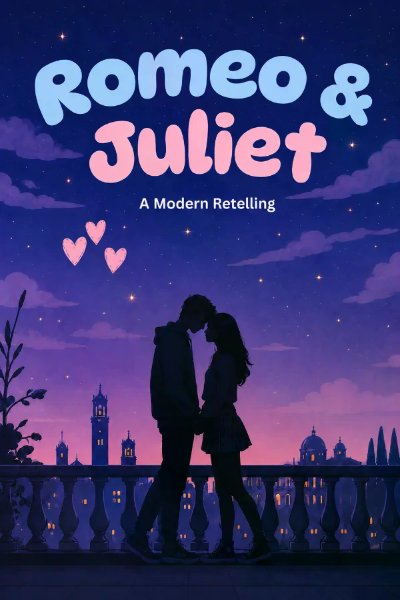
You know the story. The bones stay, but the world around them is new, with characters you have never met and scenes you have never seen. At 72,000 words in 25 chapters, it lands squarely inside the romance genre's traditional range, a reminder that faithful structure survives translation into serial form. Roughly 2,900 words a chapter, released piece by piece, and still recognizably a novel by any publisher's ruler.
Read Romeo & Juliet: A Modern Retelling on NovelDay
5. This Is How I Lived [A Post-Apocalyptic Diary]
![This Is How I Lived [A Post-Apocalyptic Diary]](https://novelday.net/api/novels/14753/image/1784375449)
The sky keeps bleeding, the undead mumble through the streets, and that is not even the worst of it. There is Lindsay. Written as a survivor's diary, it runs 53,000 words spread across 67 chapters, under 800 words each, the extreme opposite of the serials above. Diary entries do not need chapters at all; the format is the storytelling. It is also a neat proof of our completed-work median: when a web novel ends, about 53,000 words is where it tends to land.
Read This Is How I Lived [A Post-Apocalyptic Diary] on NovelDay
6. zeR0 (Part I)

Seret spent half his life cleaning up other people's disasters, so staging his own seems only fair. First he has to escape a city where the criminals subsidize the cops. The striking thing here is the shape: nearly 35,000 words in only 8 chapters, an average of about 4,300 words per chapter. Where This Is How I Lived fragments into diary entries, zeR0 builds its episodes like television, long self-contained blocks. Two ongoing serials, two completely different answers to the same question.
Read zeR0 (Part I) on NovelDay
7. The Eighth Absolute
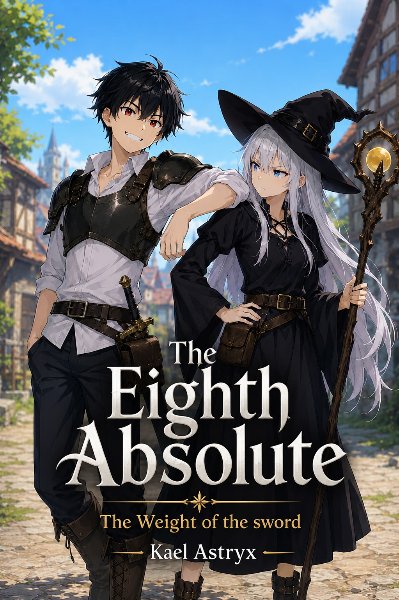
Ten-year-old Ravon leaves the only family he has ever known to search for his real parents, surviving on the basic spells he is terrified to outgrow. At 30,000 words across 13 chapters, this is the median ongoing serial in our data almost to the word: roughly 2,300 words per chapter, novella length so far, and nowhere near finished. If you want to know what the typical web novel actually looks like right now, it looks like this. Ask again in a year and the answer will be twice as long.
Read The Eighth Absolute on NovelDay
How Long Should Your Novel Be?
The honest framework is shorter than the genre table:
- If you are querying agents, obey the genre ranges. They are not fair, but they are real, and a debut fantasy at 160,000 words will get rejected on word count alone before anyone reads page one.
- If you are serializing, think in arcs, not totals. Your first arc should be completable in a sane number of chapters. Whether the whole story ends at 60,000 words or 600,000 is a decision you get to keep making as readers show up.
- If you are choosing a format, match length to story shape. A diary, a revenge thriller, a single mystery: these want to end. A sprawling world with six protagonists wants to grow. Neither is wrong. The mistake is forcing one into the other's shape.
- For chapter length specifically, our data lands around 2,100 words as the platform norm, and the full chapter-length breakdown by genre and platform is worth a read before you commit.
One practical note for web fiction writers: POV choice and character depth interact with length more than people expect. An intimate first-person serial can sustain a longer word count because the narrator's voice is doing the retention work. A detached epic needs its length to earn scope. Plan the pair together.
Frequently Asked Questions
How many words is a novel?
Technically, anything over 40,000 words qualifies. Commercially, traditional publishers expect 70,000 to 100,000 for most adult fiction, with fantasy and science fiction allowed to run longer. Web serials ignore the ceiling entirely; the median ongoing serial on NovelDay is about 26,000 words and climbing.
Is 50,000 words a novel?
Yes, by the standard award-category definitions it crosses the 40,000-word novel threshold, and NaNoWriMo famously treats 50,000 as the target. Most agents still consider it short for adult fiction, though it is a perfectly normal length for a completed web serial or a YA book.
How many pages is a novel?
At roughly 250 to 300 words per printed page, a 90,000-word novel runs about 300 to 360 pages. Web fiction makes the question meaningless, which is why serial platforms measure in word count and reading time instead of pages.
How long is a novel chapter?
In print fiction, anywhere from 1,500 to 5,000 words is normal, with genre and pacing deciding. In web serials, our data puts the median near 2,100 words, tuned to update schedules and screen reading. See our chapter-length data guide for the platform-by-platform numbers.
Can a novel be too long?
For traditional publishing, yes: debut novels over about 120,000 words face real resistance, and anything past 150,000 is nearly unsellable for a first-timer. For web serials, only reader attention limits length, and the longest work on NovelDay is over 530,000 words with an audience still growing.
What is the difference between a novel and a novella?
Word count. A novella runs 17,500 to 40,000 words; a novel runs longer. Novellas suit single-arc stories, and a surprising share of completed web serials land in or near novella territory, which is not a flaw. It is the format finding the size the story actually needed.
Bottom Line
A novel is 40,000 words and up, commercially 70,000 to 100,000, and in web serialization, whatever the story demands. The old ranges still matter if you are chasing agents. But if you are writing for readers who measure commitment in updates rather than shelf space, the only real rule left is to keep the next chapter worth clicking on, every single time.
Writing something that does not fit the old rulers? Publish it on NovelDay and let it grow to the size it needs to be. Or browse the library and see every length in the wild, from 30,000-word serials just getting started to epics past half a million.