What Is the Longest Book Ever Written? The Answer Is More Complicated Than the Record Book
The Answer Depends on Who's Counting
Ask the Guinness Book of Records what the longest novel ever written is, and you'll get an answer from 1653: Artamène ou le Grand Cyrus, a French courtly romance by Madeleine de Scudéry that runs to roughly 2.1 million words across more than 13,000 pages. It held the record so thoroughly that for three and a half centuries, nobody seriously contested it.
Ask the internet, and the answer is a fantasy web serial that's still being written, currently past thirteen million words, and would fill more than two hundred paperback volumes if anyone ever printed it. Somewhere between those two answers is the interesting story: the definition of "book" quietly changed underneath the record books, and the longest works of fiction humans have ever produced are being written right now, in installments, by people releasing chapters on the internet.
The Record Book's Answer
The traditional "longest book" list is a parade of the famously doorstop-sized:
| Book | Approx. word count | Reading time at 250 wpm |
|---|---|---|
| Artamène ou le Grand Cyrus (1649–53) | ~2,100,000 | ~140 hours |
| In Search of Lost Time, Proust | ~1,260,000 | ~84 hours |
| Mission Earth, L. Ron Hubbard | ~1,200,000 | ~80 hours |
| Sironia, Texas, Madison Cooper | ~1,100,000 | ~73 hours |
| Clarissa, Samuel Richardson | ~970,000 | ~65 hours |
| War and Peace, Tolstoy | ~587,000 | ~39 hours |
| Atlas Shrugged, Ayn Rand | ~560,000 | ~37 hours |
| Infinite Jest, David Foster Wallace | ~545,000 | ~36 hours |
That list is impressive, and it's also frozen in a publishing model. Every entry on it was written for print: one author, one or several bound volumes, a manuscript that had to be delivered whole to a publisher before anyone read it. The ceiling on the list is economics, not stamina. Printing a million words costs real money. Binding them costs more. Convincing a bookstore to shelve a thirteen-thousand-page novel costs the most of all.
Notice, too, that nearly everything on that list is either very old or very odd. Artamène is a seventeenth-century French serial. Proust, Richardson, and Cooper are all pre-1960. The modern entries, Mission Earth and Atlas Shrugged, are both products of authors with unusual industry leverage, not of a system that rewards length. The publishing world's actual sweet spot has been shrinking for a century: the average literary novel today runs 80,000-100,000 words, and anything past 400 pages gets a hard look from an editor's desk. The record book is frozen, the residue of a market that stopped rewarding what it once celebrated.
The web removed all three constraints at once. And the moment it did, the record book became a historical document.
The Web Broke the Record and Nobody Updated It
The Wandering Inn, a LitRPG serial by pirateaba that has been publishing since 2016, passed thirteen million words some time ago. It is roughly six times the length of the current Guinness record holder, and it passed Artamène years before anyone outside web fiction noticed. It's not an outlier in spirit, just in scale: The Practical Guide to Evil finished around 2.4 million words, Ward around 1.9 million, and Mother of Learning closed its loop near 760,000, comfortably past War and Peace, and it's considered a short serial by web-fiction standards.
The scale shift is hard to overstate. The Guinness record stood for three and a half centuries at ~2.1 million words. Web fiction didn't edge past it; it lapped it several times, in about a decade, with the format still accelerating. If Artamène is the record book's ceiling, the web's answer isn't a new champion so much as a new order of magnitude.
None of these count for the record book, because the record book counts "published novels," and a serial published chapter-by-chapter on a website doesn't fit the category. The technicality is technically fair, and also completely wrong in spirit. A 13-million-word continuous narrative written by one author is the longest book ever written by any reasonable definition of the words "longest," "book," and "written."
The interesting question isn't whether web serials broke the record. It's what they broke it with, because the answer is reader economics, and it changes how you should think about length as a reader.
Why Long Books Exist at All: The Serial Incentive
Traditional publishing rewards finished objects. An author earns when the book ships, so books get written, edited, and shipped. Serial publishing rewards continuation. An author earns attention every week they publish, so the most rational thing a successful serial can do is never stop being successful. The longest books in history aren't long because their authors couldn't stop writing; they're long because their readers wouldn't stop reading.
That inverted incentive explains the numbers. A trad-published author who writes a million words gets paid once. A serial author who writes a million words over six years gets paid attention six hundred times. Long books are the business model.
It also explains the chapters. A serial lives or dies on the unit of the chapter, roughly 2,000-4,000 words, designed to be read in a sitting and ended on forward motion. The total length is an emergent property of hundreds of those sittings, which is why nobody sits down to write a 13-million-word book but several people have now written one anyway.
The Twist: Long Books Are Actually the Historical Norm
Here's the part that reframes the whole question. The bound, finite, publisher-packaged "book" is the anomaly in literary history, not the serial. For most of the nineteenth century, the novel was a serialized form. Dickens published in monthly installments: The Pickwick Papers arrived in nineteen parts over twenty months. Dumas wrote The Count of Monte Cristo as a newspaper serial across two years. And War and Peace itself, the canonical doorstop, was serialized in The Russian Messenger from 1865 to 1867, with Tolstoy rewriting earlier installments as the story outgrew his plan.
The economics were the same then as now. Serials kept readers subscribed to journals, which meant authors who could sustain length got paid to sustain it. The doorstop editions we associate with those books were reprints, the format the story settled into after it had already proven itself in installments. The twentieth-century publishing industry inverted the order: book first, readers second. Web serials simply reverted it back. The Wandering Inn is doing, at internet scale, exactly what Dickens did at paper scale: writing a story that keeps going because the audience keeps arriving.
Seen that way, the 300-year reign of Artamène makes more sense too. It was itself a serial, published in ten volumes over four years, the longest product of an era that rewarded length. The record book didn't get broken because web fiction is a new kind of writing. It got broken because the oldest kind of writing finally got infrastructure again.
The Arithmetic of Thirteen Million Words
How does one person write a book six times longer than the Guinness record? Not in a burst. In a rhythm. The Wandering Inn publishes roughly two chapters a week, has been doing so since 2016, and averages somewhere around 25,000-30,000 words per chapter in its later volumes. Do the math and thirteen million words isn't a marathon; it's five hundred weekly installments that happened to accumulate into something unprecedented.
That's the structural insight buried in the record: long-form web fiction doesn't produce long books, it produces long relationships. A reader doesn't experience 13 million words. They experience ten years of Tuesday chapters, which is a completely different kind of reading life, and the reason the format has readers who are more loyal to a single serial than most people are to entire genres.
The Data From Our Own Catalogue
This is the part only we can report. NovelDay is a serialized-fiction platform, which means our catalogue is a live sample of what the format does to length. Here are the real numbers, pulled from the live site this week:
- 120 user-authored serials over 10,000 words each
- 9,288,849 total words published across them
- 3,672 total published chapters
- 17 serials longer than 10 hours of reading time
- 5 serials longer than 20 hours of reading
The catalogue total, 9.3 million words, is about sixteen copies of War and Peace. And because these are living serials, that number is bigger today than when this sentence was drafted.
Here are the five longest works currently running on the platform, with their real word counts:
1. Stillore: Shard and Canvas — 565,558 words
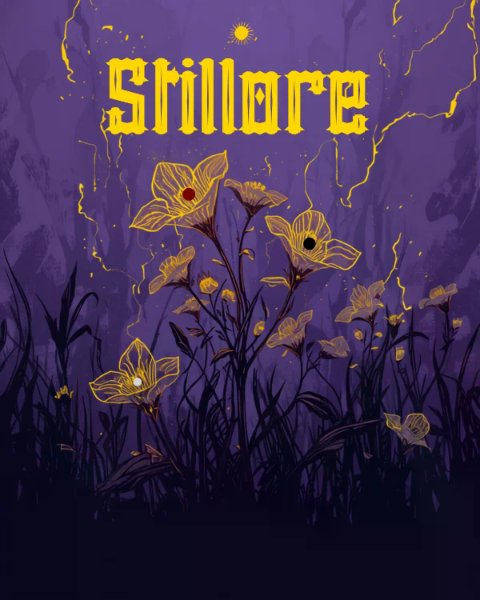
Just shy of War and Peace's length, and it's not done yet. A missing-sister investigation that keeps expanding into a city-sized conspiracy across an archipelago. If it updates at its current pace, it crosses the Tolstoy line sometime next year, and the strangest part is that by serial standards it would still be a young story.
2. The Shattering Point — 419,515 words
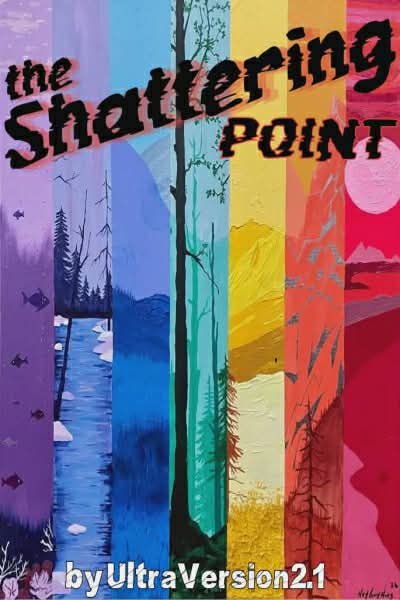
Longer than A Game of Thrones (298k) with a third again on top. A multi-realm epic about people carrying memories that contradict the world they're living in.
3. The System Administrator — 355,175 words
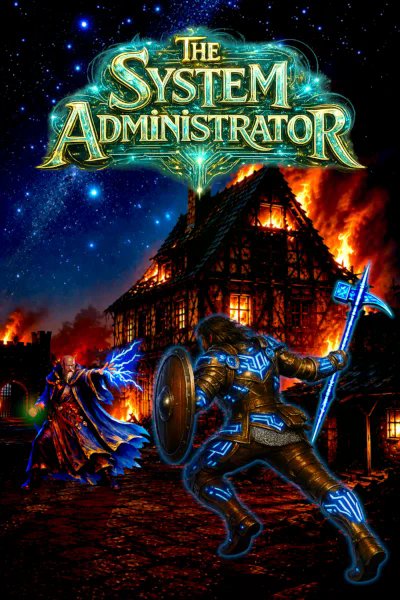
The platform's most-chaptered serial: an IT professional ripped into a world governed by a buggy system, which keeps producing chapters the way a production environment keeps producing incidents. One hundred and eighty-three chapters is the deepest bench on the site.
4. The Spartan of Invicta — 321,829 words
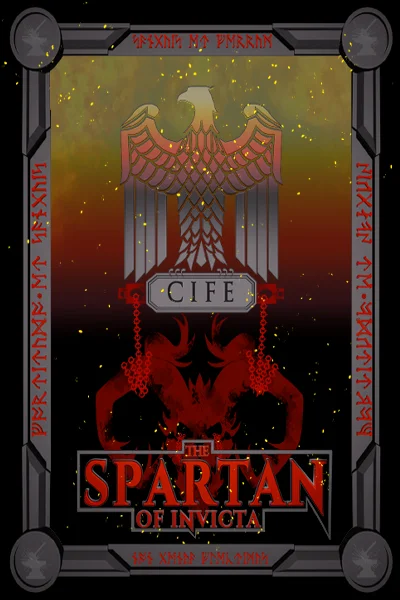
Military science fiction at epic length: a super-soldier story told with the sprawl of a war memoir, chapter by chapter.
5. Heirs of Hyarch — 314,613 words
A generational fantasy saga, the exact kind of story that benefits from serial sprawl: the length is the point, because the inheritance of consequences is the plot.
Together, those five serials contain about 1,976,000 words: more than the entirety of In Search of Lost Time, by five living authors, all publishing now.
A Note on How These Numbers Were Counted
Transparency matters in a data report, so here's the methodology. The historical word counts in the first table are the widely-cited approximations literary references agree on (exact counts vary slightly by edition and counting method). The web-serial figures are the communities' own reported totals, which update continuously. The NovelDay numbers are exact, pulled live from the catalogue: the platform stores every chapter's precise word count and computes reading times at 250 words per minute, so "565,558 words" is a real number, not an estimate. The "reading time" figures throughout are what a reader at typical adult pace should expect.
What This Means If You're a Reader
The obvious takeaway is binge fuel: if you want something you cannot possibly finish this month, the serial format is where length actually lives now. But there's a subtler one. The "long book" used to be a commitment you made at purchase time: you bought the doorstop and then either climbed it or didn't. Serials invert that too. You don't commit to the length; you commit to the next chapter. The book's length is only ever revealed to you in arrears, as the trail behind you grows.
That's a friendlier deal for most readers. The people who "can't finish War and Peace" are often the same people who accidentally read three hundred chapters of something without noticing, because nobody asked them to commit to the total.
There's also a discovery angle worth knowing. In print, length is a marketing disadvantage: doorstops intimidate buyers, which is why publishers break sagas into volumes. In serials, length is the opposite signal. A 400-chapter serial with active readership is a story that survived three hundred consecutive weekly auditions. Every long-running serial on a platform is, in effect, a book that has already been stress-tested by readers for years. That is no guarantee it will suit you, but it is a very different kind of quality signal than a back-cover quote.
Frequently Asked Questions
What is the longest book ever written?
By the traditional record book, Artamène ou le Grand Cyrus (1649–53), about 2.1 million words. By any modern definition, The Wandering Inn, a web serial past 13 million words and still running. The discrepancy exists because the record counts "published novels," and web serials publish chapter-by-chapter, not as bound finished volumes. The technicality is real; so is the 13 million words.
How long does it take to read the longest books?
At the average adult reading speed of about 240 words per minute, War and Peace takes roughly 39 hours, In Search of Lost Time about 84, and the current web-serial record holder would take more than 850 hours, about five months of full-time reading.
Why are web serials so much longer than published books?
Incentives. Print rewards finished books; serial publishing rewards weekly continuation. A successful serial has every reason to keep going, and readers reward length because the story keeps pace with them. There are also no physical constraints: no printing cost, no binding, no shelf space. The length is the business model, not stamina.
Is War and Peace the longest book?
Not remotely, it's just the longest one people finish. At ~587,000 words it sits seventh or eighth on the traditional longest-novel list, and the top of that list is itself six times smaller than the longest web serials. Its reputation comes from fame, not scale, which is a different thing entirely.
Are really long books worth reading?
Different question: are you enjoying the reading? Long books work when the length is a feature (sagas, slow-burn mysteries, world-building that pays off) and fail when it's padding. The serial format has a natural quality control here: readers stop reading bad chapters weekly, so a serial that survives to 300 chapters earned every one of them.
The Bottom Line
The record book says 2.1 million words. The internet says 13 million and counting. The honest answer is that the longest books ever written are being written right now, one chapter at a time, by authors whose readers keep showing up. Our own shelf holds 9.3 million words across 120 living serials, which is either a statistic or a challenge, depending on how you look at it. If the record book ever updates its definitions, it won't be finding a new champion; it'll be discovering a category it missed while it wasn't looking.
If you'd like to start climbing, the NovelDay library shows every serial's exact word count and computed reading time up front, so you know what you're signing up for before you start.
Writing a long serial of your own? NovelDay authors publish chapter by chapter to readers who show up every week. Start publishing free →
Want more data and recommendations? Follow The Storyteller's Journal for weekly lists, genre guides, and data reports. You might also enjoy our novel word-count data report, our chapter-length analysis, and our LitRPG guide.