
Average Reading Speed: How Fast People Actually Read (and How Long Your Next Book Takes)
The Question Behind the Question
Nobody searches "average reading speed" because they love statistics. They search it because they're trying to answer a much more personal question: how long will this book actually take me? Whether it's a doorstop fantasy someone lent you, a reading challenge you're trying to hit, or a 500-chapter web serial you're deciding whether to start, the math always comes back to the same number: how many words per minute you can actually move through a page.
The good news is this is one of the most-studied questions in reading research. The honest answer is "it depends," but it depends in ways that are genuinely interesting, and the numbers behind the average turn out to be more useful than the average itself.
The Actual Number
The best answer we have comes from a 2019 meta-analysis by Marc Brysbaert at Ghent University, which aggregated 190 studies covering more than 18,000 readers. The headline figure: the average adult reads silently at about 238 words per minute, with most people landing somewhere between 175 and 300 wpm. Reading aloud is slower, around 183 wpm, because your mouth can't keep up with your eyes.
The distribution is wide enough that "average" hides a lot:
- Children start around 100-150 wpm and climb steadily through school, roughly gaining a grade level of speed per year until late teens.
- College-educated adults cluster near the upper end, around 250-300 wpm, mostly because they've simply read more words in their lifetime.
- Older adults slow slightly, but far less than stereotype suggests; reading speed turns out to be one of the more durable cognitive skills we have.
- Proficient readers occasionally hit 400+ wpm with full comprehension, but this is a tail of the distribution, not a mode.
One practical consequence: if you time yourself and land anywhere between 200 and 300 wpm, you are not slow. You are statistically, boringly normal. The people claiming 1,000 wpm are doing something else entirely, which brings us to the part nobody likes.
Speed Reading: The Part Nobody Likes
Speed reading courses have been selling the same promise since the 1950s: read at 1,000, 2,000, even 10,000 words per minute with full comprehension. The research verdict, summarized cleanly in a major review by Rayner, Schotter, and colleagues in Psychological Science in the Public Interest, is that the promise does not hold up under testing.
The mechanics are the problem. Your eyes don't sweep smoothly across a page; they jump in small movements called saccades, pausing 200-300 milliseconds at each fixation to actually process text. Reading at very high "speeds" means skipping most of those fixations, which means skipping most of the words, which is skimming, not reading. Skimming is a useful skill for finding a specific fact or deciding whether a text is worth reading, but comprehension of narrative or argument collapses when you do it.
There's a subtler limit underneath the eye-movement one: subvocalization. Most readers silently "hear" the words as they read, an inner voice running at roughly speaking pace. That voice is doing real work; it's part of how your brain holds a sentence's grammar together long enough to understand it. Techniques that suppress subvocalization remove that processing, and comprehension drops with it. That inner voice is doing the reading, not slowing it down.
The uncomfortable truth is that reading speed and comprehension trade off against each other almost exactly the way you'd expect. There is no hack. The only reliable way to read faster is the boring one: read more, because practice expands vocabulary, pattern recognition, and processing fluency all at once.
What the Numbers Mean for Your TBR
Here's the part that's actually useful. If you know a book's word count, you can convert it directly into hours at any reading speed. Most published books list approximate word counts, and web serials usually show exact ones. At the average adult speed of ~240 wpm:
| Book | Word count | At 200 wpm | At 250 wpm | At 300 wpm |
|---|---|---|---|---|
| Harry Potter and the Sorcerer's Stone | ~77,000 | 6.4h | 5.1h | 4.3h |
| The Hobbit | ~95,000 | 7.9h | 6.3h | 5.3h |
| Typical published novel | ~90,000 | 7.5h | 6.0h | 5.0h |
| A Game of Thrones | ~298,000 | 24.8h | 19.9h | 16.6h |
| War and Peace | ~587,000 | 48.9h | 39.1h | 32.6h |
Two things stand out from that table. First, the difference between a 200 wpm reader and a 300 wpm reader on a single novel is measured in hours, not days; on a 300k-word epic it's a full working day of reading either way. Second, those "I'll read it this weekend" plans die on the math. A Game of Thrones at average speed is five or six long evenings. Knowing your number is how you plan honestly.
For context on what "a lot of reading" looks like in practice: 30 minutes a day at average speed is about 7,000 words, which works out to a typical novel every two weeks, or roughly 26 books a year. That's more than most people manage, which tells you something about how little the average person reads, not how fast.
What Ten Minutes Actually Buys You
Published-book math hides a more useful unit: the chapter. Web serials are built out of chapters sized for exactly this kind of arithmetic, and on NovelDay the average chapter runs about 2,500 words. At average reading speed, that's ten minutes of reading. Here's what that converts to in real life:
| Your daily slot | Words read | What it covers |
|---|---|---|
| 10 minutes (a coffee) | ~2,400 | One average serial chapter |
| 30 minutes (a commute) | ~7,000 | Three chapters, or a week of one long serial per month |
| 60 minutes (an evening) | ~14,500 | Six chapters, or a 90k-word novel every six days |
| A lazy Sunday (3h) | ~43,000 | Half a published novel, or a short serial start to current |
This is why the serial format fits modern attention so well even though the total word counts are enormous. Nobody reads a 500-chapter novel; they read 15 chapters a week, one coffee at a time, for eight months. The total looks intimidating in aggregate and is trivially easy in practice, which is the entire trick of serialized fiction.
Where Web Serials Break the Model
Everything above assumes books end. Web serials don't, and the math gets strange fast.
Here at NovelDay we compute reading time for every serial at 250 wpm, the middle of the adult range. Using our live catalogue data: across 120 independently-written serials over 10,000 words each, the median story runs about 3.2 hours of reading. The mean is 5.2 hours, pulled up by the long tail, because the top of the catalogue goes much further: 17 serials run more than 10 hours, and the longest, Stillore: Shard and Canvas, currently sits at 565,000 words, which is 37.7 hours of reading. That's roughly War and Peace territory, and it's still being written.
The whole catalogue combined comes to about 9.3 million words: roughly 620 hours of reading at average speed, or about 26 straight days of nonstop reading with no sleep. If you tried to read the entire NovelDay catalogue at 30 minutes a day, it would take you three and a half years, and by the time you finished, the active serials would have added tens of thousands of new words behind you.
That's the real shift web fiction made. The constraint used to be access to enough material; the serial model inverted it. At this point your minutes are the scarce resource, not the words.
What the Range Actually Looks Like
Abstract stats are easier to trust with examples. Here's the live spread across the same catalogue, four serials at four completely different commitments, all free to read:
Stillore: Shard and Canvas — 37.7 hours

The catalogue's longest serial: a missing-sister detective story wrapped around a conspiracy spanning an entire archipelago. At average reading speed this is longer than War and Peace takes most readers, and it's still being written.
The Legendary Demon Hunter's Cursed Brother — 17.0 hours

Roughly the equivalent of a Game of Thrones, split across 107 weekly-style chapters. This is the upper-middle of the serial range: a serious commitment, but a bounded one.
Rynth: Four Beats — 7.1 hours
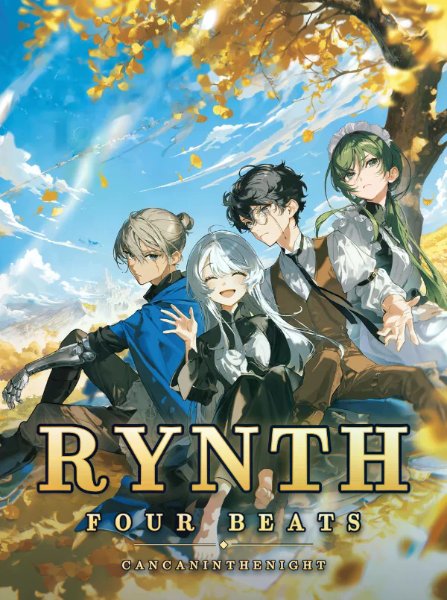
A magic-academy serial running about the length of a standard published novel. This is the median neighborhood of the catalogue: a weekend of reading, or two weeks of commute chapters.
Mirror of Fate — 3.2 hours
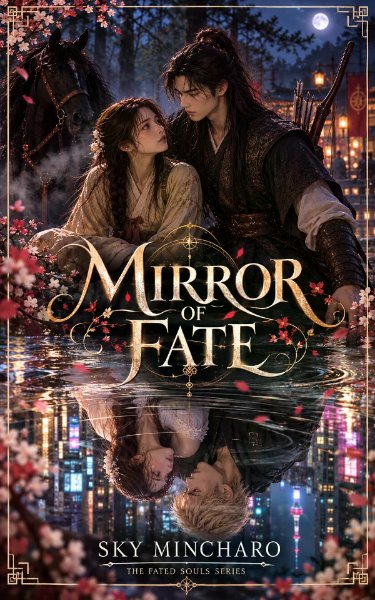
A time-crossed romance at the shorter end: read start to current chapter in a single evening. The shorter serials on the platform are the low-commitment on-ramp, and they grow with you.
Why "Books Per Year" Is the Wrong Metric Anyway
The reading-speed conversation usually ends up at "how many books can you read a year," which is a strange way to think about it once you see the serial math. A year of reading adds up to hours spent inside stories, not a shelf of books. At 30 minutes a day, you read about 2.7 million words a year, whether that surfaces as 30 published novels, 15 doorstop epics, or three long web serials you followed all the way through their arcs.
That's worth saying because serial readers are often made to feel like their reading "doesn't count" the way a Goodreads shelf counts. The math disagrees. Someone who read Stillore's 565,000 words this year did the same volume of reading as someone who read seven average novels. The format changed. The words-per-year didn't.
What Actually Changes Your Speed
Before you test yourself, it's worth knowing what the number responds to, because most of the variation in reading speed isn't between people. It's inside the same person, hour to hour:
- Familiarity with the material. You read a genre you know measurably faster than one you don't, because genre vocabulary and sentence shapes come pre-loaded. Fantasy readers fly through invented names that stall new readers.
- Purpose. Reading to find out what happens next runs 20-30% faster than reading for language. The same person has two speeds, and most fiction reading is done at the first.
- Format. Screen reading runs slightly slower than print for long-form text, though the gap has narrowed to single digits as screens improved. Line width matters more than the device itself.
- Fatigue and attention. Late-night reading is slower reading, and it doesn't feel slower, which is the trap. The words take longer and you notice less.
- Translation and complexity. Dense literary prose, heavy dialect, and translated fiction all cost 10-20% of baseline speed for most readers, no matter how practiced.
The practical upshot: your "reading speed" isn't one number, it's a range your brain picks from automatically. That's why timing yourself on a chapter of what you actually read is worth more than any population average.
How to Find Your Real Reading Speed
If you want your actual number instead of the average, it takes about ten minutes:
- Pick a chapter, not a test. Use a book you'd actually read, at the difficulty you'd actually read. Artificial test passages will inflate or deflate the result depending on how weird the vocabulary is.
- Time yourself for 10 minutes of normal reading. Read the way you actually read, not faster just because you're being timed.
- Count the words you finished. Word count divided by minutes is your wpm. Most e-readers and web platforms will tell you a chapter's exact word count, which saves you from counting by hand.
Do it a second time with a different genre and you'll probably see a different number. That's normal too: reading speed isn't a fixed trait, it varies with vocabulary familiarity, sentence complexity, and whether you actually care about what you're reading. A third pass on the thing you read purely for fun usually gives the highest number of all, which is the whole argument for reading what you like.
Frequently Asked Questions
What is the average reading speed in words per minute?
About 238 words per minute for silent reading in adults, according to the largest meta-analysis on the question (Brysbaert, 2019, aggregating 190 studies). Most adults fall between 175 and 300 wpm. Reading aloud runs slower, around 183 wpm.
Can you actually increase your reading speed?
Yes, but modestly, and not through speed-reading courses. Reading speed improves the way vocabulary does: through accumulated practice. Readers who read more get faster, because speed tracks fluency more than technique. Deliberately pushing pace usually costs comprehension, which defeats the point for fiction.
Is speed reading real?
Not the way it's marketed. Research consistently shows comprehension collapses above roughly 500-600 wpm for connected text. What speed-reading techniques actually teach is skimming, which is a real and useful skill for specific tasks, like previewing a textbook chapter or finding a name in a report, but it isn't reading in the sense anyone means when they talk about finishing a novel.
How many books can you read in a year?
At average speed, a 90,000-word novel takes about 6 hours of reading. Reading 30 minutes a day gets you through roughly 26 novels a year; an hour a day gets you past 50. The math is more generous than most people's actual book counts, which is why the binding constraint is usually time spent, not speed.
How long does it take to read a 300-page book?
A 300-page paperback runs about 75,000-90,000 words depending on typesetting, which is 5-6.5 hours at average speed, or roughly a week of half-hour evening reading sessions. Page counts lie more than word counts do, which is why web serials, which display exact word counts and reading times, are actually more honest about what you're signing up for.
The Bottom Line
The average adult reads about 240 words per minute, you probably read close to that too, and speed-reading promises are mostly selling you skimming with extra steps. What the number is actually good for is planning: word count divided by your wpm tells you exactly what a book will cost you in hours, which is the honest unit of a reading life. Nobody has a word budget. Everybody has a time budget, and the books that get finished are the ones that fit inside it.
If you want to test your number against something with no page-count guesswork, web serials display exact word counts and computed reading times up front. The NovelDay library currently holds about 9.3 million words of serialized fiction, all free, and all of it tells you exactly how long it takes before you start.
Writing a serial of your own? NovelDay authors publish chapter by chapter to readers who show up every week. Start publishing free →
Want more recommendations and reading science? Follow The Storyteller's Journal for weekly lists, genre guides, and data reports. You might also enjoy our novel word-count data report, our chapter-length analysis, and our best sci-fi books list.