Can You Make Money Writing Web Novels? An Honest Breakdown
The honest answer is yes, but almost nobody explains how, and the gap between "possible" and "probable" is where most new serial authors get hurt. Search the question and you will find platform marketing promising income, forum threads full of survivorship bias, and screenshots of exceptional months presented as typical ones. What is missing is a map of the actual revenue paths, what each one costs you in rights and control, and what the economics look like for the median author rather than the top one percent.
This is that map. There are five real ways web novel authors earn money, and they differ enormously in who they favor. Some trade your rights for a modest guaranteed check; others pay nothing directly but leave you owning everything. Knowing which is which before you post your first chapter is the difference between building an asset and renting out one.
One framing helps before any of the paths: a serial is two assets, not one. There is the story itself, which can later become a book, and there is the readership gathered around it, which follows you to whatever you write next. Every monetization path is really a different way of converting one or both of those assets into income, and every contract clause is about who ends up owning them.
Path 1: Platform Exclusivity Contracts
The best-known model, popularized by Webnovel and similar apps, works like this: the platform offers you a contract, usually triggered by word count or early traction, that locks your work to their ecosystem in exchange for a share of reader spending. Readers pay to unlock chapters; you receive a percentage. It is the only path that can pay from day one with zero audience, which is exactly why it is dangerous, and why it is offered so eagerly. The contracts typically demand exclusivity and broad rights, the revenue splits favor the house, and the payout threshold means most contracted authors never see meaningful money. We broke down what these agreements actually take in our piece on what you lose before you sign a webnovel contract; the short version is that the signature is worth far more to them than the check is to you.
The psychological trap is worth naming too. A contract arriving in your inbox feels like validation, proof the work is good enough to buy, and that feeling is precisely what makes authors sign terms they would reject from any other business. The early traction that triggers the offer usually means your story already has the one scarce thing in this industry, readers who care, which is exactly when the leverage should be yours, not theirs.
There is also a subtler cost rarely priced in: the contract converts an open-ended asset into a fixed bet. If the story takes off elsewhere, you cannot follow it. If the platform deprioritizes it, you cannot move it. And if the market shifts, your income and your work are locked inside the same room.
In most other industries, an offer contingent on you surrendering the rights to your own labor would raise alarms; in serial fiction it is dressed up as an opportunity.
Path 2: Direct Reader Support
The dominant model for independent serial authors is not the platform paying you; it is readers paying you through the platform. Patreon, Ko-fi, and PayPal links attached to a serial let fans support the work directly, often with early-access chapters as the reward. The economics are completely different from contracts: no revenue split taken by the platform if the platform is built for it, no exclusivity, and the money scales with loyalty rather than pageviews. A hundred committed readers supporting at a few dollars a month is a real income floor, and it is the path most mid-tier serial authors actually live on. The catch is obvious: it pays nothing until you have readers, which is why it pairs with free, open publishing rather than replacing it.
There is a subtler advantage worth noting: direct support compounds. Each reader who pledges is a relationship, not a transaction, and the serial keeps earning from that relationship every month it holds their attention. Contract money is a capped wage; reader support is an appreciating one.
Path 3: Paid Chapters and Freemium Apps
Radish, Dreame, and similar services flip the model: chapters are free early and cost coins later, with the app taking a significant cut of every unlock. For romance, werewolf, and mafia-style serials, this can genuinely pay, since those audiences are conditioned to buy chapters. For most genres it pays little, and the trade-offs mirror contracts: platform lock-in, opaque splits, and an audience that belongs to the app rather than to you. It is a legitimate path for commercial-genre serials, but read the rights clauses before assuming it is just distribution.
The practical difference from contracts is speed and selectivity: freemium apps will often take a broader range of work, but the coin-unlock model only sustains genres with compulsive re-reading behavior. If your serial does not fit that profile, the platform's cut turns an already small audience into a smaller paycheck.
Path 4: The Kindle Conversion
Serial first, book later. Build an audience on a free platform, then compile, edit, and self-publish the finished work on KDP, where the serial becomes a novel and the readers become buyers. This is the path that turned several web serials into mainstream publishing deals, and it has a quiet advantage nobody advertises: the serial phase is a market test. A story that holds readers for a hundred free chapters has already proven it can hold buyers. The rights question matters enormously here; authors who signed exclusivity contracts often cannot do this, while authors who kept their rights can serialize and sell the same work in both places.
The conversion also produces a second asset the serial alone never could: a finished book with a cover, a price, and a permanent shelf position on Amazon. Many successful serial authors treat the free chapters as the marketing engine and the compiled edition as the checkout lane.
Path 5: Adaptation and Rights
The lottery ticket, except it is not purely luck. Solo Leveling was a web novel before it was a manhwa and an anime, and the adaptation pipeline from serial fiction to screen and print is now a real industry channel. Almost no author should plan around this, but every author should own the possibility, because it only exists if you kept your rights. This is the least measurable path and, per dollar of expected value, the worst contract defenses are still too expensive.
How to Evaluate Any Platform Offer
Whatever path tempts you, the same four questions reveal what you are actually being offered. First, who keeps the rights, and for how long; anything that takes them permanently or for the life of the work should price that in. Second, what percentage reaches you after all fees, not the headline split but the net. Third, can you leave with your audience, meaning can readers follow you elsewhere or does the platform own the relationship. Fourth, what happens to the work if the platform changes terms, pivots, or shuts down, a question that stopped being hypothetical when one of the industry's biggest programs collapsed overnight.
The scoring is simple. A platform that keeps your rights, lets you link out to direct support, and pays nothing directly is often worth more than one paying a small advance with exclusivity attached, because the former is an asset and the latter is a ceiling. Run every offer through those four questions and the apparently confusing market sorts itself quickly.
What the First Year Actually Looks Like
Most honest accounts of serial income share a shape: months one through six earn close to nothing while the audience forms; months seven through twelve begin to show small direct-support revenue if the schedule held; and the second year is where the compounding starts, because a completed arc can be recommended, compiled, and sold while the next one builds. The authors who describe it differently are almost always describing an exceptional launch, a pre-existing audience, or a platform contract that looked better in month one than it did in month eighteen.
This is not discouragement; it is the price of the asset. A serial that earns little in year one and owns its rights is still accumulating something trad publishing cannot offer a debut: a public track record, readers who watched the book get written, and a catalog position that does not expire when the marketing budget does.
What Actually Predicts Earnings
Before the variables, one honest floor: no path rescues a serial that cannot hold readers. The monetization debate matters only after the retention question is answered, which is why the smartest early metric is not income at all but whether readers come back for the next chapter. Everything below assumes a story that already works as a story.
Strip away the path differences and the same few variables decide who earns: consistency of schedule, genre heat, and completion. Readers support stories that update reliably; a chapter-a-week habit outperforms bursts. Commercial genres with loyal audiences (romance, progression fantasy, thriller) monetize faster than literary work. And finished arcs convert better than perpetual works in progress, because a complete Book One is a thing a reader can recommend.
It is worth looking at what that consistency actually produces in the wild. None of these are lottery winners; they are examples of the asset being built, chapter by chapter, before the money question even makes sense.
Stillore: Shard and Canvas
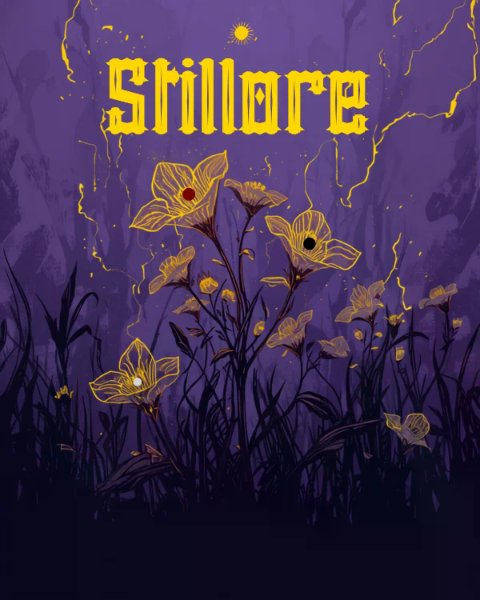
One hundred thirty chapters, roughly thirty-seven hours of reading, from a single author building one world over months. This is the consistency variable made physical: a serial long enough to be a genuine body of work, and still updating.
Read Stillore: Shard and Canvas on NovelDay
The System Administrator
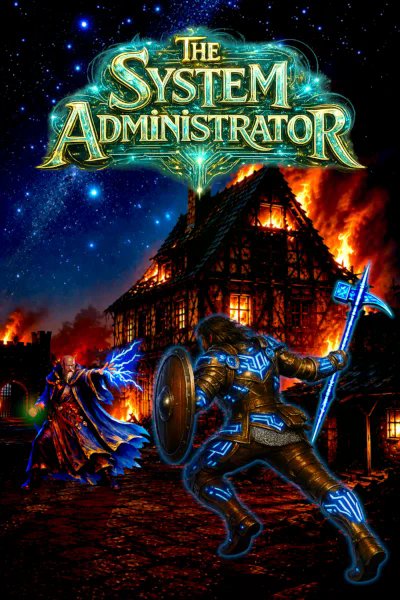
One hundred sixty-five chapters of an escalating premise, sustained. The schedule variable at its most visible: a backlog deep enough that a new reader becomes a weeks-long reader, which is exactly what a support-based income model feeds on.
Read The System Administrator on NovelDay
The Killer's Consultant

The other end of the asset spectrum: a thriller arc built at novella-plus length, the kind of contained story a reader can finish and then recommend whole. Finished arcs convert because a complete Book One is a thing, and things get shared.
Read The Killer's Consultant [Kdrama Crime Thriller] on NovelDay
One more variable hides inside the schedule point: re-readability. Stories that reward a second pass hold support longer than stories consumed once and discarded. The authors who earn the steadiest money tend to write the kind of chapters readers return to, and you cannot fake that with marketing.
The Question Nobody Answers: Should You Do It?
Writing web novels for the money alone is a bad trade; the expected value for a first-year author is low by any honest accounting. Writing them as the first stage of a career, an audience, a portfolio, and an asset you own is a different calculation entirely. The authors who earn are rarely the ones who optimized for income; they are the ones who published consistently on terms that did not strip them of the rights to capitalize later. If you want the deeper comparison of where to build that audience, our guides on Royal Road versus Scribble Hub and where to post your web novel break down the platform trade-offs, and our comparison of every publishing path covers the traditional-versus-indie math for the day you turn the serial into a book.
It is also worth being honest about the timeline. The serials that earn typically do so after a hundred chapters, not after ten, and the authors who lasted to that point were almost always writing because they wanted to tell the story, not because the math already worked, and the story had to carry them through the months when it was the only thing paying out. The money tends to be the reward for surviving the invisible middle, which is the part nobody writes about because it has no screenshot.
More Questions Writers Ask
Do webnovel authors get paid?
Some do, through the paths above: platform contracts, direct reader support, paid-chapter apps, Kindle conversion, and rights deals. Most earn little or nothing in year one; the realistic reading is that money follows audience, not the other way around.
Do you have to pay to publish a web novel?
No. On any legitimate serial platform, publishing is free, and any site charging you to post chapters is not a publishing platform but a service vendor, which is a very different business relationship to enter knowingly.
Does Royal Road pay authors?
No, not directly. Royal Road is a free platform that functions as an audience engine; authors monetize by linking Patreon or similar support from their story pages. It is one of the better launchpads precisely because it does not take your rights.
Can you make money writing on Wattpad?
Mostly no, not from Wattpad itself; its paid programs are invitation-only and small. Its real value is audience, which authors then convert through outside channels or traditional publishing deals.
How much do web novel authors earn?
The honest distribution is brutal: a long tail earning nothing, a working middle earning a few hundred dollars a month from reader support, and a thin top earning livable income through stacked paths, typically contracts plus direct support plus book sales. Anyone quoting a single number is selling something.
Can a complete beginner earn from a first serial?
Rarely from the serial itself, but that is not the right frame. The first serial's job is to teach the schedule, find the readers, and prove the book can hold an audience; the second serial is usually where the income starts, built on everything the first one taught you.
Is a Webnovel contract worth signing?
Usually no for a first work, because the typical deal trades broad rights and exclusivity for modest money and a payout threshold most authors never reach. Exceptions exist, but read the rights clauses before the dollar figure.
Do I keep my rights if I serialize online?
On the right platform, yes. NovelDay's model is built on that: authors keep all rights and 100% of direct reader support, so the serial stays an asset you fully own rather than a rental.
What is the fastest path to the first dollar?
A completed short serial in a commercial genre plus a Ko-fi link beats a contract offer nine times out of ten. You keep everything, learn whether the story holds readers, and own the result either way.
Is writing a web novel worth it at all?
As a pure income plan for year one, no. As an asset-building strategy, absolutely: you end the period with a published body of work, a readership, retained rights, and proof of consistency, which is the stack every later income path is built on.
The Bottom Line
Can you make money writing web novels? Yes, in roughly the same way you can make money in most creative fields: slowly, then suddenly, and almost never on the terms the platform marketing implies. The authors who treat the first year as audience-building rather than income-earning are the ones who end up with both. The durable strategy is boring: write on a schedule, pick a platform that leaves you owning the work, and let reader support follow the audience it has earned. If that is the plan, the NovelDay library shows what working serials look like, and our writer program is built around exactly that deal, free to publish, rights kept, and 100% of reader support staying with the author it was always meant to belong to.