Do Web Serials Ever Finish? Completion Rates from 148 Real Serials

Everyone who reads web fiction knows the quiet truth about the format: most serials never finish. The "last updated" date is the genre's unofficial epitaph, and every reader has a graveyard of favorites that stopped mid-arc with no warning and no farewell chapter. What nobody publishes anywhere is the actual rate. How many serials ever reach an ending, where do the rest die, and is a finished serial even the right thing to hope for in the first place?
We can answer some of that with our own catalog. As of October 16, 2026, NovelDay hosts 148 user-authored serials, and every figure below is computed from that snapshot: 8.5 million words, 3,317 chapters, real authors publishing chapter by chapter. It is a young platform's dataset, so treat it as one honest sample rather than an industry census, but the shape it reveals matches what the format's veterans already suspect.
The Dataset at a Glance
| Measure | Count | Share of catalog |
|---|---|---|
| Serials (user-authored) | 148 | 100% |
| Total words | ~8.5 million | — |
| Total chapters | 3,317 | — |
| Marked complete | 28 | 19% |
| Updated within last 30 days | 67 ongoing | 45% |
| Stalled 30+ days | 53 ongoing | 36% |
| Stalled 60+ days | 30 | 20% |
The Headline Number: One in Five
Nineteen percent of the catalog is marked complete. On its face that sounds low, and compared to finished products like published novels it is. But context changes the read: web fiction is a format where starting costs nothing, where posting chapter one takes an afternoon and abandoning it takes none at all. Against that baseline, one in five serials reaching an ending of any kind is not a failure rate. It is a selection process working exactly as designed.
The more interesting question is not the percentage but the shape of the cliff underneath it: where serials actually die.
The Survival Cliff
Here is what happens to 148 serials as you raise the bar. Each line is the share of the whole catalog that ever reached that chapter count:
| Milestone reached | Serials | Surviving share |
|---|---|---|
| 5+ chapters | 115 | 78% |
| 10+ chapters | 82 | 55% |
| 20+ chapters | 54 | 36% |
| 50+ chapters | 16 | 11% |
| 100+ chapters | 5 | 3% |
Read it as a survival curve and two cliffs appear. The first is early and brutal: one in five serials never makes it past chapter five. These are the false starts, the premises posted on a burst of enthusiasm that could not carry a second week. The second cliff is quieter but more decisive: between ten and twenty chapters, another fifth of the catalog drops away. That stretch is the first real arc, the point where a serial has to prove it can sustain a story rather than a premise. Survive to chapter twenty and a serial has already outlasted two-thirds of everything ever started on the platform.
Past twenty chapters the curve flattens dramatically. The serials that reach fifty chapters are disproportionately likely to keep going: long-run momentum appears to be its own kind of proof, and the catalog's five hundred-chapter serials are still updating.
The Forty Serials That Never Really Started
It is worth pausing on the largest single cohort in the data: the 40 serials, more than a quarter of everything published, that never passed five chapters. These are not really abandoned stories. Most are abandoned attempts: a premise posted in an evening, three chapters written ahead of a plan, a burst that met the week-two wall of realizing a serial is a schedule that never ends, not a document you finish once.
The distinction matters for interpreting the 19% completion rate. Strip out the false starts and the picture changes substantially: among serials that reached ten chapters, the effective survival rate is far better than the headline suggests. The graveyard narrative conflates two different phenomena, the stories that died and the attempts that were never alive. The data separates them: roughly a third of the catalog was stillborn by any honest measure, and the real attrition story is what happens to the two-thirds that were actually running.
What "Completed" Actually Means
Here is the finding that reframes the whole question: the median completed serial is twelve and a half chapters long. The mean is seventeen. The single longest finished work in the catalog is thirty-nine chapters.
Web fiction's completion statistics look catastrophic only if you picture "completed" as a finished epic. In practice, the serials that finish are the ones structured to finish: bounded arcs, first volumes, novella-length stories that reach a real ending and stop. The format's completion rate is not mostly a story about abandoned epics. It is a story about which writers defined an ending and which ones never did.
This is the part the graveyard narrative misses. A serial that posts thirty-nine chapters, completes its arc, and stops is not a failed two-hundred-chapter epic; it is a finished book one. Serialization blurs the unit of measurement. The chapter is the atom, but the arc is the book.
Does Genre Change the Odds?
Yes, and by more than expected. Splitting completion by primary genre shows a clean pattern: bounded genres finish, sprawling ones stall.
| Genre | Serials | Completed | Completion rate |
|---|---|---|---|
| Horror | 33 | 11 | 33% |
| Romance | 35 | 8 | 23% |
| Psychological | 50 | 11 | 22% |
| Slice of Life | 34 | 7 | 21% |
| Mystery | 45 | 7 | 16% |
| Supernatural | 42 | 6 | 14% |
| Fantasy | 92 | 9 | 10% |
| Adventure | 77 | 8 | 10% |
| Magic | 70 | 6 | 9% |
| Action | 74 | 6 | 8% |
Genre tags overlap (a serial can carry several), so the rows are groups, not a partition. Rates are completions as a share of each genre's serials.
Horror finishes at three times the rate of action and adventure. The mechanism is not genre quality; it is scope. A horror serial is usually built around a single situation with a natural end: the haunting resolves, the mystery closes, the protagonist escapes or does not. Action and adventure serials are built to escalate, and escalation has no scheduled stop. The genre that plans an ending is the genre that reaches one.
There is a second pattern worth noting: finishers finish repeatedly. Six authors account for a disproportionate share of the catalog's completions, with several holding two, three, or five finished works each. Completing a serial turns out to be a skill, and like most skills it compounds.
The Stalled Middle
Thirty-six percent of the catalog is an ongoing serial that has not updated in over a month. That is the hiatus zone, and it is where the honest uncertainty lives, because a stalled serial is not a dead one. Twelve of them are substantial works, twenty-plus chapters deep, paused mid-story. Whether they resume is unknowable from the data. Some will; the format's rhythms include multi-month gaps between volumes. Most will not; that is simply what the statistics of unfinished serial fiction look like everywhere.
What the numbers do show clearly: the likelihood of a serial stalling is highest early, in the same chapter five-to-twenty window where the survival cliff sits. The serials most likely to update this month are the ones that already updated last month. Momentum in web fiction is not a metaphor; it is the single strongest predictor of whether a serial exists in a year.
For the authors behind those twelve substantial paused works, the charitable read applies: serialization is volunteer labor, life intervenes, and an eighty-seven-chapter hiatus is not the same thing as a three-chapter abandonment. The data cannot tell intentions from outcomes, only count them.
Why the Finish Rate Looks Different Here
Web fiction's reputation for unfinished work is earned, but the reasons are structural rather than moral. Starting a serial has no gatekeeping: no agent, no contract, no editorial gate at all. That is the feature. It means the catalog contains every kind of author, including the ones who were always going to write three chapters and stop. A bookstore cannot show you the books nobody finished. A serial platform shows you all of them, permanently, which makes the incompleteness visible in a way it never is in print.
The counterweight in our data is the book-structured serial. Platforms where authors publish in volumes see markedly higher completion, because a volume is a finishable unit in a way "the whole story" often is not. Of our twenty-eight completed works, the majority are arcs and first volumes with deliberate endings: exactly the structure the format rewards.
There is also a self-selection effect worth acknowledging honestly. Writers who choose a smaller, newer platform often do so precisely because the pace of serial fiction fits how they write: bounded projects, personal schedules, stories sized to the telling rather than to an algorithm's appetite for daily chapters. The catalogs most famous for unfinished epics are also the ones whose feeds most aggressively reward endless continuation. Incentives shape outcomes, in fiction as everywhere else.
Three Serials, Three Outcomes
The paused epic: Of Crimson and Ash
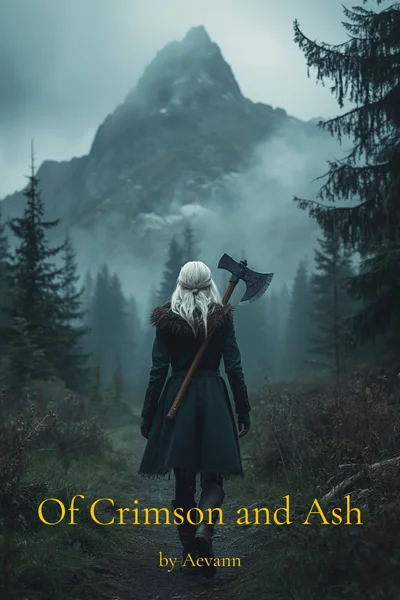
The hiatus case: eighty-seven chapters of historical fantasy, deep and well-built, silent for eleven weeks. Is it dead? Statistically, probably. But eighty-seven chapters is a library's worth of finished reading either way, and the format's honest answer is that the chapters that exist do not stop being good because chapter eighty-eight is late.
Read Of Crimson and Ash on NovelDay
The finished arc: The Weight of Falling Objects Book 1: The Oasis of the eye
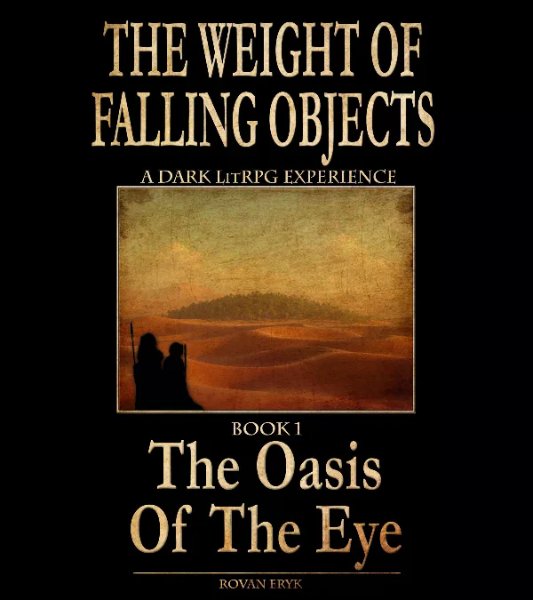
The longest completed work in the catalog: thirty-nine chapters, a full first volume with a deliberate ending. This is the pattern that produces finished serials: a bounded arc with a defined destination, written to reach it. It sits in the library as a complete book one, not an abandoned attempt at something longer.
Read The Weight of Falling Objects Book 1: The Oasis of the eye on NovelDay
The compact finish: What We See: An Eyes Story (Book One)
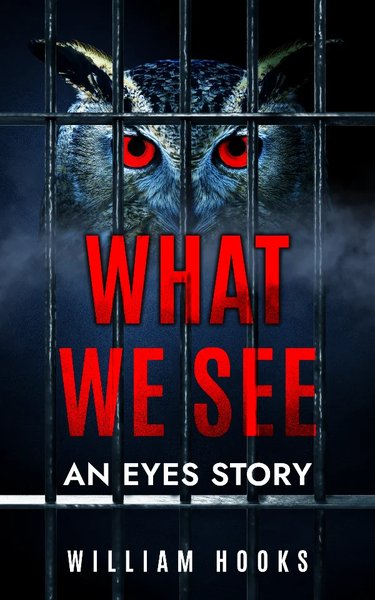
Twenty-nine chapters, complete, a psychological-horror book one that knew its boundaries and wrote to them. The median completed serial is twelve chapters; What We See is what the data says most "completed" serials actually look like: a bounded volume with an ending, not an endless story that stopped.
Read What We See: An Eyes Story (Book One) on NovelDay
What This Means If You Are Reading One
For readers, the survival curve suggests a calibration that avid serial readers already practice without naming it. Ongoing is not a promise; it is a probability. A serial at chapter eight with a weekly schedule is a coin flip for the year. A serial at chapter sixty with a weekly schedule is a near-certainty to keep going, because it has already survived the attrition window where most of its cohort died.
The practical reading strategy follows from that: read ongoing serials for what they are now, not for the ending you hope arrives. If a story needs its conclusion to be worth your time, filter for complete, and the library's completion flag exists for exactly that reason. If you are willing to ride an ongoing story, the ones past chapter twenty are statistically your safest bet, and a serial quiet for more than a month should be read the way you would read a finished book that stops mid-arc: worthwhile on its own terms, not as an investment.
What This Means If You Are Writing One
The practical advice the data supports is unglamorous and consistent: write to an ending. Not necessarily the ending of the whole story, but an ending: a volume, an arc, a resolution readers can feel. The completed serials in this dataset are not the ones with the most ambitious scope; they are the ones with a defined finish line. A finished thirty-chapter arc outranks an abandoned hundred-chapter epic on every metric that matters: readers finish it, recommend it, and it stays complete in the catalog forever.
The second implication is about cadence. The window where serials die, chapters five through twenty, is precisely where a weekly update habit either forms or does not. Writers who want to survive the cliff should treat the first twenty chapters as the trial: if the schedule holds through arc one, the serial is statistically already in the durable third of the format. Our chapter-length data and the serial-writing plan cover the mechanics; this report is the case for why it is worth doing.
For the broader catalog picture, the state of web fiction report has the genre and length breakdowns this analysis draws on.
Quick Answers on Serial Completion
What percentage of web serials finish? In our catalog, 19% are marked complete, though "complete" usually means a finished arc or first volume rather than a whole saga. The median finished work runs about twelve chapters.
Why do so many web novels get dropped? Because starting one is free and continuing one is not. The steepest losses happen between chapters five and twenty, before a serial's first arc resolves: the zone where writing is still effort, the story has not yet proven itself, and readers have not yet arrived in numbers.
Is an unfinished serial still worth reading? The data says the chapters that exist do not depreciate. A paused 87-chapter epic is a dozen finished hours of reading. It is rational to prefer completed works, but skipping every ongoing serial means skipping most of what the format produces.
How long is the average completed web serial? Shorter than people assume. Our median completed serial is twelve and a half chapters, roughly a novella's worth. Long finished works are the exception everywhere in the format, not the rule.
What makes a serial more likely to finish? Two things dominate: a bounded destination (a volume or arc with a planned ending) and update momentum through the first twenty chapters. Serials that survive past chapter twenty complete at far higher rates than the catalog average.
Do stalled serials ever come back? Some do; multi-month gaps between volumes are normal in the format, and authors return after hiatuses regularly. But the probability drops fast: a serial quiet for two months is far less likely to resume than one quiet for two weeks.
Where can I read completed web serials? The NovelDay library filters by completion status, and every serial on the platform is free to read.
If you are on the other side of this statistic, writing a serial of your own, the durable advice is simple: pick a finish line, post on a schedule, and get past chapter twenty. Start on NovelDay and let the next version of this report count you in the nineteen percent.