NaNoWriMo Alternatives: Why a Web Serial Beats the 50K Sprint

NaNoWriMo is gone. The organization shut down in 2025, the website is dead, and for the second November in a row, hundreds of thousands of writers are looking at a calendar with a hole in it. What is easy to miss: the challenge itself never belonged to the organization. It was always just a number (50,000 words), a month (30 days), and a crowd doing it together. All three still exist. The question is only where you point them.
Every "NaNoWriMo alternatives" list published so far points them at the same thing: another hosted sprint. Novel November, Reedsy's Novel Sprint, Novel90, writing challenges with names you will forget by December. They replicate the format faithfully: write 50,000 words in November, get a badge, and then face the same question NaNoWriMo always left unanswered. You have a manuscript nobody has read and a deadline that is over. Now what?
There is an alternative nobody lists, because it changes the question entirely. Instead of writing a manuscript in private, write a web serial in public. Same 30 days. Same daily word count. But every chapter you finish goes live, readers start showing up in week one, and on December 1st you do not have a trunk novel: you have a published serial with an audience that is waiting for the next chapter.
What Actually Happened to NaNoWriMo
A quick recap, because the information online is scattered. National Novel Writing Month ran for over twenty years, growing from a few dozen friends to peaks of more than 500,000 participants per year. The nonprofit behind it weathered several public controversies, then announced in early 2025 that it was shutting down for financial reasons. The forums closed, the website went dark, and Camp NaNoWriMo, the smaller twice-yearly event many writers preferred, ended with it.
What did not end: the idea that November is for writing. Search volume for "NaNoWriMo alternatives," "camp nanowrimo," and "what happened to nanowrimo" proves the demand outlived the brand. Writers still want the structure. They just need somewhere new to put it.
The Alternatives Lists, and the One Thing They All Miss
To be fair, the replacement challenges exist and some are genuinely good. Several run a 50,000-word November sprint for free. A couple offer cash prizes. One or two have active communities that feel like the old NaNo forums did at their best. If what you loved was the camaraderie of the sprint, they deliver that.
But every single one inherits NaNoWriMo's deepest flaw: the work is invisible until it is finished. You write alone for thirty days, and the reward structure is identical whether you produce a masterpiece or a mess. Nobody reads along. Nobody waits for your next chapter. When motivation craters around day twelve, and it will, the only thing pulling you forward is the word counter.
A web serial inverts that. Your draft is the product. The 1,667 words you write tonight become a chapter tomorrow morning, and someone on the internet can read it before you wake up.
Why a Web Serial Beats the 50K Sprint
The math works out almost suspiciously well. NaNoWriMo's pace is 1,667 words a day. A typical web serial chapter runs 1,500 to 3,000 words. That means the NaNoWriMo writing habit produces roughly one chapter every day or two, which happens to be exactly the update cadence that performs best on serial platforms. You do not have to change the challenge at all. You just have to stop hiding the output.
That inversion fixes the four failure modes that kill most NaNoWriMo attempts:
- Motivation: on day twelve of a private sprint, quitting costs you nothing and nobody notices. On day twelve of a public serial, readers have already commented and are expecting the next update. Accountability that comes from an audience is stronger than any badge.
- Feedback: a sprint gives you feedback in December, from beta readers you have to recruit. A serial gives it to you on chapter three, from strangers who chose to read your book. You learn what is working while you can still fix it.
- Length pressure: 50,000 words is a hard floor that forces padding. Serials have no minimum: our catalog's median ongoing serial sits around 30,000 words, which is a legitimate, completed month of work, not a failed draft.
- The ending: December first on a sprint means "now find an editor, a query letter, an agent, eighteen months of waiting." December first on a serial means "the story continues." You are not done; you are established.
There is a quieter benefit too: the serial is the only format where speed is a feature, not a bug. NaNoWriMo output has always been dismissed as too rough to publish, and for traditional publishing that is true. Serial readers expect rough. They want velocity, momentum, and a story that keeps moving, and they are famously forgiving of a slightly jagged chapter if the next one arrives on schedule. The sprint you were embarrassed by turns out to be the genre's house style.
How to Run a Serial November: The Plan
The mechanics are simple enough to fit on one list. This is the version we would run:
- Week 0 (late October): write a two-paragraph pitch and a rough arc for the first 10 chapters. Not an outline, just landmarks. Serials reward momentum over planning, but you need enough structure to know what tomorrow's chapter does.
- Day 1: publish chapter one. Do not wait for a "polished" draft. The platform's update feed is how readers find new serials, and a live chapter is findable in a way a private document never is.
- Days 1-30: write ~1,700 words a day, publish every one to two days. That lands you at 15-20 chapters and ~50,000 words by November 30: the NaNoWriMo number, but live, readable, and already gathering comments.
- Title and cover: a readable thumbnail matters more than polish. Pick something clear over something clever; readers scroll fast and click on what they understand instantly.
- Do not chase the word count: if your serial naturally finishes an arc at 35,000 words, that is a finished arc, not a failed November. The serial does not care about 50K. It cares that chapter 21 arrives in December.
A note on the numbers: serial chapters are shorter than you think. Our data-driven chapter-length guide breaks down the real distribution across hundreds of serials, and the short version is that 1,500 to 2,500 words is the sweet spot. One NaNoWriMo day is literally one chapter.
What the Month Actually Feels Like
Week one is the easy part, same as every November challenge. The difference shows up in week two, which is where sprints go to die. On a private draft, day ten's session produces invisible progress: the counter ticks up and nothing else changes. On a serial, day ten means chapter five or six is live, and if the platform's feed is working, somebody has already found it. One comment, even a short one, changes the psychology of the whole month. You are no longer writing toward a deadline. You are writing toward people.
Week three is the grind either way, and there is no alternative format that fixes it. The serial version's advantage is structural rather than motivational: because each chapter is a discrete published unit, a bad writing day costs you one chapter, not the manuscript. You can post a slightly thin chapter, note it, and keep moving. Sprint drafts do not work that way; a rough stretch pollutes everything around it and the whole file starts feeling contaminated.
Week four is where the two paths fully diverge. Sprinters are writing to a finish line and borrowing energy from it. Serialists are not finishing anything; they are mid-story by design, which means the last week of November feels like any other week of an ongoing project. That sounds less triumphant, and it is, but it is also the point. The sprint was always a means to a habit. The serial just admits it.
Who This Is Not For
Honesty section, because the pitch does not fit everyone. If your goal is traditional publication of a standalone novel, a public serial November can complicate it; some publishers and agents still treat previously-posted work cautiously, and a rough first draft on the open internet is a real choice, not a free one. If you write slowly and carefully by temperament, the daily-output rhythm of both formats will fight you rather than help you. And if what you loved about NaNoWriMo was specifically the local write-ins, the café sessions, and the forum culture, no platform feature replaces that; the Discord servers and group write-ins around the replacement challenges are the better fit.
But if the thing you actually wanted was to finish a substantial piece of fiction in thirty days and have someone, anyone, read it, the serial route is not a consolation prize. It is the better version of the same bet.
The Math, Because It Deserves Its Own Section
Say you commit to NaNoWriMo's exact discipline but serialize instead. Fifty thousand words over thirty days is twenty chapters of 2,500 words. On a serial platform that publishes as you go, you end November with:
- 20 published chapters and a completed first arc (or a strong ongoing story)
- Reader comments on individual chapters, which function as free, ongoing developmental editing
- A listing that keeps surfacing in the "recently updated" and genre feeds every time you post
- An audience that is invested in the story's continuation: the single hardest asset for any writer to build
Compare that with the sprint alternative: a private manuscript, a badge, and the same blank question you started with. The effort is identical. The assets you end with are not.
A Grown Serial Looks Like This: Heirs of Hyarch
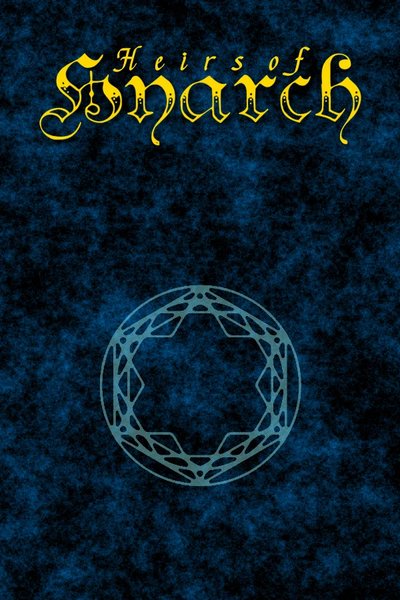
For a concrete shape of what the November rhythm builds toward, look at this ongoing epic-fantasy serial on the platform. One hundred and fifty-three chapters, published a few thousand words at a time: the output of exactly the cadence a sprint trains, sustained long after the calendar stopped mattering. Nobody wrote it in a month. It just kept showing up week after week, and now it is one of the longest reads on the site.
Read Heirs of Hyarch on NovelDay
If you want the industry context for why this works, our state of web fiction report has the numbers: half of the serials in our catalog were updated within the last thirty days, and the median serial is exactly the length one good November produces. This is not a theory. It is what the format looks like when people commit to it.
Where to Do It
The honest picture of serial publishing is the one we covered in Royal Road vs. Scribble Hub, and for non-LitRPG writers, the genre question matters more than the platform. The short version: pick a platform where your genre actually has readers, publish on a schedule, and keep your rights. (Ours, for the record, does all three and keeps authors in full control.)
If this is your first long project, our complete beginner's guide to writing a novel covers the foundations, and the novella explainer is worth a read because, structurally, a 30,000-word serial arc is closer to a novella than a novel, and knowing that changes how you pace it.
What Happens on December 1
This is the part the challenge lists never address, and it is the part that matters most. On a traditional NaNoWriMo, December first means the work starts: revision, querying, submissions, months of silence. On a serial, December first is just another posting day.
You have three real options, and all of them are better than the sprint's single path:
- Keep going. If the serial found readers, the obvious move is to continue. The successful serials on most platforms update weekly or more; a November sprint just front-loaded the habit.
- Pause and edit. Serialized chapters can be revised, collected, and republished. Many serials become finished books after the fact, with the difference that yours already has reviews and readers.
- Take the win. A finished 30,000-word arc with real readers is a completed work, not a practice draft. For a lot of writers, finishing something publicly for the first time is the actual breakthrough, more than any word count. It is also proof, to yourself first of all, that the next long project is not a hypothetical.
Quick Answers on NaNoWriMo Alternatives
Is NaNoWriMo actually gone for good? Yes. The organization announced its shutdown in April 2025 after financial collapse, and the site and forums are closed. The trademark and the tradition are separate things; writing 50,000 words in November was never theirs to take.
What happened to Camp NaNoWriMo? It ended with the organization. Camp ran smaller, self-directed versions in April and July, and there is no official successor, which is part of why the "alternatives" search volume keeps climbing.
Is a web serial a real NaNoWriMo alternative, or a different thing? It is a different container for the same discipline. You still write 1,667 words a day for thirty days. The difference is that you publish as you write instead of hoarding the draft, so the month produces a live serial instead of a private file.
Do I have to finish 50,000 words? No. Serials have no minimum length, and plenty of strong ones are 20,000 to 30,000 words. If you hit NaNoWriMo's number, great; if you finish a clean arc at 35,000, you still finished a serial, which is more than most sprinters can say.
What genre works for a serial November? Whatever you write. Fantasy, LitRPG, and progression dominate the format's reputation, but our catalog data shows non-LitRPG genres are the large majority of what actually gets published and read. Romance, mystery, literary, horror: all of them work as serials.
Can I start a serial without an outline? Yes, and most serialists do exactly that. You need a premise strong enough to sustain twenty chapters, a protagonist readers want to follow, and enough direction to write tomorrow's scene. The serial format tolerates discovery better than almost any other, which is part of why it fits a thirty-day sprint.
Isn't publishing rough chapters bad for my reputation? Serial readers do not judge polish the way book reviewers do; they judge momentum and whether chapter five makes them want chapter six. The convention on every platform is that early chapters are rougher than later ones. Revision happens. What cannot be revised is a manuscript nobody ever read.
Where do I actually publish it? Any serial platform that hosts original fiction and lets you retain your rights. NovelDay's writer program is built for exactly this: publish free, own the work, and reach readers who came specifically for serialized fiction.
If the November itch is real this year, scratch it somewhere that leaves you with something. Open a serial, post chapter one on November 1st, and see what thirty days of public writing produces. Start writing on NovelDay, or browse the library to see what the format looks like when it works.