Cosmic Horror, Explained: The Genre of Unknowable Dread
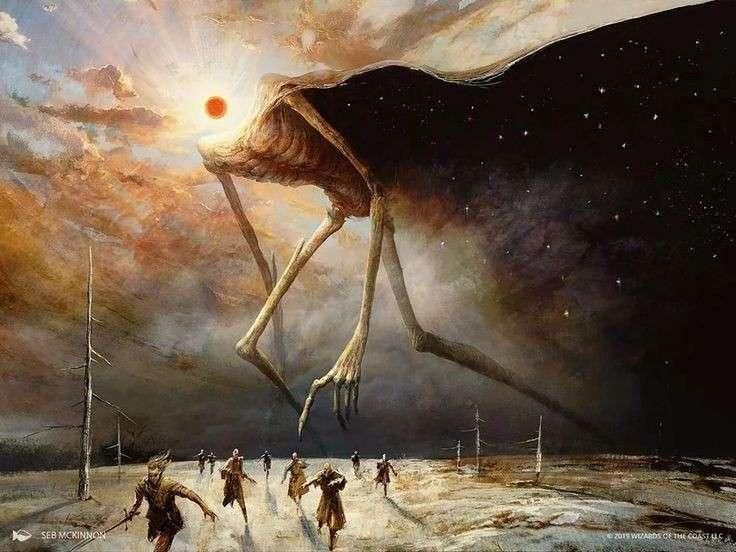
Most horror scares you with something that wants to hurt you. Cosmic horror scares you with something that does not know you exist. That is the whole trick, and it is why the genre survives every trend: the monster is not evil, it is vast. The dread comes from a single unbearable idea, that humanity is too small to matter to the universe, and that seeing that truth clearly is what breaks people. This guide explains what cosmic horror actually is, where it came from, how it differs from ordinary horror, and where to read it free on NovelDay.
What Cosmic Horror Actually Means
Cosmic horror (also called Lovecraftian horror or eldritch horror) is a subgenre where the source of fear is humanity's insignificance before vast, incomprehensible forces. The genre's founding insight is philosophical rather than visceral: the universe is not hostile to us, it is indifferent, and indifference at cosmic scale is worse than any malice.
H.P. Lovecraft codified the genre in the 1920s and 30s with stories about entities like Cthulhu and Yog-Sothoth: beings so far beyond human comprehension that contact with them shatters minds rather than bodies. His term for the worldview was cosmicism, the belief that there is no divine presence looking out for humanity, that our values mean nothing to the cosmos, and that knowledge itself can be fatal. The genre outgrew him long ago, but his fingerprints remain on the vocabulary: elder gods, forbidden tomes, cultists, and protagonists who learn just enough to wish they had not.
Two things separate cosmic horror from its neighbors. First, the entity is unknowable, not merely unknown. A ghost can be understood and appeased; a cosmic entity cannot be understood at all, and that gap is permanent. Second, the fear is existential rather than physical. The scariest moment in a cosmic horror story is not when something attacks. It is when the protagonist, and the reader, grasps what the world actually is.
A Brief History of the Genre
Cosmic horror has a clearer lineage than most genres, because it was essentially invented by one writer working at full strangeness. H.P. Lovecraft spent the 1920s and 30s writing short fiction for pulp magazines, building what became known as the Cthulhu Mythos: an informal shared universe of elder entities, forbidden grimoires, and scholars destroyed by what they learned. What was radical then is the genre's baseline now: the monsters were not moral agents, humanity was not the point, and the scariest truth was a fact rather than a threat.
The genre then did something rare: it escaped its creator. Weird-fiction writers carried it through the mid-century, horror novelists folded it into mainstream scary books, and tabletop games (Call of Cthulhu made sanity a literal mechanic in 1981) taught generations of players to fear knowledge itself. Then the internet rebuilt it. Creepypasta, the SCP Foundation's collective wiki of containment horror, and analog horror series on YouTube are all Lovecraft's model wearing new skins: anomalous entities, institutional dread, and universes that do not care whether you understand them. The genre is nearly a century old and currently in its third renaissance, which almost never happens in horror.
The Genre's Working Parts
The indifferent universe. The cosmos does not hate us. It simply does not register us. Cosmic horror villains do not rage or scheme; they sleep, they dream, they drift, and our extinction would be incidental. The terror is scale.
Knowledge as a trap. In most fiction, learning more makes characters safer. In cosmic horror, learning more is the mechanism of doom. Every answered question reveals a worse one, and the wisest characters are the ones who stopped looking. Forbidden books and suppressed truths are genre furniture for a reason.
Fragile sanity. The human mind is the genre's measuring instrument, and it breaks on contact. Madness in cosmic horror is not decoration; it is what an accurate perception of reality does to a brain built for a small world.
Ancient time. Cosmic entities predate humanity by eons and will outlast us by more. Deep time does the same work as deep space: it shrinks us. Ruins older than civilization and beings older than language are standard issue.
Human smallness, made literal. Cults worship entities that do not know they exist. Scholars go mad translating marginalia. The genre's recurring joke, which is not a joke, is that even the faithful are beneath notice.
Cosmic Horror vs. Other Horror
It helps to triangulate. Ordinary horror threatens the body: a slasher, a haunting, a disease. Psychological horror threatens the mind from inside: the narrator cannot be trusted, the fear is in your own head. Cosmic horror threatens the worldview: everything you assumed about meaning, safety, and humanity's place turns out to be wrong.
That is also why the genre crosses over so often with mystery and science fiction. A mystery asks "what happened here?" and cosmic horror answers with something nobody wanted to know. Sci-fi asks "what is out there?" and cosmic horror answers "something that was here first and does not care." The three genres share an engine, curiosity, but cosmic horror is the only one where curiosity is punished by design.
Genre lines blur constantly. A grimdark story shares the bleakness but keeps human cruelty at the center. Dark fantasy borrows the monsters but usually lets humans fight back meaningfully, as in our grimdark web novel picks. Cosmic horror is the strain where fighting back is beside the point, because the opponent never noticed you were fighting.
Where Cosmic Horror Hides Today
The genre no longer wears its name on the label, which is part of why readers find it hard to shop for. It hides inside science fiction (any story about first contact with something truly alien is cosmic horror's neighbor), inside dark fantasy (dead gods and forbidden magic are its direct descendants), inside thriller fiction (conspiracy stories where the conspiracy turns out to be non-human), and inside games, which may be its largest modern habitat. Titles from Bloodborne to Control to Signalis are cosmic horror engines, and their audiences have carried the taste back into prose.
It also hides inside web fiction's biggest trend: the system apocalypse, where Earth gets patched with hostile new rules overnight. Strip the stats away and a system apocalypse is pure cosmic horror: reality itself changed, nobody consented, and the entities behind it are beyond appeal. The genre's central terror, that the world has rules you never agreed to, is the same terror wearing a progress bar.
Why Cosmic Horror Thrives in Web Fiction
Serialized fiction is secretly the perfect delivery mechanism for the genre. Cosmic horror runs on slow revelation: hints, anomalies, details that do not fit until they suddenly do. A weekly chapter structure stretches that reveal across months, letting dread accumulate the way the genre wants. Web serials also inherited the genre through gaming culture (the system apocalypse wave, where reality itself gains hostile rules, is cosmic horror wearing an RPG skin) and through the internet's own invention, creepypasta, which is Lovecraft's model rebuilt for forums.
Cosmic Horror on NovelDay
The catalog's horror shelf leans psychological and supernatural, but these four serials carry genuinely cosmic DNA: unknowable forces, reality coming apart, and protagonists shrinking before something vast. Ordered longest first:
1. The Spartan of Invicta
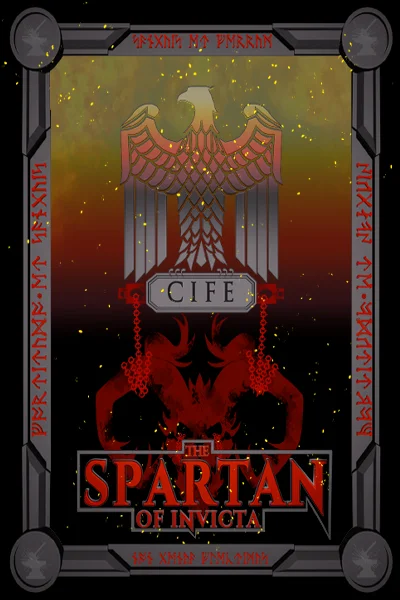
The Empire of Invicta runs on forged gods in warplate: engineered divinities bound by code and collar, operated by people who do not fully understand what they have built. That is cosmic horror in military dress, entities beyond human scale pressed into human service, with the genre's oldest anxiety underneath: the people holding the leash are not the ones in control. At over a hundred chapters it is the deepest cosmic read on the platform.
Read The Spartan of Invicta on NovelDay
2. A Game of Cosmic Titans
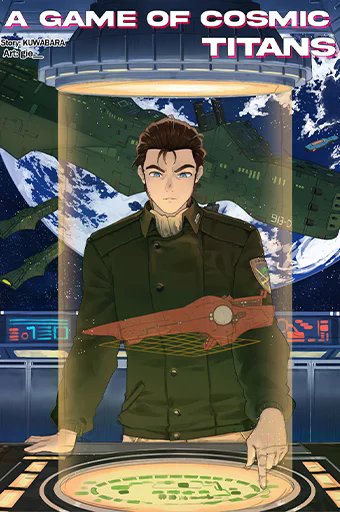
A galactic war two centuries old, and a soldier discovering that the powers above the war treat civilizations as pieces on a board. The title is literal: the titans are cosmic entities, and the dread is the genre's signature one, that humanity's largest struggles are a rounding error to whatever is actually playing. The most direct cosmic-scale pick on the list.
Read A Game of Cosmic Titans on NovelDay
3. Suicide Syndrome
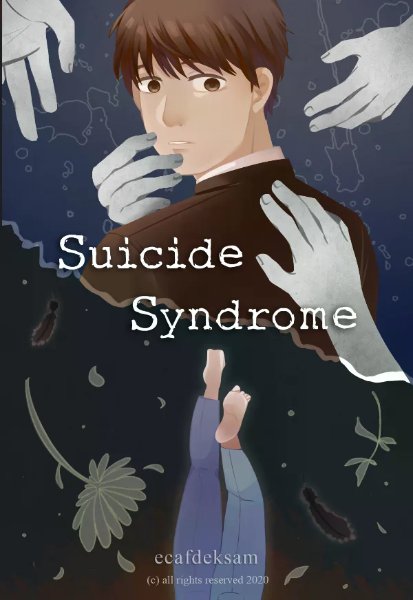
Three suicides that keep arriving with bouquets from a secret admirer, and a transferred detective slowly realizing the cases are not cases at all. Cosmic horror's quietest register: the horror is in the pattern, something intelligent and vast operating at a scale the investigation cannot touch. The coldest pick here, for readers who like their dread procedural.
Read Suicide Syndrome on NovelDay
4. The Worlds We Carry
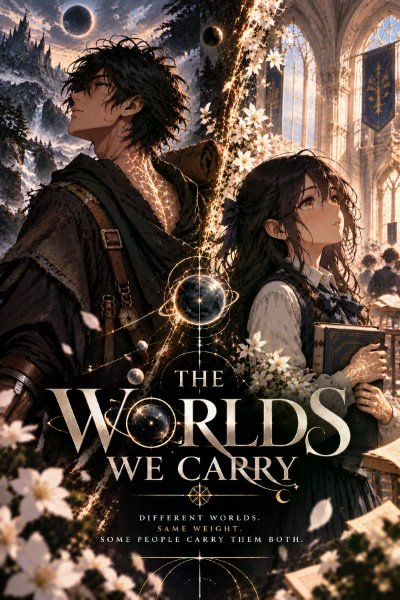
A dying planet gave Ren Talven the last of itself, and now he crosses a universe where civilizations worship power while carrying a world that refused to die. The newest and shortest pick, and the most classically cosmic in premise: one man is small, one planet is small, and the forces deciding both are not. Four chapters in, it is the easiest way to test whether the genre is for you.
Read The Worlds We Carry on NovelDay
For more, the horror, supernatural, and psychological shelves overlap heavily with this territory, and our best horror reads list covers the broader genre.
How to Read Cosmic Horror (And Get It)
New readers sometimes bounce off the genre expecting a monster they can fight. A better approach: read for atmosphere, not plot armor. Let the protagonist be small. Notice that the scariest passages are the ones where nothing happens except comprehension. And do not expect resolution in the traditional sense; the genre's honest endings are survival, escape, or a mind quietly rearranged. If a cosmic horror story ends with the entity defeated by pluck, it was never cosmic horror, it was fantasy with tentacles.
It also helps to know what the genre is doing with time. Cosmic horror runs on slow accumulation: a detail that seems like set dressing in chapter three is the thing you realize was a warning in chapter forty. The genre rewards rereading in a way most horror does not, because the second pass reveals how early the author told you the truth. If a story feels slow at first, that is usually not padding. It is the author patiently arranging the furniture in a room you will not be allowed to leave.
Finally, calibrate your expectations around hope. Cosmic horror is not nihilist fiction, but it is honest about scale: characters can survive, occasionally even win local victories, and the universe remains as it was. The genre's satisfaction is in clarity, not rescue. If that trade sounds appealing rather than bleak, you are already the genre's reader.
Why the Genre Endures
For anyone building horror of their own, the genre's lesson is scale rather than tentacles. The entities matter less than the ratio: make the threat bigger than the characters' capacity to fight or fully understand it, and dread arrives on its own. Cosmic horror is also a century old and still growing because its engine cannot be exhausted: there is always a bigger indifference to imagine, and for serial writers the slow reveal can run for hundreds of chapters. It is, honestly, one of the more forgiving genres to debut in too, because web fiction's horror audience is voracious and patient with rough edges if the atmosphere lands. If you are building something in this space, publishing on NovelDay is free, the work stays yours, and every cent of reader support goes straight to you.
Why "Cosmic" and Not Just "Eldritch"
One vocabulary note worth having, because readers confuse the terms constantly. Eldritch describes the texture of the thing: weird, unnatural, wrong in a way that resists description. Cosmic describes the scale of the threat: the thing is bigger than humanity, older than the map, indifferent to the outcome. A story can be eldritch without being cosmic (a haunted mirror is eldritch, but it still cares about you specifically), and a story can be cosmic without tentacles or robed cultists at all (a asteroid survey that discovers the universe is a simulation nobody is running is pure cosmic horror with zero supernatural elements). The overlap is where the genre's classics live, but knowing the difference helps you find the flavor you actually want.
It also explains why the genre pairs so naturally with science fiction. Space is the one setting where the cosmic scale is literal rather than metaphorical, which is why so much of the genre's best modern work wears a sci-fi skin.
The Genre's Blind Spots
An honest explainer owes you the criticisms too. The genre's canonical texts carry the baggage of their era, including a founder whose prejudices show up in the work itself, which is why so much modern cosmic horror deliberately writes against that inheritance rather than from it. The genre's second weakness is tonal: pure indifference can curdle into monotony if every story ends the same way, which is why the best modern entries vary the emotional register — grief, awe, even dark comedy — while keeping the scale. And the third is accessibility: the genre's slow-burn patience is a real barrier for readers raised on hook-first fiction, which is part of why serial platforms have become its natural habitat. A serial can afford to take fifty chapters getting to the reveal.
Quick Answers on Cosmic Horror
What is cosmic horror in simple terms? Horror where the threat is not a monster that hates you but a universe that does not notice you. Fear from insignificance rather than danger.
Is cosmic horror the same as Lovecraftian horror? Effectively yes. Lovecraftian horror is cosmic horror built on Lovecraft's specific mythology; cosmic horror is the broader genre name that includes work beyond his canon.
What is the difference between cosmic horror and psychological horror? Psychological horror breaks the mind from inside (unreliable narration, personal demons). Cosmic horror breaks it from outside (the character saw something true about the universe and could not carry it).
Does cosmic horror need tentacles and Cthulhu? No. Those are set dressing from the genre's founding era. The requirement is only an incomprehensible vastness and the dread of human smallness before it.
Why do cosmic horror protagonists go mad? Because the genre treats the mind as too small an instrument for the truth it finds. Madness is what accurate perception does to a human brain in these stories.
Can cosmic horror be hopeful? Rarely, and honestly it should not be. The genre's contract is that the universe stays vast and indifferent. The best endings offer survival and scars, not victory.
Is there free cosmic horror online? The horror shelf on NovelDay collects the catalog's supernatural and existential horror, all free to read.
Is cosmic horror related to existential horror? They are near-synonyms. Existential horror stresses dread about existence itself; cosmic horror specifies the cause as humanity's insignificance in an incomprehensible universe.