Books With Smart Protagonists: Web Novels Where the Leads Actually Outthink Everything
There is a specific frustration every reader of this genre knows: the protagonist who is told to be brilliant. Other characters call them a genius. The narration insists on their intellect. And then the "brilliant plan" turns out to be something any reader could have spotted three chapters earlier. Readers searching for books with smart protagonists are not looking for that. They are looking for the opposite experience: watching a mind work in real time, being handed every clue and still getting outplayed, following a plan that is cleverer than anything they would have thought of themselves.
That is a harder bar than it sounds, because demonstrated intelligence is a technical writing problem. The author has to actually construct the deduction, the scheme, the counter-move; there is no shortcut, and no amount of other characters saying "she's brilliant" substitutes for one scene of the brilliance itself. Which is why the recommendation threads for this query fill up with the same dozen famous names (Artemis Fowl, Kelsier, Tyrion), and why the good answers are rare enough to be worth a list of their own.
What "Smart" Looks Like on the Page
Real demonstrated intelligence in fiction comes in distinct flavors, and they scratch different itches. There is the detective's smart: pattern recognition, reading a room, pulling meaning out of details everyone else walked past. There is chess-move smart: plans within plans, where the protagonist is three moves ahead and the reader finds out late. There is street smart: improvisation, bluffing, talking your way through problems you cannot punch through. And there is system-gaming smart, a flavor web fiction practically invented: protagonists who read the rules of their world, find the exploit, and bend the mechanics themselves.
The common thread is proof. A smart protagonist earns their label the way a strong one earns theirs: by doing the thing on the page, in front of you, in a way that holds up when you think about it afterwards. The novels below were chosen because the intelligence is load-bearing; remove the protagonist's brain and the plot collapses. That is the real test, and it is also why this list mixes genres freely. Detective work, heist logistics, alien diplomacy, and contract-dodging comedy all qualify, because the itch being scratched is the same in every case: give me a character whose mind I get to watch work.
One more note on selection: these are ordered by reading time, longest first, and each entry notes which flavor of smart it serves. All six are original serials on NovelDay, all free to read, and most are still running.
1. The Legendary Demon Hunter's Cursed Brother
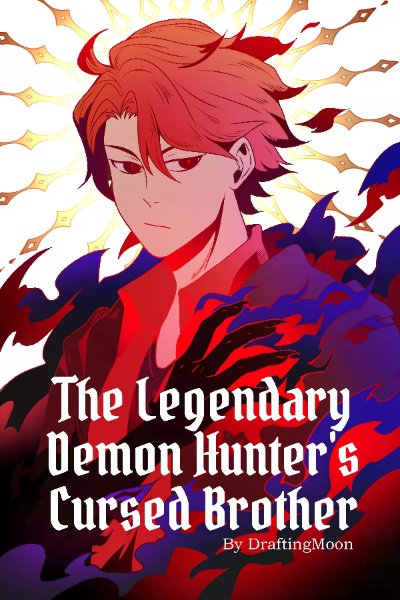
The smart: stolen foreknowledge versus a System that trolls him.
Evan transmigrates into the world of a story he already knows, landing on a post-apocalyptic Earth as the younger brother of its reincarnated Legendary Demon Hunter. That setup is the intelligence engine: he carries foreknowledge of how this world is supposed to go, but two counterweights keep it from becoming a cheat code: a System that seems determined to troll him at every opportunity, and a curse that makes disaster find him wherever he goes. The pleasure is watching a protagonist play the board with inside information while the dealer keeps changing the rules. It is the longest entry on this list by a wide margin, at eighty-four chapters and counting, which means the schemes have room to compound rather than resolve early.
Read The Legendary Demon Hunter's Cursed Brother on NovelDay
2. The 90's Kid
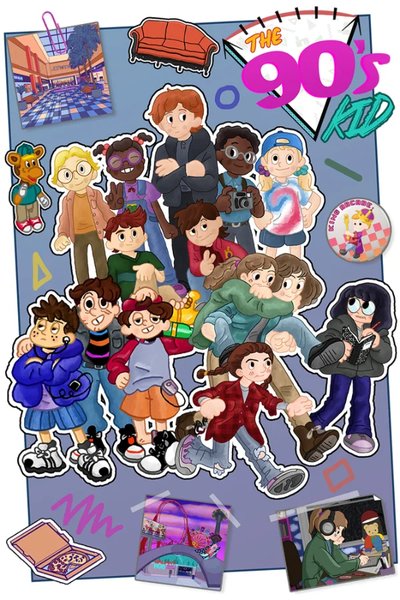
The smart: adult observation wearing a childhood skin.
Wes walks through a mysterious portal in his pantry door and lands in his own childhood neighborhood, decades back. The premise sounds nostalgic, but the intelligence here is investigative: an adult mind with adult pattern recognition dropped into a world where everyone is too young to hide their secrets properly. He sees the city where he grew up with fresh eyes, notices what he missed the first time, and starts pulling threads adults never let kids pull. What sells it is that Wes is observant rather than omniscient; he misreads things, draws wrong conclusions, and recovers like a person would. The cleverness is quiet and observational, the kind that makes you reconsider how much was happening in your own hometown while you weren't looking.
3. Rosetta's Last Stand
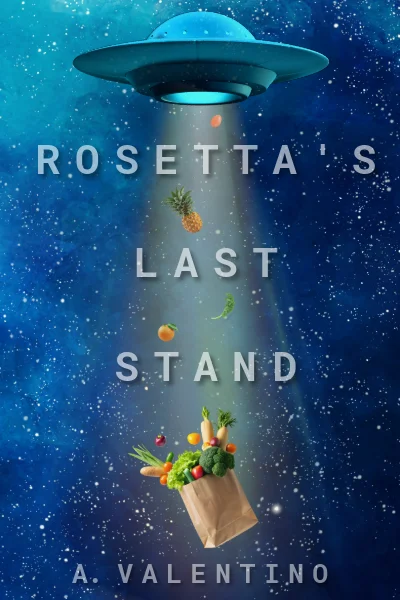
The smart: negotiating humanity's survival with leverage nobody expected.
2051: Earth is losing a catastrophic global war, until a league of food-obsessed aliens arrives offering salvation for a price. The twist that makes this a smart-protagonist story rather than a first-contact spectacle: Earth's one genuine asset is not military or technological, it is culinary, and the characters who grasp that fastest get to set the terms. Diplomacy as puzzle-solving, where the winning move is understanding what the other side actually wants. It is the rare alien-contact book where the decisive weapon is a well-timed argument instead of a well-aimed railgun, and where the comedy of food-obsessed aliens sits on top of a genuinely serious question about what a desperate species trades away to survive.
Read Rosetta's Last Stand on NovelDay
4. What We Are: An Eyes Story (Book Two)
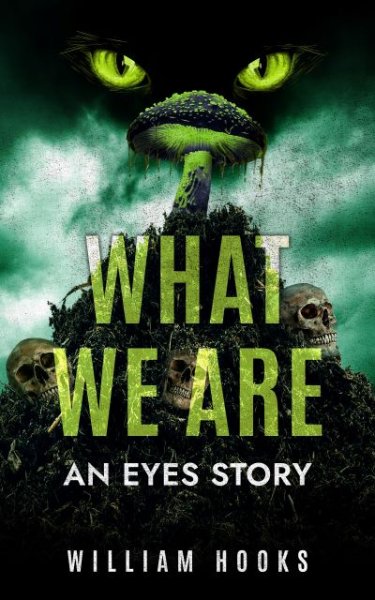
The smart: survival instincts inside a corporate conspiracy.
The sequel to a thriller built on information asymmetry, and this one leans harder into manipulation: Ritz is separated from his friends in a bus crash and left facing a threat that may be deadlier than the Eyes themselves, while The Company tightens its grip on events nobody fully understands. The intelligence here is desperate and improvisational, characters reading each other's motives because survival depends on it. It shares DNA with the conspiracy thrillers we covered in our guide to unreliable narrators: a world where what people say and what they are doing are permanently misaligned.
Read What We Are: An Eyes Story (Book Two) on NovelDay
5. Princess Possession
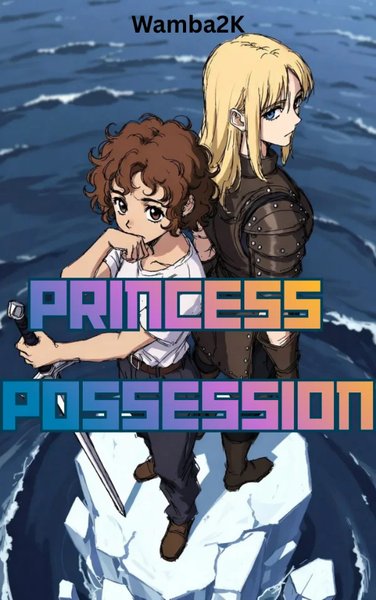
The smart: two minds, one body, opposite goals.
Alyssa dies and wakes up sharing a body with Tatiana Malvey, sole surviving heir to a realm's throne. Alyssa wants quiet. Tatiana wants the world, and Alyssa's talent for manipulating her stat allocations may be the lever that gets it for her. This is system-gaming smart fused with negotiation: every chapter is a two-player game where both players are the same person, and the plot advances on bargains, leverage, and carefully rationed cooperation. If you like clever protagonists who win through deals rather than duels, the shared-body premise is a puzzle box that keeps generating new moves.
Read Princess Possession on NovelDay
6. Suicide Syndrome
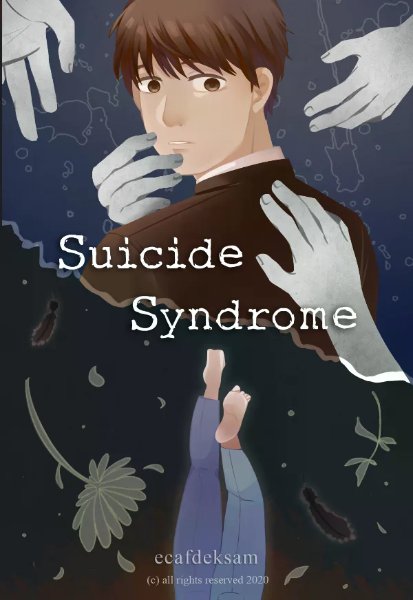
The smart: literal detective work.
Holland is transferred to Bridsnod City Police and handed what look like routine suicides: a rooftop, a hanging, a poisoning. Then the pattern stops adding up, and the deeper he digs the more the case starts digging back, bouquets of flowers from a mysterious admirer turning into something between a threat and a courtship. Holland is not superhuman, which is the point; he is simply more stubborn and more observant than the case expected, and the wrongness accumulates until it cannot be ignored. The detective procedural is the oldest smart-protagonist engine in fiction for a reason: the reader gets to sit inside an investigation, test hypotheses, and lose to a writer who plotted fairer than expected. This one wraps the deduction in dread, which suits the genre well.
Read Suicide Syndrome on NovelDay
How to Spot the Real Thing Before Chapter Three
Since fake genius is the genre's biggest disappointment, here is a quick field test for whether a smart protagonist is going to pay off, all readable within a few chapters.
The plan survives your scrutiny. Pause at the midpoint of the protagonist's first scheme and try to break it. If you can find the hole in thirty seconds, so could the author's other characters, and the only reason it works is that the plot says so. Genuinely smart fiction makes you work to find the seams.
The opponents are competent. A genius protagonist needs worthy opposition, or the cleverness is an illusion built on everyone else failing at once. Watch the antagonist's second decision. If it is a decision a reasonable person would make, you are in good hands.
The reasoning is on the page. Real deduction shows its work: the observation, the inference, the conclusion. A character who announces conclusions with no visible reasoning is a magic trick, not a mind. The best smart-protagonist writing lets you arrive at the answer half a second before the character does, which is the most satisfying feeling this subgenre sells.
Intelligence has a cost or a boundary. The smartest characters in fiction are bounded ones: brilliant at reading people but terrible at politics, unbeatable in a scheme but helpless in a fair fight. A protagonist whose intelligence solves every category of problem is not smart; the book is just easy. The picks above mostly share this trait, from Alyssa's one narrow lever in Princess Possession to Holland's single thread in a sea of dead ends.
Why Serial Fiction Is Where Smart Protagonists Thrive
There is a structural reason this list is made of web novels rather than bookstore shelves: serialized fiction punishes fake intelligence fast. A traditionally published thriller can survive a thin genius on the strength of marketing; a serial lives or dies on a comment section that re-reads every chapter the day it drops. When a plan has a hole, hundreds of readers find it within hours and say so. Authors who write genuinely clever leads under that scrutiny have passed a test print publishing never runs.
The feedback loop also makes writers smarter about how to write intelligence. Serialized authors learn quickly that readers want to see the reasoning, that a clever protagonist who hides their logic feels like cheating, and that the best trick in the genre is laying out the pieces honestly and still surprising everyone. Many of the sharpest examples overlap with the morally grey territory we explored in our morally grey characters guide, because cunning and flexible ethics travel together — and where brilliance crosses the line into outright villainy, our antihero explainer picks up the thread.
It is also a genre where the audience participates. Comment sections on clever web novels fill up with readers solving alongside the protagonist, predicting the scheme, and flagging when a plan does not hold up. Writing toward that audience is a gym for the muscle this query is actually asking about. And for readers, the participation is half the pleasure: a serial that invites you to outguess the author turns "smart protagonist" from a label on a back cover into a weekly competition you can actually win.
Smart Protagonist Questions Readers Ask
What makes a protagonist "smart" instead of just competent? Competence is reliability; intelligence is problem-solving under uncertainty. A smart protagonist faces situations the reader cannot immediately solve and produces solutions that are both surprising and, in hindsight, inevitable. The label fails when the book merely asserts it: if other characters call someone a genius but the reader never watches the thinking, the protagonist is not smart, just adjacent to the word.
Why do so many "genius protagonist" books feel disappointing? Because demonstrated intelligence is expensive to write. Every clever plan has to actually be constructed, every deduction fairly clued, every scheme robust enough to survive a reader who pauses to poke at it, and that labor is invisible when it works. It is much cheaper to have a sidekick gasp "how did you know?" than to build a chain of reasoning worth gasping at. Some books shortcut the work by dumbing down the opponents instead, which readers notice immediately. The tell is a protagonist who looks smart only because everyone around them got stupid.
Are web novels a good place to find smart main characters? Unusually good, for two reasons. The serialized feedback loop punishes holes in logic within hours of a chapter dropping, which filters for authors who plot rigorously. And the genre conventions (systems, cultivation rules, kingdom politics) give smart protagonists visible machinery to exploit, so their cleverness has something to work on.
What is the difference between a smart protagonist and an overpowered one? Power resolves obstacles by force; intelligence resolves them by leverage. A smart protagonist is interesting precisely because the obstacle is bigger than them: the detective against the conspiracy, the heist crew against the vault, the diplomat against the alien fleet. When a character can simply overpower every problem, the mind never has to do the interesting work, and the story quietly converts from a puzzle into a parade. Both are fun; they are just different contracts, and this list is for readers holding the puzzle contract.
Do smart protagonists have to be morally grey? No, but the correlation is real. Schemes and manipulation are the tools smart characters reach for, and those tools sit naturally in grey territory. What We Are and Princess Possession on this list both live there. Meanwhile Suicide Syndrome shows the other pole: intelligence in service of straightforward justice.
Where can I find more books like these? The NovelDay library sorts by genre and tag; mystery and psychological are the richest veins for demonstrated intelligence, while system and litrpg host most of the system-gaming variety.
The Short Version
Smart protagonists are easy to promise and brutal to deliver, which is why the genuinely good ones are worth bookmarking. Start with The Legendary Demon Hunter's Cursed Brother for foreknowledge played against a trolling System, The 90's Kid for observational smart, Rosetta's Last Stand for diplomatic smart, What We Are for survival smart, Princess Possession for negotiation smart, and Suicide Syndrome for detective smart. Every one of them is free to read on NovelDay, and the library has more where they came from; new chapters land weekly, so the schemes above are still unfolding.
And if you are the kind of writer who builds schemes chapter by chapter and fields a comment section checking your math, serial fiction was built for you. Publish on NovelDay free, keep every right to your work, and keep 100% of whatever readers choose to give it.