Villain Protagonist Books: 6 Web Novels Where the Bad Guy Is the Point
The Perspective Flip Nobody Gets Tired Of
"Villain protagonist" is one of fiction's most-searched premises, and the appeal never wears out: the same story from the other side of the sword, with the reader positioned where the genre's moral order says they shouldn't be. What most lists get wrong is dilution. A morally-gray hero is not a villain lead, and an antihero with a redemption arc queued up isn't either. The label has to mean the protagonist is actually on the villain's side, not just the darker side. The real thing is rarer and more specific: a protagonist whose goals would be villainous in someone else's story, carried by writing that makes you root for them anyway.
That standard is what these six web novels were picked against. Each was judged on the same question: is the protagonist actually on the villain's side of the story, and does the book commit to it? No fake-outs, no "hero with a dark aesthetic," no villains who secretly weren't. All free on NovelDay.
The Books
1. The Legendary Demon Hunter's Cursed Brother
The family the legend forgot.
By DraftingMoon · ~18.5 hour read · 117 chapters · Magic, Fantasy, Reincarnation · Ongoing
The purest "the other brother" story in the catalogue: the legendary demon hunter exists, but he's not the protagonist. His cursed brother is, the one the family quietly wrote off. It's the villain-protagonist premise by structural position rather than moral alignment: in his brother's story he'd be the cautionary footnote, the cursed sibling the legend left behind. Here, the curse is the story.
What makes it villain-lead rather than just dark-fantasy-lead is the positioning. The book commits to watching the world from the side the heroic narrative discards, with the demon-hunting machinery seen from the outside in. The magic system runs through the curse rather than around it, which means the protagonist's power and his condemnation are the same thing, exactly the engine a good villain-lead book runs on: the rise and the wound fed by the same source, chapter after chapter, with no resolution forced on either.
At 18.5 hours it's also the deepest villain-side perspective on the platform, which matters for this genre specifically: the "other brother" inversion needs room to stop being a premise and start being a sustained argument, and a hundred-plus chapters is exactly the runway that requires.
2. The Dark Lord Saved the Heroine
The title that tells you whose side you're on.
By JesterLegacy · ~11.8 hour read · 76 chapters · Fantasy, Romance, Adventure · Ongoing
The most literal villain lead on the list: the Dark Lord is the protagonist, the heroine is the person he's supposed to menace, and the premise is that he saves her instead, which makes him the villain of the world's story and the hero of his own at the exact same time. It's the genre's favorite structural joke played straight: the designated final boss is the one with the conscience.
What keeps it a villain book rather than a redemption story is the frame: he stays the Dark Lord throughout, with the political weight, the reputation, and the enemies that title earns him. The romance works because the world's read on him is the obstacle; it's the rare villain-protagonist book where the label is the conflict rather than the costume. If romantasy readers want the enemies-side version, this is the catalogue's cleanest version of it.
The enemies-to-lovers angle gets the attention, but the villain-protagonist machinery underneath is the real craft: the book keeps the Dark Lord's position doing real work throughout the book. His allies fear him, his enemies want him dead, and the story's tension runs on the gap between what the world thinks he is and what the reader actually sees going on inside him.
3. HORDE: Annunciation
The monster's sermon.
By A.E. Payne · ~9.2 hour read · 57 chapters · Horror, Satire, Adult · Ongoing
The monster's-perspective pick and the darkest entry on the list, a horror-satire told from inside the thing the heroes would hunt. The writing is confident enough to make the monstrous register feel inhabited rather than performed, which is the hard part of any monster-lead book: you have to keep the reader oriented inside a perspective that shouldn't feel natural, and this one pulls it off by committing to the voice completely.
It's also the most formally unusual pick; the satire tag is literal, the horror is real rather than decorative, and the lead is genuinely the thing the story's moral order would destroy. If "villain protagonist" for you means the actual monster's sermon, this is the one. Adult-tag applies for a reason; the darkness here is the point, not the decoration.
Fair warning on tone: this is the one pick on the list where "villain" isn't a structural label but a moral one. The lead is genuinely the horror. If your appetite for the genre is the fun-inversion kind rather than the genuinely-dark kind, start with the comic or romantic entries first.
4. The Deceiver
The pickpocket who can't stop performing.
By wolfy4033 · ~5.6 hour read · 30 chapters · Fantasy, Horror, Psychological · Ongoing
The villain lead at its most likable: Lucian is a pickpocket, professionally and cheerfully, and the opening chapter is him fencing a stolen cigarette case with the dry confidence of a man who has never once lost a negotiation ("Two daler." "You wound me."). His calling card, the word Pickpocket left where a mark will find it, is vanity he can't quit, and it's the vanity that finally pulls something very large out of the dark after him. The comedy is real but the crimes are too: he's the villain of every mark's story, just a charming one.
What makes it more than a caper is the floor under the charm: a sick mother, thin doors, the reason the hustle exists. It is the villain-protagonist premise running in its most sympathetic form: a protagonist whose crimes you understand without the story ever once pretending they aren't crimes, and the funniest voice on the list sitting comfortably alongside the darkest ones on the same page, a combination that's harder to pull off than either mode alone, because the jokes have to land without softening the stakes underneath them.
5. The Killer's Consultant [Kdrama Crime Thriller]
The murderer on the inside of the investigation.
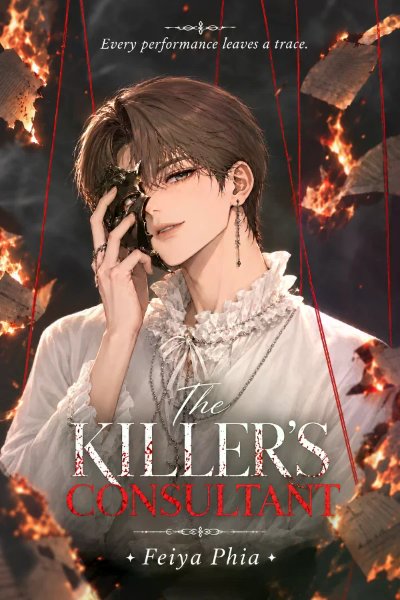
The dramatic-irony version of the villain lead: the killer consults on his own case. Everyone knows Seo Yujin: beloved actor, humility incarnate, the last person Detective Kang Minjae would expect inside a murder investigation. The reader meets him differently: the opening chapter is a hotel room, champagne dosed with muscle relaxant, and a knife pressed to a throat while he watches her pulse fight the steel. Then the story seats him next to the detective hunting him.
What makes it a villain-protagonist book rather than a thriller with a twist is that there's no twist to wait for: you know from page one, and the book's engine is watching the country's nicest face redirect an investigation from inside it. For readers who want the villain energy in a contemporary register rather than a fantasy one, it's the fastest-moving pick here.
The celebrity frame is the weapon: Yujin's armor isn't magic or muscle, it's a reputation nobody thinks to question, and the novel keeps finding new ways to make the audience complicit; you catch yourself admiring the cover-up. That's the villain-lead machine running in prime-time.
6. I'm Only Here To Distract The Hero
The henchman's-eye view.
By Wamba2K · ~3.6 hour read · 21 chapters · Magic, Slice of Life, Adventure · Ongoing
The most structural villain lead on the list: the protagonist is literally on the villain's payroll, a decoy whose job is to occupy the hero while the real villains work. It's the villain-side story told from the very bottom of the org chart. Not the dark lord, but the expendable footnote, which turns out to be the more interesting seat in the whole house after all.
The slice-of-life texture is the twist: the book is less interested in villainy-as-power than in villainy-as-a-job, with the quiet texture of working for the wrong side carried chapter by chapter. For readers who liked the isekai reframing trick, this is the same move applied to the villain's side: the disposable role given interiority.
At 3.6 hours it's the lightest commitment on the list, and the one that best answers the "villain lead" skeptic's question: what if the interesting part of the villain's side was never the villainy at all, but the people doing the work?
How We Chose
The villain-protagonist label is the most abused in web fiction. Every morally-gray hero gets tagged as one, and readers searching for the real thing learn to be disappointed. So the bar for this list was stricter than the tag: the protagonist had to be on the villain's side of the story's moral order, and the book had to commit to it past the premise chapters. A redemption arc waiting in the wings disqualifies a pick; a hero-with-an-edgier-outfit disqualifies faster. What survived are six novels where the villainy is structural; the story would be a different genre entirely if the lead flipped sides.
We also read past the openings, because villain leads have a specific failure mode: the protagonist quietly turning heroic once the premise wears off. All six are still on the villain's side in the middle, which is rarer than the premise count suggests.
The List at a Glance
| Novel | Hours | The villain angle |
|---|---|---|
| The Cursed Brother | ~18.5 | The discarded sibling of a legend |
| The Dark Lord Saved the Heroine | ~11.8 | The literal Dark Lord, with a conscience |
| HORDE: Annunciation | ~9.2 | The actual monster's sermon |
| The Deceiver | ~5.6 | Thief-protagonist, comedic |
| The Killer's Consultant | ~4.0 | Killer inside the investigation |
| Distract the Hero | ~3.6 | The henchman's-eye view |
Hours are NovelDay's own estimates at average reading speed; all six are still publishing.
Why Villain Leads Work Better in Serials
The villain-protagonist premise has a pacing problem in bounded fiction: three hundred pages is enough to set up the inversion but rarely enough to explore it. Serials solve it by accumulation: a villain lead who's still the villain at chapter 60 has become a sustained argument rather than a gimmick, and the reader's complicity in rooting for them deepens with every week the book keeps being true to its premise. Every pick on this list benefits from that effect: the premise keeps being true week after week, which is what makes it interesting instead of a one-chapter inversion that never got developed.
The other advantage is community pressure. Web-fiction villain leads live or die on whether readers keep showing up, which produces a natural filter: the picks that survive are the ones where the villainy is structural rather than aesthetic, because a gimmick can't hold a weekly readership. A fake villain lead loses its audience by chapter ten; a real one builds the specific loyalty only sustained inversion produces — readers who've been complicit long enough that the perspective is theirs now.
There's also a craft reason worth naming: villain leads need room to be wrong. A bounded novel tends to resolve the protagonist's villainy into either redemption or punishment by the last act; a serial can keep the question open indefinitely, which is a far more honest, patient treatment of the premise than any bounded novel allows. The dark lord who's still the dark lord at chapter 71 is a more interesting character than the one the plot had to resolve — and the serial format is the only one that lets the question stay open long enough to actually mean something real.
The Villain-Lead Spectrum
Worth naming the spread, because "villain protagonist" covers different appetites. At the most literal end: The Dark Lord Saved the Heroine, where the villain label is the premise itself — the world's designated final boss, followed from the inside. At the structural end: the two perspective picks (Cursed Brother, Distract the Hero), where the protagonist is the villain of someone else's story entirely by position rather than by nature. At the tonal extremes: HORDE's genuinely-dark monster lead at one pole, The Deceiver's bantering pickpocket at the other. All six are villain leads by the moral-order test, but they answer very different versions of the same question — pick your side by which end of the genre you read for the most.
Where to Start
Three honest entry points. For the most classic villain-lead experience: The Dark Lord Saved the Heroine. For the darkest: HORDE: Annunciation. For the funniest: The Deceiver. All six are completely free in the NovelDay library, and if you write villain-side fiction of your own, the author program is the home for it.
Frequently Asked Questions
What counts as a villain protagonist book?
Fiction where the protagonist's role in the story-world is villainous (a dark lord, a monster, a pirate crew, a henchman) carried by writing that makes the reader root for them anyway. The test used for this list: is the protagonist on the villain's side of the moral order, or just a hero with a dark aesthetic? Only the first kind counts, and the difference is exactly the one most lists blur — "villain protagonist" is about whose side the camera is on, not how dark the costume is.
Are villain protagonist books the same as antihero books?
No. The difference is alignment. An antihero is a good guy who does bad things; a villain lead is a bad guy who the story follows anyway. The Dark Lord stays the Dark Lord; a HORDE protagonist is the actual monster. The antihero label is about methods; the villain-protagonist label is about which side of the story the camera is on. The picks on this list span the full range: the literal dark lord himself, the actual unrepentant monster preaching from the pulpit, the discarded sibling, the pickpocket who cannot stop performing, the murderer seated inside his own investigation, the expendable henchman — six different ways of being on the wrong side of a story. For the neighboring shelf, heroes who keep your sympathy while skipping the hero manners, our antihero explainer covers that distinction in full.
Do villain protagonists have to be evil?
Not morally. They have to be positioned as villains in the story's moral order. The pickpocket in The Deceiver is likable and quick-witted; he's still the villain of every mark's story. The villain-protagonist premise is about whose side the narrative takes, not whether the character is irredeemable.
Why are villain protagonists so popular in web fiction?
Because the format rewards the perspective-flip. A villain lead who's still the villain at chapter sixty is a sustained argument, not a gimmick, and serial readers keep showing up for exactly that sustained inversion. It's also a genre where the community votes weekly; a fake villain lead loses readers fast, which is why the surviving ones tend to commit fully.
Where can I read villain protagonist web novels for free?
All six picks are free on NovelDay with no paywalls, no chapter-gating. The fantasy shelf and horror shelf hold the wider catalogue of dark-lead fiction, and the Fourth Wing list covers the related enemies-to-lovers territory.