Paranormal Books: 6 Web Novels Where the World Has Teeth
The Genre Where the Ordinary Has Teeth
Paranormal is the genre where the supernatural lives next door, not in a fantasy world but in this one, hidden, hungry, or just present — the ordinary world with the extraordinary woven into it rather than added on top like a costume you can take off when the party's over. The premise is the genre's contract: the world you know, plus the things that don't belong in it at all: vampires, demons, witches, monsters, ghosts. And the reader's payoff is watching the ordinary world carry the weight of the extraordinary.
These six web novels cover the genre's full modern spread: a supernatural school, a cyberpunk demon-hunt, a monster apocalypse, a vampire villainess, a witch school, and a city where gods are made. All free on NovelDay.
The Books
1. In the Shadow of Moonlight
The supernatural school.
By Writer Wolf · ~11 hour read · 52 chapters · School Life, Supernatural, Drama · Ongoing
The genre's most atmospheric pick: a supernatural school where the paranormal isn't a threat to fight but a condition to live inside. The moonlit world where the students are the things that go bump, and the drama is the social and personal weight of being one of them. The school-life frame makes the paranormal domestic rather than cosmic; the supernatural is the daily reality, not the occasional intrusion.
It's the longest and most committed paranormal read on the platform, and the one where the genre's "hidden world" premise gets the most room to breathe: the supernatural as a community to belong to rather than a threat to survive. It earns its spot here as the genre's purest school-mode entry; readers who want more of it can check our dark academia list.
2. HORDE: Annunciation
The monster apocalypse.
By A.E. Payne · ~9.2 hour read · 57 chapters · Horror, Magic, Satire · Ongoing
The genre's most apocalyptic take: monsters at the end of the world, not a hidden supernatural layer but a full invasion, and the paranormal angle is the horror-action version rather than the quiet one. The "HORDE" premise means the supernatural is the catastrophe itself, and the book's question is what ordinary people do when the world's teeth come out.
It's the genre's most kinetic entry (the paranormal as apocalypse rather than as hidden world) and the pick for readers who want the genre's monsters at full scale rather than full secrecy. The horror-action blend makes the supernatural feel genuinely dangerous in a way a hidden-world book can't.
3. The Sanguine Queen: How I Reincarnated as the Strongest Vampire Character
The vampire take.
By Kurayami · ~5.2 hour read · 37 chapters · Isekai, Magic, Adventure · Ongoing
The genre's most self-aware take: a vampire villainess who knows she's the paranormal creature of her own story. The reincarnation frame makes the supernatural identity the subject rather than the secret, which is the genre's most meta angle. The "sanguine" premise is the vampire story told with the self-awareness the genre's readers actually want.
It's the pick for readers who want the paranormal as identity rather than as threat, the vampire as the protagonist's own form rather than the antagonist's, and the isekai frame makes the supernatural identity feel earned rather than just assigned to her. It also belongs on our vampire books list.
4. Project:Psychic
The ghost-and-thriller register.
The genre's most classic spine run at thriller pacing: Liam is an ordinary high-school student who falls into a world he never knew existed, ghosts and abilities arriving with a threat he has to learn fast enough to stop. The opening chapter sets the paranormal bar immediately — "Amy Vasser was an odd girl" is the book's own understatement, since her desk companion is a floating calculator and her chemistry class ends with the chemicals exploding. The supernatural here is intrusion: the hidden world breaking into the most mundane setting the genre has, a regular school day.
It's the pick for readers who want paranormal as discovery rather than as community: ordinary protagonist, awakening abilities, the other world layered directly on top of this one, and the thriller frame keeps the pace higher than the school stories on this list. It also appears in our magic academy picks as the psychic-classroom entry.
5. Reborn Rising
The spirit's side of the story.
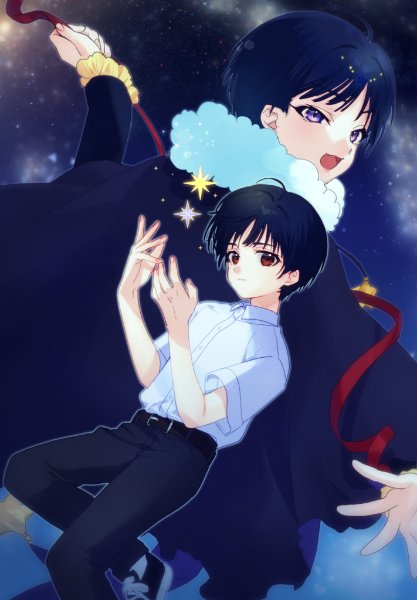
The genre's perspective flip: paranormal told from inside it. Olen Doe woke up three years ago with no memory and one unbreakable conviction: that Ileana Grace, the retired magical heroine once known as Stardust, saved him. From what, he never found out. The opening chapter shows the answer from the other side: a wispy thing of black essence being torn apart by a girl who believed it was her brother, surviving anyway. Here the supernatural isn't a secret the world keeps; it's the shape the protagonist is stuck in.
That makes it the list's most unusual paranormal register, the creature's-eye view, where the heroine's light is the threat and the thing being exorcised is the narrator. It gives the genre's "hidden world" premise a body instead of a backdrop. Readers who want the genre's dangerous side pushed further can check our best horror books list.
6. Witches of Mellgrah
The witch school.
By Levia T. Ebris · ~3 hour read · 16 chapters · Magic, Fantasy, School Life · Ongoing
The genre's most classic shape: a witch school, where the supernatural is the curriculum, which makes the paranormal the genre's oldest, most familiar version. The "witches" premise is the paranormal as institution, and the school frame makes the supernatural a lived-in world rather than a hidden threat at the edges.
At three hours it's the lightest pick on the list and the most classically paranormal: the witch-school story done plainly, the genre's oldest form at its most direct, and the one for readers who want the genre's classic version without the genre's newer complications. Readers curious how a magic system like Mellgrah's is put together can see our magic systems guide.
The List at a Glance
| Novel | Hours | The paranormal angle |
|---|---|---|
| In the Shadow of Moonlight | ~11 | Supernatural school, community |
| HORDE: Annunciation | ~9 | Monster apocalypse, invasion |
| The Sanguine Queen | ~5.2 | Vampire villainess, identity |
| Project:Psychic | ~5.2 | Ghosts, psychic thriller, modern |
| Reborn Rising | ~4.5 | Spirit POV, heroine's shadow |
| Witches of Mellgrah | ~3 | Witch school, classic |
Hours are NovelDay's own estimates at average reading speed; all six are still publishing new chapters.
How We Chose
The paranormal label is the most loosely-applied in fantasy. Every book with a strange creature claims it, and readers learn the hard way that "paranormal" often just means "there's a monster somewhere in the background." So the bar for this list was the supernatural's role: the paranormal had to be the world's condition, the thing the story runs on, rather than just the creature that shows up in chapter ten. A book with a vampire in it isn't paranormal; a book about the world the vampire lives in is. What survived are six novels where the supernatural is the story's fabric, in six different flavors.
We also read past the openings, because paranormal stories have a specific failure mode: the "supernatural" fading into ordinary adventure until the genre's premise stops mattering. All six keep the paranormal present in the middle, which is the genre's real discipline.
The Paranormal Spectrum
Worth naming the spread, because "paranormal" covers different appetites. At the cozy end: the two schools (Moonlight, Mellgrah), where the supernatural is a community to live inside. In the middle: the three darker entries (HORDE, Project:Psychic, Reborn Rising), where the supernatural is a threat, fought from outside in two, survived from inside in the third. At the subversive edge: the vampire-as-identity, where the paranormal is the subject of the story rather than the secret inside it. All six are paranormal by the supernatural-is-the-world standard, but they answer different versions of the genre's oldest question: pick your entry point by which kind of "teeth" you read for.
Why Paranormal Is the Genre Web Fiction Rebuilt
Publishing's paranormal books run on the hidden-world shape (the supernatural as a secret the protagonist discovers) because a bounded novel can hold that reveal for one arc. Web fiction's versions can run the paranormal at its real length: the supernatural as a condition, not a secret, which means the "how does the ordinary world carry the extraordinary" question can stay open for hundreds of chapters; the reveal never has to happen all at once, because the supernatural was never the secret.
The serial format also fits the genre's real subject (the slow work of living with the supernatural) because a serial can let the paranormal keep being present at the texture that real weirdness actually runs on. A bounded paranormal book reveals the secret; a serial's can keep the secret lived-in, which is the version the genre's readers are actually there for.
There's also a reader-relationship reason the genre thrives here: paranormal runs on the reader's own curiosity about what actually hides in the world, and a serial keeps that question open week after week. A bounded paranormal book resolves the secret; a serial's keeps the secret lived-in and ever-evolving, which is the specific, sustained engagement the genre's dedicated audience is built for.
One more thing worth naming: the genre's readers are its most versatile audience. They'll read the cozy school and the gritty hunt in the same week, because the genre's pull is the supernatural's presence rather than any single mode or monster. The picks on this list were chosen for the spread, because a reader who only wants the hidden-world version has been well-served by publishing for decades; the reader who wants the genre's full range (school, hunt, apocalypse, identity, invention) is the one this list is for.
It's also worth naming the genre's quality signal: paranormal is the genre where the reader's trust is earned chapter by chapter. A world that keeps the supernatural consequential rather than decorative, where the creatures have weight and the ordinary world has to carry them. The picks on this list were chosen for the ones where the paranormal actually functions, where the world has teeth and the teeth matter, rather than the ones where a monster's just a name on a cover. That's the version of the genre that rewards the reader who wants the supernatural to mean something — to carry the plot, not just decorate it.
And one thing worth naming about the catalogue: paranormal is the genre where the shelf runs deepest: six picks because the catalogue's supernatural-fiction bench is genuinely strong, not because the genre forced a thin list. The picks that made it are the ones where the supernatural is the story rather than the set-dressing, which is the genre's honest spread here at its best density.
And it's worth naming the thing the genre's readers actually read for: paranormal is the shelf where "what if" is most literal: the world you know, plus the things that don't belong, which makes it the mode where the reader's own curiosity is most directly the engine. A fantasy world asks you to imagine a different place; paranormal asks you to imagine this one with teeth — the genre's most intimate version of the question.
One more honest note on the shelf: paranormal is where the catalogue's bench is deepest and most varied — six picks because the supernatural-fiction bench actually supports the genre's full spread, not because the list needed padding to reach a rounder number. The picks that made it are the ones where the supernatural is the story rather than the set-dressing, and the shelf's depth means the reader who wants the genre's full range actually has it.
And the genre's readers are its most loyal — they find a mode they love and they stay in it, which is exactly the audience a serial catalogue is built to hold. A reader who finds the vampire books or the demon-hunt books on the paranormal shelf isn't a one-visit reader; they're the kind who finds a genre and stays in it, which makes the paranormal shelf one of the catalogue's highest-value reader segments for the long, loyal run.
And one last thing worth naming: paranormal is the genre where "hidden" is the default question, but the best books on this list treat "present" as the answer — the supernatural as a condition the world carries rather than a secret it hides. That distinction is the genre's real quality line, and the picks here were chosen for the version where the paranormal stays central the whole way through the story.
Where to Start
For the biggest, most atmospheric pick — the community version: In the Shadow of Moonlight. For the grittiest: HORDE: Annunciation. For the most unusual angle: Reborn Rising. For the fastest-paced: Project:Psychic. All six are free in the NovelDay library, and if you write paranormal fiction yourself, the author program is the right home.
Worth one last honest framing: the genre's promise is easy to name and hard to keep: a world that has teeth, delivered with enough consequence that the paranormal feels like a condition rather than a costume. The picks on this list were chosen for the second kind, because the first kind is what gives paranormal its reputation for creatures that don't matter.
Frequently Asked Questions
What counts as a paranormal book?
Fiction where supernatural elements (vampires, demons, witches, monsters, ghosts) are part of the world rather than visitors to it, and the paranormal is the story's condition rather than just its antagonist. The genre's test: is the supernatural a world-state or a secret? The picks on this list span both, which is the genre's full modern spread.
Is paranormal the same as urban fantasy?
They overlap heavily but they're not identical. Urban fantasy is the setting (supernatural in a modern city); paranormal is the content (the supernatural elements themselves). An urban fantasy can have no paranormal elements beyond the setting; a paranormal book can be set anywhere as long as the supernatural is the story's fabric. The picks here span both ends of it.
Do paranormal books need a modern setting?
No. The genre's engine is the supernatural-as-condition, not the time period. The picks on this list include a school, a cyberpunk world, an apocalypse, an isekai vampire, a witch school, and a city where gods are made; the "contemporary" mode is one version of the genre, not the whole thing.
Why is paranormal such a durable genre?
Because it's the genre whose premise is the reader's own curiosity. What if the world has teeth, and what would it feel like to live in the version where it does? The premise is flexible enough to survive every treatment (cozy school, gritty hunt, apocalyptic invasion, meta-vampire), which is why it's lasted decades and why web fiction keeps reinventing it.
Where can I read paranormal web novels for free?
All six picks are free on NovelDay with no paywalls, no chapter-gating. The supernatural shelf and the horror shelf hold the wider catalogue, and the LitRPG guide covers the adjacent territory in more depth.