Worldbuilding Tips for Serial Fiction: Build a World Between the Chapters

Worldbuilding has a reputation problem among writers, and it earned it honestly. Somewhere right now, someone is writing their third page about the trade routes of a fantasy kingdom whose protagonist has not yet appeared. The map is beautiful. The religions have names. The currency exchange rates are internally consistent. The story does not exist. This is the lore-first trap, and it has killed more fantasy novels than bad prose ever will.
And yet worldbuilding is also the thing readers remember. Nobody quotes a plot; they describe the place. So the craft question is not whether to build a world, but when to show it and how to keep it working across a hundred chapters. Serialized fiction changes those answers in specific ways, and most worldbuilding advice online is written for people writing closed books, not running serials that publish while they build.
What follows is the version of the discipline aimed at that format: the parts that transfer, the parts that do not, and the techniques that only exist because chapters ship one at a time.
What Worldbuilding Is Actually For
Start with function, because it is where the advice usually goes wrong. Worldbuilding is not decoration and it is not trivia. A world's real job is to constrain: it decides what characters can do, what they cannot do, what they pay for power, and who gets to say no. A well-built world generates conflict by existing. A badly-built one is a backdrop the plot happens in front of.
The test is simple: if you changed the world's rules tomorrow and nothing about the characters' decisions would change, the world is not doing work. In a working world, the rules are load-bearing. The magic system decides who holds power. The geography decides who starves. The religion decides what can be said out loud. Readers do not need to recite these facts; they need to feel the pressure of them.
The Lore-First Trap
The canonical advice is the iceberg: know ten times what you show. That is right, but it hides the harder instruction. The trap is not researching your world; the trap is confusing the research notes with the actual story. Writers who build for months before writing chapter one are often not building a world at all. They are postponing the scary part, which is writing the story.
The better discipline is demand-first: build the piece of the world the current chapter needs, and only that. The temple's ritual matters when a character has to attend it. The tax code matters when the protagonist cannot pay and the collector is at the door. Everything else lives as a note until a chapter calls for it. This is not laziness; it is how the world stays subordinate to the fiction instead of quietly replacing it one spreadsheet at a time.
Why Serial Fiction Plays by Different Rules
Here is the part the worldbuilding guides do not cover, because they are written for novels. A published book can open with a five-page tour of the capital; the reader has already committed their evening and their shelf space to finishing it. A serial cannot afford that assumption. Each chapter is a separate decision to continue, which means the world must reveal itself through what happens, not through what is described.
That constraint is also the serial's advantage. In a book, the worldbuilding arrives in front-loaded exposition the reader has to absorb before the story starts. In a serial, the world accretes: a festival mentioned in chapter eight pays off in chapter thirty, a passing reference to the old war becomes the arc villain's motive forty chapters later. Readers of serials build the world in their heads the way the author builds it on the page, incrementally. The format rewards patience in a way print cannot.
The practical rules this produces:
- No worldbuilding without a witness. Every fact arrives attached to a character noticing it, needing it, or being hurt by it. If nothing in the scene depends on the world's rule, the rule waits.
- Plant before you pay off. A serial's long horizon means you can seed a fact ten chapters before it matters. Readers love retroactive coherence; it is the format's signature pleasure.
- Keep a canon file. A serial running for months will contradict itself without one. Names, dates, distances, prices: write them down the day you invent them, not when you need to remember them.
- Let readers test the world. Comments and reviews will find the inconsistencies faster than you will. Serial readers treat worldbuilding as a collaborative audit; treat their questions as free editorial work.
The Four Questions That Do the Work
If you build nothing else, answer these, because they generate most of a working world:
- What does the world forbid? Constraints create story faster than possibilities do. A world where magic costs memories produces different fiction than one where magic is free.
- What does the world reward? Whatever is scarce and valued creates the power structure, and power structure is where conflict lives.
- What does everyone believe that might be wrong? The gap between the world's received wisdom and its actual rules is where plots hide. Half of fantasy's great twists are a character discovering the lore is propaganda.
- Who pays for the ordinary? Food, roads, medicine, safety: someone produces them and someone pays for them. A world where the economics of ordinary life make sense feels ten times more real than one with elaborate gods and invisible farmers.
Everything else, the maps, the pantheons, the conlang, is optional ornamentation on top of those four answers. They are the difference between a world that exists and a world that performs.
The Daily-Life Layer
Grand worldbuilding is easy to notice; the layer that actually sells a world is smaller. What do ordinary people eat, fear, complain about, and spend money on? What do children play? What do drunks argue about in the tavern? The daily-life layer is where worlds stop being dioramas and start being places, and it is the layer most worldbuilders skip because it is unglamorous.
In serialized fiction this layer does double duty, because it is also pacing material. A chapter where the hero buys lunch, haggles badly, and overhears a rumor is not filler; it is worldbuilding that moves. The serials that feel most lived-in are rarely the ones with the richest cosmology. They are the ones where you know what breakfast costs.
The trick is rotation: pick one ordinary domain per arc and make it concrete. Arc one touches money and food. Arc two touches work and worship. Arc three touches how the town handles the dead. You never describe the society; you visit it, one errand at a time, and readers assemble the picture themselves. That assembly is not a compromise. It is the mechanism by which a fictional world becomes a place a reader believes they have been.
The Feedback Loop Nobody Warned You About
Serialized worldbuilding has a hazard no book faces: the audience is watching you build. In a closed novel you can revise a contradiction before anyone sees it. In a serial, chapter twelve is already published and someone has already commented on the inconsistency you just created in chapter thirty-one.
Handled badly, this is terrifying. Handled well, it is the strongest tool in the format. Serial readers love being the person who notices things; a fandom that feels like a co-investigator stays engaged across long update gaps in a way a passive readership does not. The craft answer is to plan the world one layer deeper than the current chapter, publish with the confidence that consistency earns, and treat the comments section as a canon audit that works for free.
The flip side is equally real: once something is published, it is load-bearing. Retcons in serials are public acts. The rule of thumb that keeps writers sane is to leave early chapters deliberately vague on anything you have not committed to. Precision is a promise; keep the promises you know you can honor.
Names Are the Cheapest Worldbuilding You Have
Here is a technique that costs nothing and reads as deep craft: naming consistency. When the people of a region share a naming pattern, the reader absorbs the existence of a culture without a word of exposition. When the capital's districts are called by number and the slum's streets are called by smell, you have communicated the city's class structure in the space of two nouns. When a character's name changes after they take a title, the reader learns the world's customs by watching the convention work.
The opposite failure is the fantasy-sound salad: names picked for how exotic they sound, with no pattern to bind them. Xyrix the Magnificent lives next door to Steve. Readers cannot always name the problem, but they feel it, and the fix is simply choosing a convention and keeping it. Serial fiction makes this easier, not harder: you only need the names the next chapter calls for, and you can let the pattern emerge and then codify it in your canon file.
Three Serials That Build Differently
Three ongoing works on the platform each take a different approach, and each approach is worth stealing:
1. Heirs of Hyarch

The ensemble approach: a noblewoman hiding a talent, a fugitive thaumaturge, a journeyman healer, a worn-out warrior. Four perspectives means the world gets built from four different altitudes at once, and the reader assembles the politics, the magic economy, and the history from the seams between them. At a hundred and fifty-three chapters it is a masterclass in accretive worldbuilding: every chapter adds a tile.
Read Heirs of Hyarch on NovelDay
2. Rynth: Four Beats

The myth-first approach: "All may be traced back to the gods. And if not, then you may query Fate itself." This serial builds its world as belief rather than geography, where cosmology is not background but the load-bearing structure of every decision. A useful study in building a world through what its characters take for granted rather than what they explain.
Read Rynth: Four Beats on NovelDay
3. Post Mortem
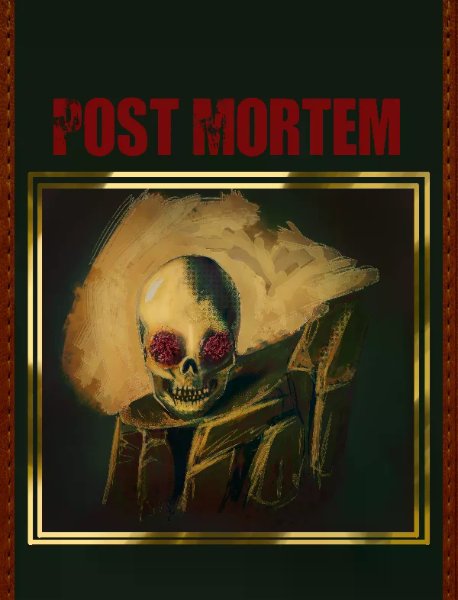
The premise-built approach: Dimi wakes in an afterlife of cannibals and forgotten gods, and the world is the premise itself. When your setting is the hook, worldbuilding cannot be background at all; it has to arrive as pressure from chapter one. Fourteen chapters in, the afterlife's unfairness is already doing more work than most kingdoms do in a trilogy.
For the most concentrated form of the same craft, our magic-system guide covers hard and soft systems and why costs matter more than powers. The xianxia explainer is a useful read too, since that genre builds entire power hierarchies as world physics rather than ornament.
Show the World Through What Breaks
The single most transferable technique: reveal the world through its failures. A reader learns more from the bridge that collapses under the third cart than from three paragraphs about engineering. Crime scenes teach the law. Hospitals teach the medicine. A character fined for speaking the god's name teaches the religion better than any scripture excerpt.
This is why "worldbuilding through consequences" outperforms "worldbuilding through description" so consistently: consequences are also plot. Every fact you reveal through a thing going wrong is a fact the reader absorbs while the story is moving, which in a serial is the only kind of fact that survives. It also scales: a broken bridge in chapter four teaches physics, a broken treaty in chapter forty teaches politics, and neither costs the reader a paragraph of exposition.
The Mistakes That Stall Serials
Across the catalog's unfinished serials, three failure patterns recur, and all three are worldbuilding problems wearing different clothes. None of them are fatal in a draft; all of them are expensive in a published serial, where the early chapters are load-bearing forever:
- The encyclopedia opening. Three chapters of history lesson before anyone does anything. Serial readers give you one chapter. The world earns its exposition by making the reader curious first.
- The unmaintained canon. The capital was a week's ride in chapter six and a month's ride in chapter forty. In a serial, readers catch this, publicly, in the comments. The canon file is not optional.
- The world that never pushes back. If the protagonist's choices never collide with the world's rules, the world was wallpaper. Real worlds resist; that resistance is where serials find their second and third arcs.
Quick Answers on Worldbuilding
How much worldbuilding should I do before writing? Less than you think. Enough to answer the four questions above and to write chapter one without contradicting yourself. The rest is legitimately built as you go; most professional serialists build maybe ten percent ahead of the current chapter.
Is worldbuilding only for fantasy and sci-fi? No. A contemporary romance has worldbuilding too; it is just called setting, and the same rules apply. What a small town forbids, rewards, and believes is worldbuilding, whether or not there is a map.
What is the difference between worldbuilding and lore? Worldbuilding is the functional machinery: constraints, economies, power structures. Lore is the decorative history layered on top. Lore is optional; the machinery is not. Most worldbuilding problems are writers having a hundred pages of lore and zero pages of machinery.
How do I worldbuild without infodumps? Attach every fact to a consequence or a witness. If a character needs the fact, suffers under it, or explains it to someone who needs it now, it is story. If it appears because the author wanted you to know it, it is an infodump. The test is deletion: if removing the paragraph loses nothing plot-wise, the paragraph was lore.
Should I draw a map? If it helps you keep distances and politics consistent, yes; if it replaces writing chapters, no. Maps are scaffolding, not deliverables. Plenty of excellent serials have no map at all and a perfectly coherent world.
How detailed should a magic system be for a serial? As detailed as the plot needs, and one notch more. The serial-reader expectation is consistency over completeness: they will forgive an unexplained mechanic forever, but never a rule that changed mid-arc to save the hero. Our magic system guide covers the detail question in depth.
Do I need a unique world for a web serial? No. Serial readers embrace familiar frameworks (litRPG mechanics, cultivation ranks, dungeon systems) because the familiarity frees them to focus on what is different. Originality lives in the specifics and the characters, not in inventing a cosmology nobody has seen.
Build the machinery first, let the readers watch it work, and let the world push back on your characters. Start writing on NovelDay, or browse the library to see how the serials above put it into practice.