The Most Popular Web Novel Genres in 2026: Ranked by What Readers Actually Open
Ask anyone what the most popular web novel genres are and they will give you the same answer: litRPG, isekai, progression fantasy. It is the accepted wisdom of the format, repeated on every forum and baked into how writers choose what to write. But "most published" and "most read" are different questions, and they do not always have the same answer. We can check what our own catalog's readers actually do, and the gap between the two answers is the whole story.
As of October 16, 2026, NovelDay hosts 148 user-authored serials. Every figure below is computed from that snapshot: view counts, bookmarks, and ratings across the whole shelf, split by genre. It is a young platform's data (treat it as an honest sample rather than an industry census) but it is real reader behavior, not vibes, and the shape it shows is worth paying attention to.
One clarification before the numbers: this post measures reading behavior, not publishing volume. The supply-side question (which genres people write) is a different report and a different dataset; what follows is the demand side, measured in what readers actually open, keep, bookmark, and come back to.
The Dataset at a Glance
| Measure | Value |
|---|---|
| Serials (user-authored, scraped titles excluded) | 148 |
| Median views per serial | 85.5 |
| Mean views per serial | 152 (nearly 2x the median: top-heavy) |
| Median bookmarks | ~1-2 per serial |
| Median ratings | 0 (most serials unrated) |
| View range | top serial ≈ 21x the median |
The Headline: Supply and Demand Don't Match
Here is the supply-demand picture in full, because it is the finding this whole report turns on.
The genre supply is heavily skewed toward classic epic shapes: Fantasy is the biggest tag at 92 serials (62%), followed by Adventure (77), Action (74), and Magic (70). But the reading patterns are messier, and the interesting finding is the gap between the two lists: the genres with the most serials are not the genres readers gravitate to per-title.
Measured by median views per serial, the overperformers are not the biggest shelves:
| Genre | Serials | Median views per serial |
|---|---|---|
| Tragedy | 27 | ~150 |
| Isekai | 24 | ~150 |
| Mystery | 45 | ~112 |
| Drama | 33 | ~112 |
| Thriller | 11 | ~112 |
| Supernatural | 42 | ~110 |
| Psychological | 50 | ~108 |
| Horror | 33 | ~107 |
| … and the shelves at the bottom of the same ranking: | ||
| Fantasy | 92 | ~88 |
| Action | 74 | ~88 |
| Adventure | 77 | ~86 |
| Romance | 35 | ~85 |
| Comedy | 33 | ~76 |
| Sci-fi | 31 | ~54 |
| System | 18 | ~50 |
| Shounen | 9 | ~50 |
Genre tags overlap (a serial can carry several), so rows are groups, not a partition. Median rather than mean because the distribution is top-heavy.
The headline in one sentence: the genres with the most supply are mid-table on reads; the genre readers disproportionately click is the one with a quarter of the supply. Isekai is 16% of the catalog and near the top of the read distribution; Fantasy is 62% of the catalog and sits at the median.
What the Pattern Actually Says
A few caveats before drawing conclusions, because data this size needs honesty about what it can show. Views measure clicks, not completions; a title that hooks on page one and loses the reader by chapter four counts the same as a book someone finishes. And median views are a blunt instrument on a young platform: serials published earlier have had more time to accumulate them, the numbers move with discovery cycles, and a genre with nine serials has a noisier median than one with ninety-two.
That said, the shape is legible, and it is consistent across two independent measurements (views and bookmarks).
Niche intensity beats broad supply: readers click on Tragedy and Isekai at higher per-title rates because the tags promise something specific. A Fantasy tag promises everything and therefore nothing; an Isekai tag is a contract. The lesson is not "write isekai": it is that specificity outperforms breadth on a crowded shelf, which tracks with what serial writers already suspect about genre tags being promises to readers rather than descriptions of content. The underperformance at the other end is equally instructive. Sci-fi and System serials pull roughly half the median views of the leaders, despite a well-documented audience for both in web fiction generally. Whether that reflects the platform's readership composition or the specific titles is genuinely ambiguous from the data alone. But it is a finding worth flagging for writers choosing a lane: on this particular shelf, those tags are undersupplied in a way that cuts both ways: less competition, but apparently less built-in pull.
There is a subtler read worth entertaining, too. The catalog's romance and slice-of-life tags sit near the bottom of the view medians, but their bookmark rates are stronger than the view numbers suggest. A quiet serial that gets fewer clicks but keeps a higher share of its readers is not losing; it is playing a longer game with a smaller, more committed audience. Whether that pattern holds at scale is exactly the kind of thing a future revisit of this data will show.
The Most-Read Serials
Four works sit at the top of the view distribution, and the shape of the cluster is itself interesting: horror, thriller, post-apocalyptic, and a fantasy SoL, and not one of them a generic epic-fantasy shelf-staple.
1. I Swear I Saw You Die

The most-read serial on the platform at ~2,000 views: a horror serial about memory, grief, and watching someone die, told across three completed volumes. Its position at the top of the distribution supports the genre finding: Horror's median views outrun the big tags, and the top of the leaderboard is where that shows.
Read I Swear I Saw You Die [Vol 3 Complete] on NovelDay
2. The Long Road to Somewhere

~157 views — nearly twice the catalog median — for a slice-of-life fantasy that opens with an orphan, a walking stick, and a teddy bear heading for the Adventurers Guild. It is the data point in miniature: on the biggest, most crowded shelf, the titles that cut through are the ones with a specific hook rather than a generic one.
Read The Long Road to Somewhere [Book 1 Complete, Book 2 in Progress] on NovelDay
3. This Is How I Lived
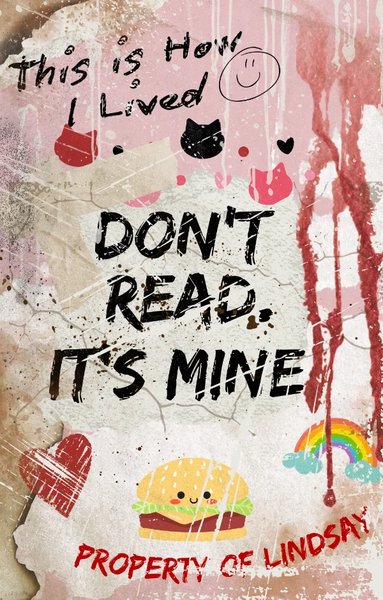
A post-apocalyptic diary serial at ~600 views, and the personal-testimony format (which web fiction does better than almost any other) finding its audience. Its bookmark rate is one of the strongest in the whole catalog, suggesting the readers who arrive actually stay with it.
Read This Is How I Lived [A Post-Apocalyptic Diary] on NovelDay
4. The Killer's Consultant

Second-most-viewed at ~1,080, and a Kdrama-style crime thriller rather than a fantasy epic: proof that the "web fiction is all fantasy" assumption is only supply-side. The readership shows up for different shapes.
Read The Killer's Consultant [Kdrama Crime Thriller] on NovelDay
For the supply side of this story, the what-authors-are-writing report is the direct sibling — that one counts the shelf; this one counts the clicks. The state-of-web-fiction report covers the catalog structure, and for writers thinking about where to fit, the where-to-post guide covers the platform-fit side of the same decision.
Bookmarks Tell a Different Story Than Views
View counts are the loud metric; bookmarks are the honest one. A view is a click, which is interest. A bookmark is a decision to return, which is retention. On a platform where the median serial has a handful of bookmarks, the ratio between the two is the closest thing the data offers to a quality signal, and the genres order differently on it.
The bookmark leaders are the niche genres: Tragedy, Mystery, and post-apocalyptic-adjacent forms (Supernatural, Psychological) all post median bookmarks at or near the top, despite middling view counts. The broad shelves (Fantasy, Action, Adventure) sit at the bottom of the bookmark column even though they anchor the view medians. The read is intuitive once you see it: a reader browsing Fantasy has eighty-plus alternatives if this one doesn't land; a reader who found a Tragedy they like has a smaller shelf to defect to, so they hold on.
The four serials at the top of the views table confirm it. Their bookmark counts are disproportionately strong for their genre mix, because each of them is a specific promise kept: a horror serial about memory, a crime thriller, a diary, a fantasy with a named premise. On this shelf, the way to a bookmark is not through the biggest tag but through the most legible one. It is the same finding from a different angle: the reader who can tell what a serial is before clicking is the reader most likely to still be there at chapter forty.
The Long Tail Is Doing the Work
The distribution's top-heaviness deserves a paragraph of its own because it changes what "average" means. The median serial has ~85 views; the mean is ~152. That gap exists because a small number of serials pull far above the median, and because most serials sit in the part of the curve where discovery is still the bottleneck. Roughly two-thirds of the catalog sits below the mean. This is normal for content platforms and absolutely expected on one this young; it is worth stating because it reframes what "average performance" looks like. A serial at the median is not underperforming; it is simply typical, and the shape of typical is "most readers haven't found it yet, and some never will."
That matters for writers deciding whether their numbers are good: the comparison point is the median, not the leaderboard. And for readers browsing, it means the interesting shelf is the long tail, not the top — the catalog's depth lives below the fold, which is exactly where niche tags shine.
What This Means If You Read
Most genre data reports are written for writers deciding what to write next. This one has a reader-side use too, and it is the more interesting half. The supply-demand gap means the shelves readers reach for reflexively are not the shelves where the surprises live. Fantasy and Adventure dominate the catalog's volume, which makes them the default browse path and, consequently, the most picked-over territory: high supply, median engagement, the most competition for your attention per title.
The shelves where the catalog's better discoveries cluster are the ones readers under-browse: Mystery, Thriller, Tragedy, Horror. Not because they are inherently better (a tag is a promise, not a guarantee) but because the supply-demand ratio favors the reader. Fewer titles, higher per-title attention, higher bookmark rates. The browsing math favors the under-populated shelf in the same way it favors the under-published genre.
If you have a genre you keep circling, the data offers a quiet argument for finally going there: on a catalog this size, the odds that an under-browsed shelf contains something you love are better than the odds of finding it in the ninety-two-deep fantasy stack. The library's genre filters make the experiment free to run.
What This Means If You Write
The temptation when seeing genre leaderboards is to chase the top tag. The data argues for something subtler. First: views are not the only currency; bookmark counts show that readers of niche genres are disproportionately loyal; a smaller audience that stays is worth more than a bigger one that skims. Second: the gaps that matter are at the intersection of supply and demand, not at the top of either column alone. An isekai or horror serial on this platform enters a smaller field with a disproportionately engaged readership; a fantasy epic enters the biggest field with the most competition for attention.
The most honest conclusion the numbers support: tag specificity matters more than tag popularity. The serials that outperform are the ones whose genre label is a promise (this is a horror story, this is a thriller, this is isekai) rather than a description. Readers on a big shelf click the titles that tell them exactly what they are getting.
That is also the answer to the question writers actually bring to genre data: "what should I write?" The numbers here do not crown a winning genre. They show something more useful: the reward goes to whichever promise is clearest. A fantasy serial tagged fantasy-adventure-action-magic-sci-fi describes nothing in particular; a serial tagged horror-drama-mystery signals a reader who wants exactly that combination. On a catalog where two-thirds of titles sit below the mean, the clearest promise wins the first click, and first clicks are where every serial's readership begins.
Methodology
All figures computed October 16, 2026 from the live NovelDay catalog API. Scope: 148 user-authored serials. "Views" are the platform's own view count, which measures reader pageviews rather than unique readers. Median rather than mean is used for genre comparisons because the distribution is top-heavy; means are inflated by the most-viewed handful. Genre tags are non-exclusive (a serial can carry five), so genre rows are overlapping groups rather than partitions. A young platform's snapshot: these numbers will move as the catalog grows.
Quick Answers on Web Fiction Genres
Which web novel genre is most popular? By supply, Fantasy dominates almost everywhere. By reads per serial on our platform, Tragedy and Isekai lead the medians; the specific genres outperform the generic ones, because the tag is a promise and specific promises click better.
Is litRPG the biggest web fiction genre? On NovelDay it is 18 of 148 serials, about 12%, behind Fantasy, Adventure, Action, Magic, and several others. Its reputation outruns its actual supply, at least on this catalog.
What genre should I write in for web fiction? The data favors specificity over size: niche genres get outsized per-title attention because the tag promises something particular. "Fantasy" is a category; "isekai" is a contract with the reader.
How many views does the average web serial get? On NovelDay, the median is ~85 views and the mean ~152; the gap between them is the top-heavy part: the most-read serial is ~21x the median. Most serials' readership grows slowly; the tail is where discovery happens.
Do views equal quality in web fiction? No. Views measure clicks, not completion or satisfaction; bookmarks and ratings are closer proxies for a serial people stay with. A serial can lead the view table on hook strength alone; the readership it retains chapter over chapter is the better signal.
Which genres get the most loyal readers? Judging by bookmark-to-view ratios, the niche genres (Tragedy, Mystery, post-apocalyptic forms) produce disproportionately high bookmark rates. Broad shelves get clicked; narrow ones get kept.
Where can I browse web serials by genre? NovelDay's library filters by genre and completion status, and every serial is free to read. The genre data this post cites is all visible in the catalog itself.
Do popular tags guarantee a serial will be read? Almost the opposite, judging by our data. The most-tagged genres have the deepest supply and the flattest medians; the serials that cut through are the ones whose tag is a promise rather than a category. "Fantasy" is a shelf; "post-apocalyptic diary" is a reason to click right now.
If you are writing serial fiction and wondering where your lane is, the honest answer the data gives is not "pick the biggest tag": it is "be specific about what the tag promises." The readers who find a serial through a legible genre promise are the readers who stay, and staying is the metric that compounds over a hundred chapters. Start writing on NovelDay and find out which shelf wants you.