How to Write a First Chapter: Openings That Earn Chapter Two
Every guide to first chapters gives the same advice: hook the reader, establish voice, introduce a conflict, withhold backstory. All true, and all abstract enough to be useless at the desk. What "hook the reader" actually looks like on a page is a different question, and it is the one this guide answers, using real opening chapters from living serials where you can click through and watch the move happen in its natural habitat.
One thing to know upfront: first chapters matter differently in serialized fiction than in print. A bookstore browser gives a novel a page or two. A reader scrolling a fiction platform gives a serial a paragraph, maybe two, because there are eleven other releases competing for the same lunch break. In a serial, chapter one is not the opening of a book; it is an audition, and the callback is measured in follows, not applause. That pressure has produced a generation of web authors who are genuinely good at openings, because the ones who were not never got chapter two read.
What a First Chapter Actually Has to Do
Strip away the advice and a first chapter has three jobs, in order of difficulty. First, it must answer the reader's silent question of whether this is worth ten more seconds. Second, it must establish the contract: what kind of book this is, what the protagonist is like, what the reader is signing up for emotionally. Third, and most often missed, it must create forward motion: an open question, an unresolved tension, a reason chapter two cannot not exist.
Notice what is not on that list. The first chapter does not have to explain the world, establish the setting, or introduce the magic system. Those are duties writers assign it because the information feels necessary, not because the reader asked for it. Every example below was chosen because it does one of the three jobs visibly well, and each is labeled with the specific move it makes, ordered by reading time, longest first. They span fantasy, horror, sci-fi, and literary drama on purpose, because the move travels across genres even when the furniture does not. All five are free to read on NovelDay.
1. The Weight of Falling Objects
The move: open inside a limitation.
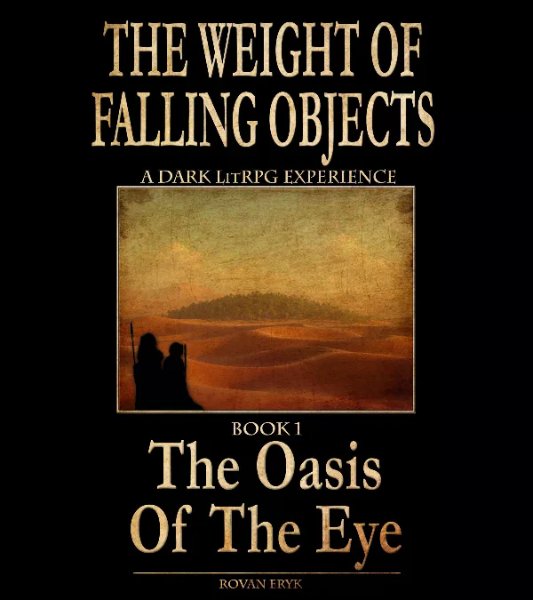
The first line is a confession of blindness: "Though I cannot see, I sense his approach." A narrator with darkened eyes and senses withdrawn from the world, perceiving only the power a stranger carries. Most writing advice says open with clarity; this opening proves the deeper rule underneath it. Open with specificity, even if what is specific is an absence. The withheld sight is not vagueness, it is a deliberately narrowed aperture that makes every thing the narrator does perceive feel charged. The lesson: you can withhold almost anything from the reader, but you must replace it with a sharper focus on what remains.
Read The Weight of Falling Objects Book 1: The Oasis of the eye on NovelDay
2. A Measure of Magic
The move: state the character's thesis, then let the room disagree.
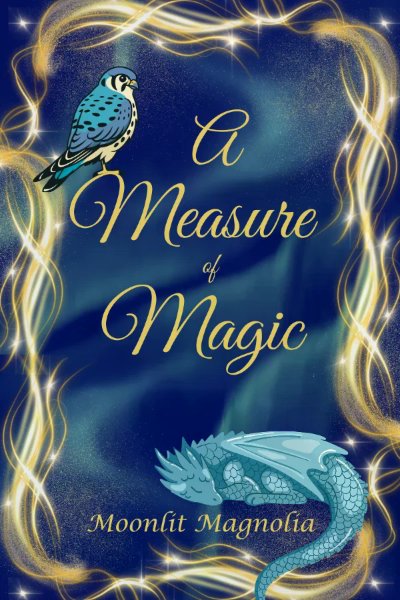
"Healing plants was pretty much the same as healing people. At least, Elliana thought so." Two sentences establish a protagonist with a working theory of the world, and then her friend's look arrives to tell us the theory is contested. That is the whole engine: a character who believes something slightly wrong, surrounded by people who can see it. It promises growth, conflict, and a magic system with opinions, all inside one conversational beat. The lesson: a protagonist's confident claim, especially a debatable one, is a hook wearing a shrug.
Read A Measure of Magic on NovelDay
3. Carrion Mind
The move: open on a document, not a scene.
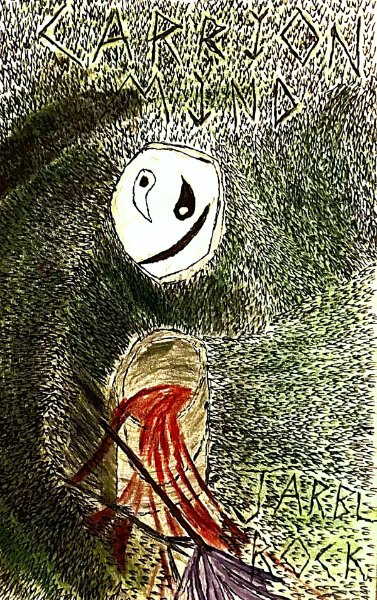
Before a single character appears, this serial presents a torn page from an in-world journal, a heretic's essay on how civilizations develop their technologies. It is a bet that the reader will trade immediate action for immediate texture, and it works because the artifact does double duty: worldbuilding delivered with a voice and a point of view, plus a planted question about who wrote this and why they are called a heretic. The epigraph-style opening is dangerous (fake documents are often just disguised infodumps), but it works when the document has attitude. The lesson: if your world is the hook, let a person inside it do the talking.
4. Reborn Rising
The move: plant a question in the reader's head on line one.
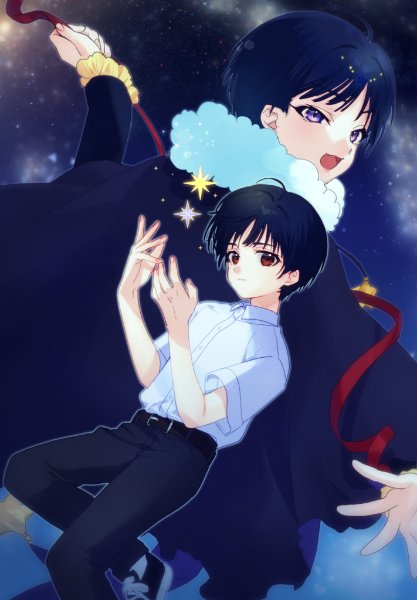
"The first time he was destroyed, he howled in pain." Ten words in, the reader is holding three questions at once — destroyed how, by whom, and the quiet bomb inside "the first time." Nothing on the page announces what the narrator is or what he did; you learn the shape of him from fragments and from the girl who watches him because she once thought he was her brother. The lesson: the strongest hooks are not events but impossibilities, small contradictions the reader cannot let stand unexplained, gaps that itch until chapter two scratches them.
Read Reborn Rising on NovelDay
5. This Is How I Lived
The move: let the form carry the contract.
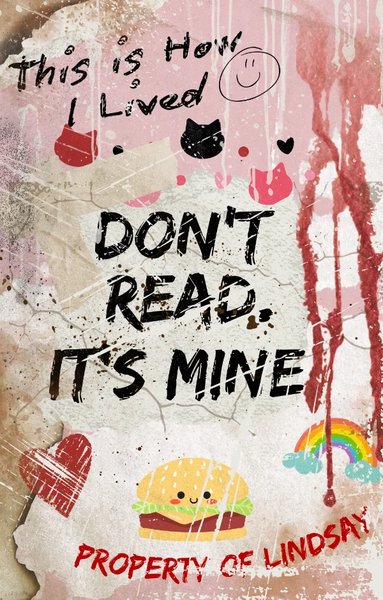
"March 10th 2022, 4:22pm. It's been about a week now since the end of the world. I think. Hard to keep track of when everyone started eating each other." A timestamped diary entry, and in four sentences you know the genre, the stakes, the format, and the narrator's coping mechanism (dark humor, slightly shaky). The diary conceit is doing the heavy lifting: it promises intimacy, immediacy, and unreliability all at once, and the deadpan uncertainty of "I think" tells you exactly whose voice you will be living in. The lesson: a committed frame is a shortcut to reader trust, because the rules of the form arrive pre-installed.
Read This Is How I Lived [A Post-Apocalyptic Diary] on NovelDay
What the Five Openings Have in Common
Five different moves, one shared mechanism: each opening installs an open loop the reader wants closed. A blind narrator's presence goes unexplained. A confident theory gets contested by the room. A heretical document raises the question of who wrote it and why they are condemned. A narrator was already destroyed once before the story started. A diary is already mid-apocalypse on entry. The moves differ only in what kind of loop they open — a mystery of character, of world, of logic, or of events — and that taxonomy is the practical takeaway: your opening's job is to pick one loop and make it itch.
There is a usable test buried in that. Read your own first chapter the way a stranger would and write down, in a single sentence, the question the reader is carrying into chapter two. If you cannot name it, there is no loop, which means the reader has nothing to follow. If you can name three, the chapter is probably doing too much at once, and the strongest one should get the oxygen. If you can name exactly one, and it is specific enough to itch, the chapter is working whether or not anyone calls it a "hook." The vocabulary of hooks (gripping, explosive, irresistible) lead writers to think an opening must be loud; the five examples above range from a quiet hallucination to the end of the world. Loudness was never the variable. Unresolvedness was.
It is also worth noticing what none of these openings does: none begins with weather, a mirror, a dream, or a glossary. The cliches fail for the same reason the loops succeed — they spend the first page on information instead of tension. In serialized fiction there is no bookstore goodwill to borrow against; the reader's thumb is already on the scroll. The contract has to be signed in the first screen, and an unresolved question is the only signature that counts.
The First-Chapter Mistakes Serial Writers Actually Make
The canonical list of opening sins (prologue infodumps, weather reports, mirror descriptions, waking-up scenes) is mostly a list of symptoms. The underlying disease is always the same: the writer is warming up in front of an audience, sketching in pencil while the reader waits for ink. In serialized fiction this is fatal at a different speed, because there is no cover, blurb, or bookstore shelf buying goodwill. The opening is the entire storefront.
The most common specific failure is the throat-clearing chapter: a first chapter that exists to get the protagonist to the place where the story actually starts. Writers sense the problem; that is why "just start later" is such durable advice. The serial-native version is more precise: your first chapter is often your third chapter rewritten, because by then you have stopped explaining and started telling. The fix is structural, not cosmetic. Cut until the first thing that happens is also the first thing the reader needs.
The second failure is overcorrection into noise: cold-open action with no one to care about. This Is How I Lived works not because the world ended but because the deadpan "I think" makes the narrator's coping mechanism visible in four sentences. Explosions are not hooks; a person reacting to explosions is. If your opening chapter could be narrated by any character interchangeable with yours, it is not done yet.
The third failure is subtler: the accurate opening to the wrong story. Writers sometimes open with a scene that is well-crafted but promises a different book than the one that follows, a moody literary overture for what becomes an action romp, or a frantic battle cold-open for what becomes a quiet character study. The reader who loved the promise feels baited by chapter four, and rightly so, since they signed up for one book and received another. Your first chapter is a contract; write the contract your book can actually honor.
Why Your First Chapter Is Never Your First Draft
Professional writers rewrite their openings after finishing the book, because a first chapter written before the story exists is guessing at its own contract. The serial version of this truth is gentler: publish your opening, let readers react, then revise it once you know what your story actually is. Unlike print, nothing is locked. The authors above all published their openings first and learned what worked from the follows and comments that came back.
That iterative loop is worth pausing on, because it changes the cost of a bad opening. In print, a weak first chapter is permanent. In serial fiction, it is Tuesday's problem. You can test hooks the way the platforms test thumbnails, and rewrite the audition until it earns the callback. The practical workflow most successful serial writers land on: publish the best opening you have, watch whether chapter two's read-through rate craters or holds, and treat the gap between the two as a report card on the hook itself rather than on the book. If the dialogue rules we covered are about how characters talk, this is the earlier question: whether anyone is still listening by the time they speak. And if you are still deciding whose head the opening should live in, our POV comparison is the adjacent decision. Starting a serial from zero? The web novel beginner's guide covers everything after the hook.
Questions Writers Ask About First Chapters
How long should a first chapter be? As long as it takes to earn the second one, and not a page longer. In web serials the practical range runs shorter than print: roughly 1,000 to 2,500 words, because the chapter is the unit of attention and the first one must clear the bar alone. Every word spent on setup is a word borrowed from the hook. If your draft's opening runs long, the question is rarely "what do I add" and almost always "what can the reader safely not know yet."
Should a first chapter start with action? It should start with interest, which is a wider category. A diary entry dated a week after the end of the world works (This Is How I Lived), but so does a blind narrator sensing a presence (The Weight of Falling Objects) or a spirit wearing a dead brother's face (Reborn Rising). What matters is that something is already in motion or already unresolved, not that something explodes.
Do I need a prologue or can chapter one carry everything? Chapter one can carry everything, and usually should. Prologues earn their keep when they show something the main timeline cannot, an event decades early or a vantage the protagonist lacks. If the prologue exists to pre-load lore, fold it. The in-world document opening (Carrion Mind shows one working) covers much of the same territory while reading as story rather than glossary.
How do I write a hook that is not a gimmick? A hook is a gimmick when it promises what the book does not deliver. The safe version is to hook with your book's actual strength: voice if your voice is the draw, premise if your premise is the draw, mystery if your plot is the draw. The mismatch is the gimmick. This Is How I Lived's diary frame is honest because the book is a diary; a car chase in a quiet literary novel would be the dishonest version.
Can I fix a weak first chapter after publishing? In serial fiction, yes, and you should. Nothing about a serial is locked; readers routinely arrive late and start at chapter one regardless of when you revised it. Rewrite the opening once you know what the book became. Many authors tighten chapter one around chapter thirty, when the voice has settled and the real hook is visible. Early followers will not mind the edit; they are the ones who told you what was actually working.
Where should I publish my first chapter to get feedback? Somewhere with readers who comment. The value of a serial platform is that the first chapter gets tested against real attention, and the feedback tells you whether the hook landed. On NovelDay you can publish a first chapter free, keep every right to it, and keep 100% of whatever readers choose to give it.
The Rule Underneath the Rules
Every opening above works for a different reason, which is the actual point. There is no universal first chapter, only first chapters that are honest about the contract they are offering. A blind narrator, a heretic's journal, a contested theory, an already-destroyed narrator, a timestamped diary: five unrelated doors into five unrelated books, and the only thing they share is that each one could not belong to any other story. That specificity is the craft. Write the opening that makes a promise your book intends to keep, make sure something in it cannot yet be resolved, and let the rest be revision.
If you want to study these openings in the wild, all five serials are free in the NovelDay library. And if you have an opening of your own sitting in a drawer, the audition is free: publish it at novelday.net/write, keep all rights to your work, and find out within days whether it earns chapter two.