
Books Like The Name of the Wind to Read While You Wait for Book Three
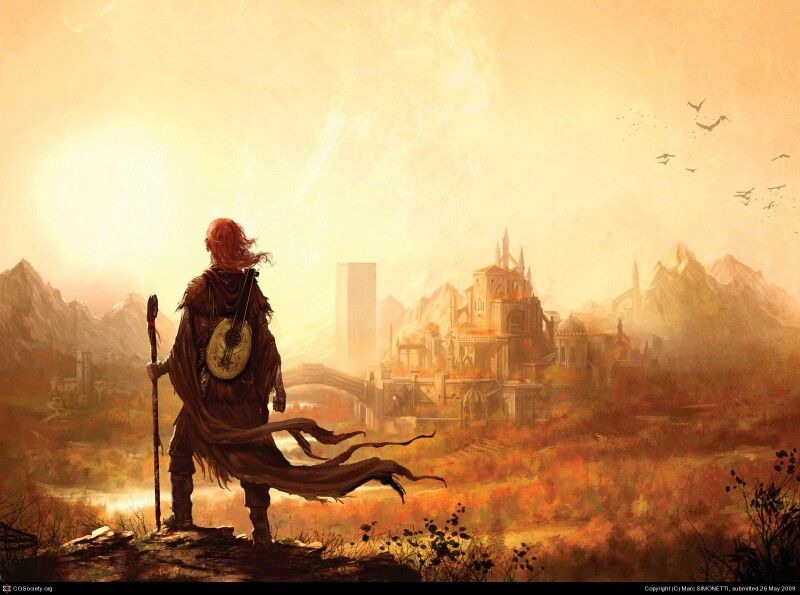
Everyone waiting on the third Kingkiller book knows the specific ache: you want the thing Rothfuss did, which is not just epic fantasy. It is the voice doing work a plot could not do alone, a hero who is clever in ways the page can prove, a world dense enough that the digressions feel like the point. Most "books like Name of the Wind" lists solve this by recommending other doorstop epics, which answers a different question than the one the itch is asking.
There is a deeper reason serial fiction is the right shelf for this particular hunger. The Name of the Wind is, at its skeleton, a story about a storyteller: a man in a tavern telling his own legend aloud. Serialized web fiction is the closest living descendant of that form, stories told in installments to an audience that can talk back, shaped by voices that learned to hold attention without a hardcover's authority. When the craft under discussion is literally "voice sustaining narrative," the tradition's heirs are serial authors.
This list goes somewhere stranger and more honest: web serials. Serial fiction is where the storyteller-voice tradition actually lives now, where prose can pause on a character's hands or the shape of a morning without an editor asking for pace. These are ongoing works you can open tonight for free on NovelDay, each carrying one piece of what made Kvothe's telling feel different from the other ten thousand farmboy-with-a-destiny books. Ordered by reading time, longest first.
Why The Name of the Wind Is So Hard to Match
It helps to name the machine before shopping for replacements. Rothfuss fused three things that usually come separately. First, the voice that is also a story element: Kvothe narrates his own legend, so the prose being beautiful is diegetic, it is the character showing you he is the kind of person who tells stories beautifully. Second, cleverness with receipts: the book does not say Kvothe is brilliant and move on; it stages the brilliance, lets you watch the work, and prices the consequences. Third, the frame-narrative ache: everything on the page is already aftermath, a legend told by the man who survived it, which gives the adventure an undercurrent of loss before anything sad has happened.
Almost no novel does all three, which is why most recommendation lists feel like they are reaching. The honest approach is to match the specific piece of it you are actually missing. That is how the six below were chosen: each carries one of those mechanisms, visibly, in its first chapters, which is also the promise this list makes that others do not. I am not telling you these are similar vibes. I am telling you which part of the engine each one has, and you can verify my claim in the first thousand words of each one for free.
1. Of Crimson and Ash
The Kingkiller piece it carries: a protagonist whose competence is louder than her circumstances.
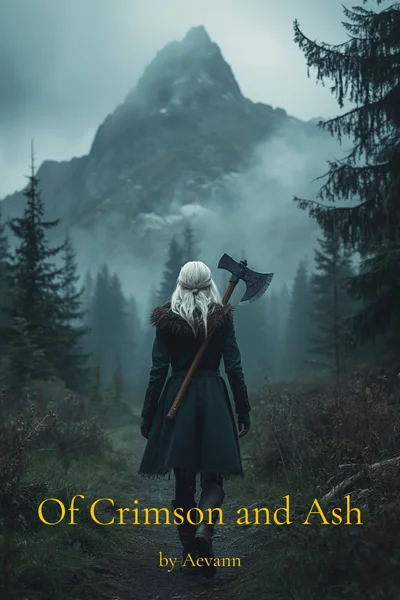
Chapter one is a village wheel repair narrated from the inside of the person lifting the cart, while two locals bet silver on whether she can do it and a merchant stands around looking like he has seen a monster. The voice does the Kingkiller thing immediately: competence rendered as irritation. She is not performing strength for the reader; she is annoyed that the wheel needs her and that she agreed to it. That register (a person so capable that the village's awe is mostly an inconvenience) is the same note Kvothe's tavern frame plays. The world arrives through her cursing it, which is exactly how you learn a place without an infodump. Twelve and a half hours of it, too, which matters on a list like this: the Kingkiller itch is not satisfiable in a novella. You need somewhere to live for a while.
Read Of Crimson and Ash on NovelDay
2. In the Shadow of Moonlight
The Kingkiller piece it carries: literary prose that treats a fantasy premise like a real place with weather.
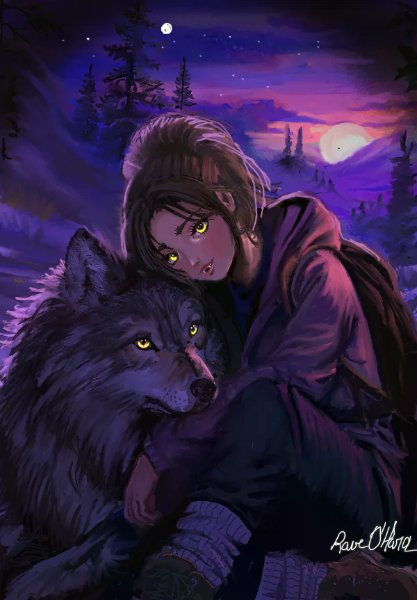
The first chapter is just a girl walking to school in October cold, envying wolves their fur coats, cataloguing the commute west on Spruce Lane and south onto a forest road. Nothing explodes. What Rothfuss's readers recognize is the attention: the cold rendered at the level of sweatshirts and driver's-ed fees, a world where buses and mountains coexist with whatever the moonlight is doing. The patience is the point. If what you miss in book-three-waiting is prose that slows down on purpose, that trusts you to stay for atmosphere instead of incident, this is the closest current match. Romance and drama tags mean the pace is a feature, not a warning. There is an honesty in that classification that a lot of blurbs hide: this book will not accelerate for you, and it was never pretending otherwise. Readers who come in expecting the slow lane get the best version of what it does.
Read In the Shadow of Moonlight on NovelDay
3. The Sky That Lied
The Kingkiller piece it carries: the craftsman-protagonist, art made under a ceiling that wants it stopped.
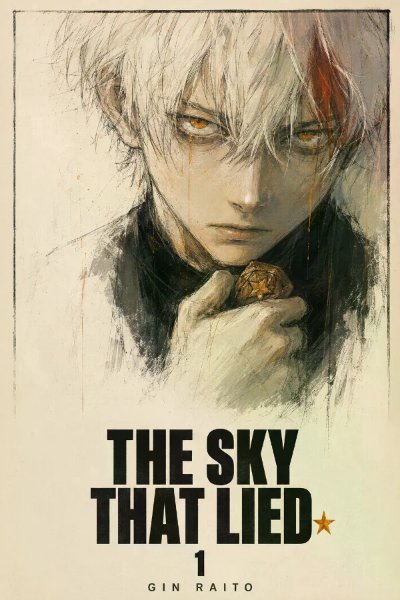
A boy named Shiro carves stars into the wall of his shack because anything brighter than candlelight costs money he does not have, working by the light of a flame guttering on a crate, his knuckles split open where the cold got them, a crooked Polaris that still looks enough like a star to matter. This is the Underthing-and-University energy: skill as survival, beauty as the one thing the city above cannot confiscate. Kvothe had music and sympathy; Shiro has a chisel and a ceiling he cannot see past. The worldbuilding arrives as weight pressing down rather than exposition, which is the Rothfuss habit worth stealing. The best detail is small: the carving is crooked. The points are uneven, the edges splintered, and from a distance it looks enough like a star to matter. That is a sentence doing the same work as Kvothe's lute in the first book, craft as the thing poverty cannot fully confiscate, and it tells you the author understands that showing the flaw is worth more than asserting the skill.
Read The Sky That Lied on NovelDay
4. A Measure of Magic
The Kingkiller piece it carries: the gifted-student thread, but written into a healer instead of an arcanist.
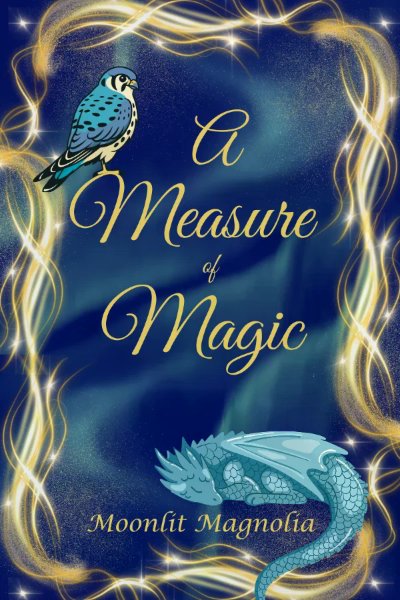
"Healing plants was pretty much the same as healing people. At least, Elliana thought so." That is a Kvothe-shaped thesis: a protagonist with a working theory of power she has not been corrected on yet, standing next to people who can see the flaw. The academy-adjacent setting, the magic as something studied rather than triggered, the protagonist who is clever in ways that will get her into and out of trouble: if the part of Rothfuss you want is watching aptitude be slightly wrong and slightly brilliant at once, this is the serial currently carrying that thread. It is also the gentlest pick here, the one for readers whose Kingkiller favorite was the University chapters more than the Chandrian plot.
Read A Measure of Magic on NovelDay
5. Rynth: Four Beats
The Kingkiller piece it carries: wit as a structural load-bearing element.
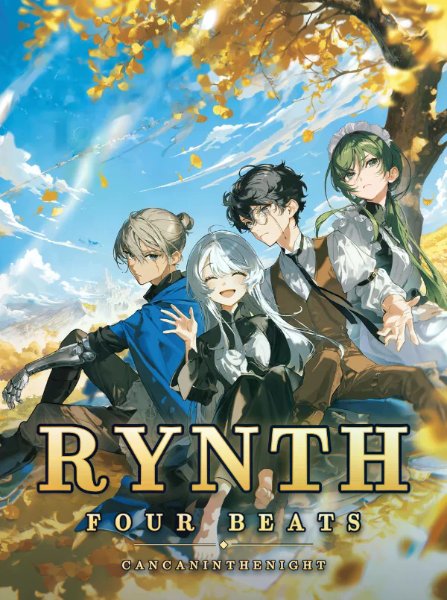
Kvothe's cleverness only half-lives in his magic; the other half is mouth. Rynth is the serial where the wit is doing the same job: a magicpunk academy world of corporate vending machines and cycle-counted calendars, and a prodigy kept deliberately small by the mother who cages his potential, broken free by a loudmouth freelancer who talks faster than everyone else in the room. The comedy runs on banter between people who are smarter than their circumstances, which is the same engine that makes Kvothe fun rather than merely impressive. If what you miss is dialogue sharp enough to carry a plot, this is the fastest-talking pick on the list, and the one most likely to remind you that Kvothe's best scenes are not the spells but the verbal duels in taverns and courts.
Read Rynth: Four Beats on NovelDay
6. The Chronicles of Veledan - The Silver Dragon
The Kingkiller piece it carries: the braided epic, characters with inner lives too large for a single thread.
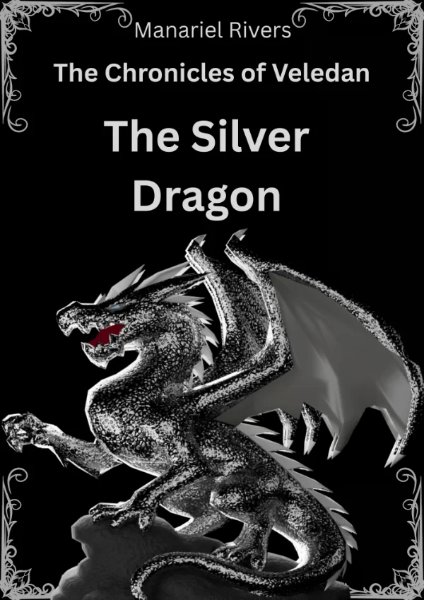
Chapter one is labeled "POV Moritz" because this is a braid, not a line: a soldier finishing his fiftieth pushup before breakfast, attendants murmuring outside, a fortress with opinions. Where Name of the Wind is one voice telling everything, Veledan is several voices who do not share the page, and the reader who enjoyed the frame-narrative trick of knowing the legend has an aftermath will recognize the architecture. Multi-viewpoint epic is the honest answer to "what if I want Rothfuss's density but ensemble-shaped." The trade it makes is worth knowing going in: you lose the single-voice confession that makes Kvothe's narration feel like one long tavern story, and you gain the thing that frame cannot do, which is the feeling of a world with more than one protagonist's gravity in it.
Read The Chronicles of Veledan - The Silver Dragon on NovelDay
How to Choose Between Them
Start by naming which Rothfuss mechanism you are actually grieving for, because these six are not interchangeable. The honest decision tree:
If it is the voice, the musician's prose that notices weather and weight, go to In the Shadow of Moonlight or The Sky That Lied first; they are the slowest two and that is the selling point. If it is the cleverness with receipts, a protagonist whose competence the text can prove on the page, Of Crimson and Ash opens with the strongest demonstration (a cart lift turned into a village wager), and Rynth: Four Beats runs the same wit into a magicpunk academy comedy. If it is the structure, the legend-being-told density, Veledan is the braided version and A Measure of Magic is the academy-adjacent one.
And if the honest answer is "I want all three at once, finished," nothing on the market will promise you that cleanly, which is the reason the wait for book three is a meme instead of a schedule. These six fill pieces of the gap; reading two of them in parallel covers more of the shape than forcing one to be the whole silhouette.
What to Read First
If the missing ingredient was prose that slows down to notice things, start with In the Shadow of Moonlight. If it was a clever hero whose cleverness is demonstrated rather than asserted, Of Crimson and Ash is the louder first chapter. If you want the craftsman-in-a-hostile-city thread that is Kvothe's actual spine, The Sky That Lied is the closest spiritual match on this list. And if what you want is just more witty fantasy with a plot, Rynth: Four Beats is the sharpest dialogue on the list.
The deeper answer is that the Kingkiller itch is several different itches wearing one cloak, and web serials happen to be the shelf where the voice-first, meander-tolerant version of epic fantasy is being written most freely right now. If none of these lands, the wider NovelDay library is browsable by genre, the xianxia explainer covers the neighboring tradition if eastern-flavored progression is the other itch you have, and the fantasy list for adult readers runs a broader net if you want picks without the Rothfuss filter.
Frequently Asked Questions
Is there a book as good as The Name of the Wind? Nothing is quite that book, but the serials above each carry one of its working parts, and knowing which part you miss is most of the battle: lyrical first-person attention (In the Shadow of Moonlight, The Sky That Lied), demonstrated cleverness (Of Crimson and Ash, Rynth: Four Beats), studied magic (A Measure of Magic), and braided epic density (Veledan). Reading for the part you actually miss beats reading for the vibe, and it beats buying something that only shares the cover mood.
Why is The Name of the Wind so hard to match? Because it fused two things that usually compete: a musician's prose and a power fantasy's plot. Most epics pick one. The serials above each pick one lane and run it well, which is honestly the more available pleasure while book three stays unwritten.
Are these actually similar to Rothfuss or just "fantasy"? Each entry names which specific Rothfuss element it carries; none of them is a generic epic recommendation. The ones that lean most Kingkiller are Sky That Lied (craftsman protagonist under a hostile ceiling) and In the Shadow of Moonlight (prose pace).
Are web serials as polished as published novels? These ones are closer to the trad-draft end of the serial range; that is why they are on this list and not a random genre scrape. Free to read, some still updating. Sky That Lied and Moonlight in particular read like they were edited by someone who cared. The honest trade is that serial polish varies chapter to chapter in a way print never has to, because print had the luxury of revision windows serials do not get.
Will any of these scratch the "waiting for book three" feeling specifically? Partially, and honestly. The itch for Doors of Stone is partly about the series and partly about the voice, and only the second itch is transferable. Ongoing serials even have their own version of the wait (chapters arrive weekly instead of yearly), which is either a comfort or a familiar pain depending on temperament.
What if I want something closer to The Wise Man's Fear specifically? The travel-and-study energy of book two maps most closely onto the academy-adjacent serials: A Measure of Magic for the apprenticeship feel, Veledan for the many-threads epic scale.
Can I write on this platform too? Yes. If you have a storyteller-voice epic sitting in a drawer, NovelDay is free to publish on, you keep all rights, and the audience here already reads for voice.
The Patient Reader's Note
Waiting for a book is its own kind of literacy problem; the gap it leaves is not "epic fantasy" shaped, it is that-specific-voice shaped. These six serials will not finish the Kingkiller story for you, but they will fill the part of the silence that was about prose and cleverness and worlds worth paying attention to. That is a better deal than a re-read, most days, and a considerably better one than another year of checking the release-date subreddits.
All six are free on NovelDay. If you write the kind of book that makes readers wait years for the next one, novelday.net/write is where you can start building the audience that waits.